

Loblolly Bay
gordonia lasianthus
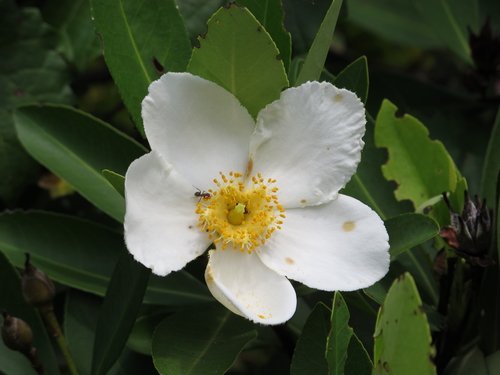
Loblolly Bay (Gordonia lasianthus) is an elegant, medium-sized evergreen tree native to the acidic wetlands and damp coastal plains of the southeastern United States. Belonging to the tea family (Theaceae), it is highly admired for its handsome, dark green foliage and showy, aromatic white blossoms that closely resemble camellias. This species plays a vital role in wetland ecology, providing nesting sites for birds and dense cover for various swamp-dwelling wildlife.
Hábitat: Found in acidic, wet, sandy soils of bay swamps, flatwoods, and boggy depressions throughout the southeastern United States.
This tree typically grows to heights of 10 to 24 meters, featuring a narrow, columnar crown and dark, deeply furrowed bark. Its leathery, lance-shaped leaves are alternate, finely serrated, and glossy dark green on top with a pale, dull green underside. During the summer, it bears delicate, 5-petaled white flowers measuring about 5 to 8 centimeters across, marked by a bright dome of golden-yellow stamens in the center.
Categoría
PlantasRareza
Common
Peligro
1/5 · Muy bajo
Snaps
¡Sé la primera persona en hacer un snap!
Its soft, close-grained wood is reddish-brown and was historically used to make cabinets and wooden bowls, though it holds little commercial timber value today.
Loblolly Bay is a member of the family Theaceae, making it a close relative of both ornamental camellias and the commercial tea plant.
The common name 'loblolly' historically referred to a swampy depression or mud hole, which perfectly describes the boggy soils where this tree thrives.
Specially adapted to thrive in waterlogged, highly acidic, and nutrient-poor soils where most other tree species cannot survive.
Retains its thick, waxy leaves year-round, allowing it to produce energy even during mild winter days in its southern range.
Mature specimens develop thick, deeply ridged bark that helps protect the vital inner cambium layer from low-intensity fires.
As a photosynthetic plant, Loblolly Bay synthesizes its own organic compounds from sunlight, carbon dioxide, water, and soil minerals.
Callosamia securifera
Loblolly Bay serves as the primary larval host plant for this specialized silk moth species.
Apis mellifera
Bees visit the fragrant, pollen-rich white blossoms during the summer, acting as primary pollinators.
Papilio palamedes
Adult butterflies visit the flowers to drink nectar, facilitating cross-pollination.
Aún no hay insignias de rasgos asignadas a este objeto.
Todavía no hay alias listados.
Las colecciones para este objeto aparecerán aquí a medida que se añadan más temas.
Peligro
1/5 · Muy bajo
Todavía no hay notas especiales de seguridad.
La forma más fácil de identificar a Loblolly Bay es usar la aplicación de identificación de naturaleza Snappit.
1000-2400 cm
50-150 años
As a photosynthetic plant, Loblolly Bay synthesizes its own organic compounds from sunlight, carbon dioxide, water, and soil minerals.
Found in acidic, wet, sandy soils of bay swamps, flatwoods, and boggy depressions throughout the southeastern United States.
Acércate para separar los grupos y explorar dónde se ha fotografiado este objeto.
Los snaps recientes aparecerán aquí a medida que se añadan nuevas observaciones.





















