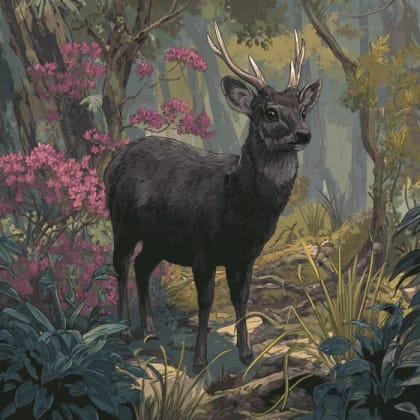
Malagasy giant rat
Hypogeomys antimena
The Malagasy giant rat is a big, fluffy rodent from Madagascar! It loves to dig and find tasty roots and fruits in its forest home. These special rats are very friendly and curious.
Hábitat: Forests
The Malagasy giant rat has a distinct appearance with large ears, big eyes, and powerful, long hind legs designed for hopping. Its soft fur is grey-brown on top, fading to white underneath, and it has a long, mostly hairless tail.
Categoría
MamíferosRareza
Rare
Peligro
1/5 · Muy bajo
Snaps
¡Sé la primera persona en hacer un snap!
Malagasy giant rats can leap over one meter, almost like a mini kangaroo!
They often clean each other's fur, a sign of their strong family bonds!
They only live in a tiny part of Madagascar, making them super rare!
This rat is one of the largest rodents in the world!
Malagasy giant rat can leap like a rabbit because its powerful hind legs help it escape danger quickly.
Malagasy giant rat can dig intricate tunnel systems that provide safe homes and nurseries for its family.
Malagasy giant rat has big ears and eyes that help them find food and spot predators in the dark forest.
Malagasy giant rat can stay with the same partner for life, raising babies together in their shared burrow.
They munch on plants, finding fruits, leaves, and roots to keep their energy up!
Diferencias por edad: Young rats drink mother's milk and gradually start eating solid plant foods.

Cryptoprocta ferox
Its main natural predator in the Malagasy forests.
Tyto alba
Hunts the giant rat, especially vulnerable young, from the air.
Felis catus
An introduced predator, posing a significant threat to populations.
Peludo describe a los animales que poseen una cubierta densa de pelo o pelaje suave.
Los animales sociales viven en grupos organizados, cooperando para obtener beneficios de supervivencia como la búsqueda de alimento, la defensa y la cría de descendencia.
Los animales excavadores cavan túneles y cámaras en el suelo y utilizan estas estructuras subterráneas para refugiarse, cazar o reproducirse.
Este rasgo caracteriza a los organismos cuya dieta consiste total o principalmente en material vegetal.

Los hábitats boscosos son entornos terrestres dominados por una densa cubierta arbórea, que sustentan una gran diversidad de vida animal y vegetal.

Gigante describe organismos u objetos de un tamaño significativamente mayor al promedio de su especie o tipo.

El estado de amenazado indica que es probable que una especie pase a estar en peligro de extinción en el futuro cercano si no se toman medidas efectivas de conservación.
Todavía no hay alias listados.
Peligro
1/5 · Muy bajo
Always watch from a distance and don't try to touch wild animals.
50-60 cm
1-1.5 kg
5-8 años
18 km/h
They munch on plants, finding fruits, leaves, and roots to keep their energy up!
Forests
Foraging
1-2
Acércate para separar los grupos y explorar dónde se ha fotografiado este objeto.
Los snaps recientes aparecerán aquí a medida que se añadan nuevas observaciones.