





Mandrillus
Mandrillus
Los mandriles son monos coloridos que viven en los bosques de África. Tienen caras de color azul y rojo brillantes y son conocidos por su naturaleza juguetona y fuertes lazos sociales con sus familias.
Hábitat: Bosques
El Mandrillus tiene una cara llamativa con surcos profundos y una raya roja brillante a lo largo de la nariz, flanqueada por crestas azules. Su trasero es igualmente vibrante con tonos de rojo, azul y púrpura, y su cuerpo está cubierto de pelaje verde oliva.
Categoría
MamíferosRareza
Common
Peligro
3/5 · Moderado
Snaps
¡Sé la primera persona en hacer un snap!
¡Los colores de los machos se vuelven aún más brillantes cuando están excitados o presumiendo!
¡Los mandriles almacenan comida en sus bolsas de las mejillas para picar más tarde!
¡Sus largos colmillos pueden crecer hasta 6.3 centímetros de largo!
¡Viven en grandes grupos llamados "hordas" que pueden tener cientos de miembros!
El Mandrillus tiene una cara y un trasero vívidos que les ayudan a enviar señales claras sobre su salud y estado a otros mandriles.
El Mandrillus puede romper nueces y semillas duras gracias a sus fuertes mandíbulas y largos y afilados colmillos.
El Mandrillus puede olfatear alimentos ocultos como raíces e insectos gracias a su bien desarrollado sentido del olfato.
Los mandriles son omnívoros, comen frutas, semillas, insectos e incluso pequeños animales.
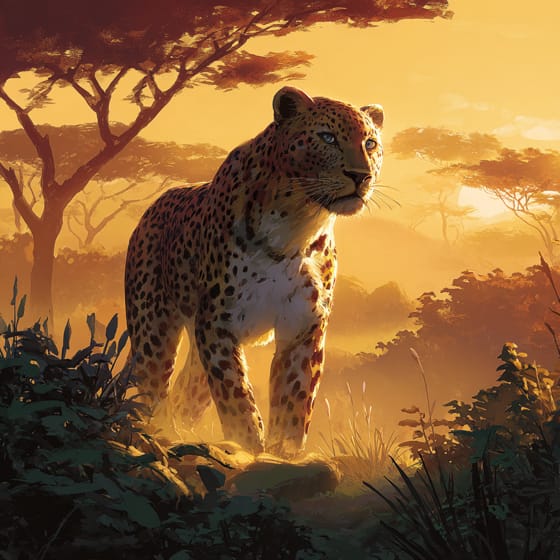
Panthera pardus
Los leopardos son un depredador natural primario de los mandriles.

Homo sapiens
Los humanos cazan mandriles por su carne y para la medicina tradicional.
Ficus ovata
Los mandriles se alimentan con frecuencia de los frutos y hojas de las higueras.
Dorylus fulvus
Los mandriles consumen varias especies de hormigas, incluidas las hormigas guerreras.
Peludo describe a los animales que poseen una cubierta densa de pelo o pelaje suave.
Los animales sociales viven en grupos organizados, cooperando para obtener beneficios de supervivencia como la búsqueda de alimento, la defensa y la cría de descendencia.
Este rasgo identifica organismos cuya dieta incluye tanto materia vegetal como animal.
Los animales arborícolas viven principalmente en los árboles, utilizándolos como refugio, alimento y protección contra los depredadores.

Colorido describe a organismos u objetos que exhiben una amplia variedad de colores brillantes y distintivos.

Los hábitats boscosos son entornos terrestres dominados por una densa cubierta arbórea, que sustentan una gran diversidad de vida animal y vegetal.

Los animales diurnos están activos principalmente durante el día y suelen descansar o dormir por la noche.

Este rasgo identifica a los organismos que exhiben una rapidez excepcional en sus movimientos para cazar, escapar o desplazarse.

El estado de peligro de extinción indica que una especie corre un riesgo muy alto de extinguirse en estado silvestre en un futuro próximo.
Peligro
3/5 · Moderado
Los mandriles son animales salvajes y deben ser admirados desde la distancia.
La forma más fácil de identificar a Mandrillus es usar la aplicación de identificación de naturaleza Snappit.
60-95 cm
10-37 kg
20-30 años
40 km/h
Los mandriles son omnívoros, comen frutas, semillas, insectos e incluso pequeños animales.
Bosques
Forrajeo
Acércate para separar los grupos y explorar dónde se ha fotografiado este objeto.
Los snaps recientes aparecerán aquí a medida que se añadan nuevas observaciones.
Llévate el descubrimiento
Haz una foto con Snappit, identifica la especie y guarda el hallazgo en tu colección.




.jpg&width=800)

.JPG&width=800)



.jpg&width=800)
