

Many-Spotted Tiger Moth
hypsocompe permaculata
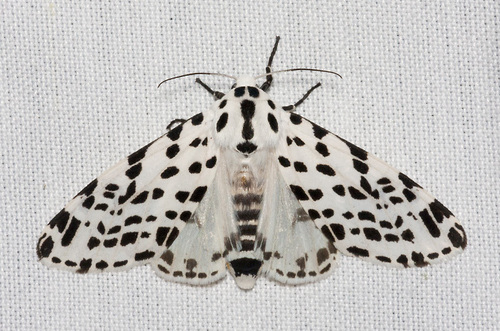
The Many-Spotted Tiger Moth (Hypsocompe permaculata) is an exquisite lepidopteran native to the diverse habitats of Southern Africa. Belonging to the Erebidae family, this moth is renowned for its striking visual appearance, which features a complex array of dark spots peppered across pale, creamy wings. This bold pattern is not just for show; it serves as a powerful warning to potential predators of the insect's unpalatability, a defense mechanism reinforced by toxins sequestered during its larval stage. In nature, these moths play a vital role as pollinators and serve as a fascinating example of evolutionary adaptation in the insect world. Spotting one of these intricately patterned creatures resting on foliage or fluttering near a light source is a true highlight for any nature enthusiast exploring the African veld. Their nocturnal habits and complex ecological interactions, particularly with bats and specific host plants, make them a captivating subject of study.
Hábitat: Mainly found in dry scrublands, open savannas, and grassy woodlands of Southern Africa.
This moth features a wingspan of approximately 3 to 5 centimeters, characterized by creamy white to pale yellow forewings densely covered in numerous small, dark brown or black spots. The hindwings are often lighter, sometimes displaying a soft yellowish hue with fewer spots. Its abdomen is robust and displays warning colors, usually bright orange or yellow banded with dark black stripes. The thorax is stout and covered in a dense, woolly collar of white hairs interspersed with dark spots, giving it a distinct, furry appearance.
Categoría
InsectosRareza
Common
Peligro
1/5 · Muy bajo
Snaps
¡Sé la primera persona en hacer un snap!
The bright orange bands on their abdomen are concealed while at rest but flashed suddenly when threatened to startle predators.
The caterpillar of this species is densely covered in stiff hairs, earning it the common nickname woolly bear.
To deter bats, these moths can generate up to 450 ultrasonic clicks per tenth of a second.
The moth possesses vibrant spotted wings and a brightly banded abdomen that warn predators of its foul taste and toxicity.
It can emit high-frequency clicks from its tymbal organs to jam the sonar systems of echolocating bats.
As caterpillars, they sequester toxic alkaloids from their host plants, making both the larvae and adult moths highly distasteful.
The larvae feed voraciously on various herbaceous plants, while the adults have reduced mouthparts and feed minimally, if at all, on nectar.
Diferencias por edad: Larvae are active leaf-chewers consuming host plant foliage, whereas the adult stage relies primarily on fat reserves accumulated during the larval stage.
Senecio madagascariensis
The larvae feed on the foliage of this common grassland plant, sequestering its defensive toxins.
Rhinolophus capensis
This aerial predator hunts adult moths at night, though the moth's ultrasonic clicks help it evade capture.
Miomantis caffra
An opportunistic predator that ambushes both caterpillars and adult moths resting on vegetation.
Aún no hay insignias de rasgos asignadas a este objeto.
Todavía no hay alias listados.
Las colecciones para este objeto aparecerán aquí a medida que se añadan más temas.
Peligro
1/5 · Muy bajo
Todavía no hay notas especiales de seguridad.
La forma más fácil de identificar a Many-Spotted Tiger Moth es usar la aplicación de identificación de naturaleza Snappit.
The larvae feed voraciously on various herbaceous plants, while the adults have reduced mouthparts and feed minimally, if at all, on nectar.
Mainly found in dry scrublands, open savannas, and grassy woodlands of Southern Africa.
Grazing
Acércate para separar los grupos y explorar dónde se ha fotografiado este objeto.
Los snaps recientes aparecerán aquí a medida que se añadan nuevas observaciones.