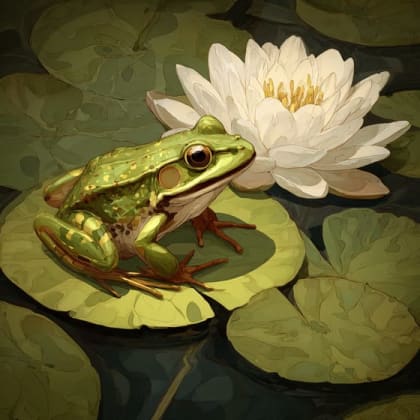
Marbled Newt
Triturus marmoratus
The Marbled Newt is a colorful little creature with a smooth body and lovely patterns. They are often found near water and love to hide among plants and rocks.
Hábitat: Wetlands
The Marbled Newt has a stunning green body covered in irregular black marbling, making it look like a mosaic. Males develop a tall, jagged black-and-yellow crest along their back during breeding season. Its belly is typically yellow or orange with dark spots.
Categoría
AnfibiosRareza
Common
Peligro
1/5 · Muy bajo
Snaps
¡Sé la primera persona en hacer un snap!
Female newts carefully fold individual leaves around each egg they lay in water!
Marbled Newts spend most of their lives hidden, often only seen during breeding season!
Newly hatched newt larvae have amazing feathery gills on the outside of their heads!
These amphibians hibernate underground or under logs to safely survive cold winters.
Marbled Newts can regrow lost limbs, tails, and even parts of their brain because of special cells that helps them recover from injuries.
Marbled Newts have glands in their skin that produce a mild toxin, which helps them deter predators from eating them.
Marbled Newts can breathe through their skin in water because their skin is permeable, helping them absorb oxygen without surfacing.
Male Marbled Newts grow a spectacular, wavy crest during breeding season that helps them attract females with an impressive display.
Marbled Newts are hunters that eat small creatures they find both in water and on land!
Diferencias por edad: Larvae eat microscopic aquatic prey, while adults hunt larger insects and worms.
Lumbricus terrestris
Adult newts forage for these worms on land.
Culex pipiens
Newts and their larvae consume mosquito larvae in water.
Natrix natrix
Grass snakes are a key predator of newts near water.
.jpg&width=800)
Ardea cinerea
Herons opportunistically prey on newts found in ponds.
Los animales solitarios viven solos durante la mayor parte de su vida y solo interactúan con otros para aparearse o cuidar de sus crías.
El camuflaje describe a los organismos que poseen colores o patrones que les permiten mezclarse con su entorno.
Colorido describe a organismos u objetos que exhiben una amplia variedad de colores brillantes y distintivos.
Este rasgo identifica a los organismos cuya dieta consiste principalmente en insectos y otros pequeños invertebrados.

Este rasgo de hábitat identifica especies que se encuentran en humedales, que son áreas de tierra saturadas de agua, ya sea permanente o estacionalmente, e incluyen marismas, pantanos y ciénagas.

Este rasgo caracteriza a los organismos con una esperanza de vida excepcionalmente larga en comparación con otros de su especie.

Los hábitats acuáticos abarcan entornos donde los organismos viven principalmente en el agua, incluidos océanos, ríos, lagos y humedales.

Los animales nocturnos están principalmente activos durante la noche, y suelen descansar o dormir durante el día.

El estado de peligro de extinción indica que una especie corre un riesgo muy alto de extinguirse en estado silvestre en un futuro próximo.
Todavía no hay alias listados.
Peligro
1/5 · Muy bajo
Always watch where you step near water to keep newts safe.
13-17 cm
0.01-0.03 kg
8-15 años
1.5 km/h
Marbled Newts are hunters that eat small creatures they find both in water and on land!
Wetlands
Foraging
150-400
Acércate para separar los grupos y explorar dónde se ha fotografiado este objeto.
Los snaps recientes aparecerán aquí a medida que se añadan nuevas observaciones.