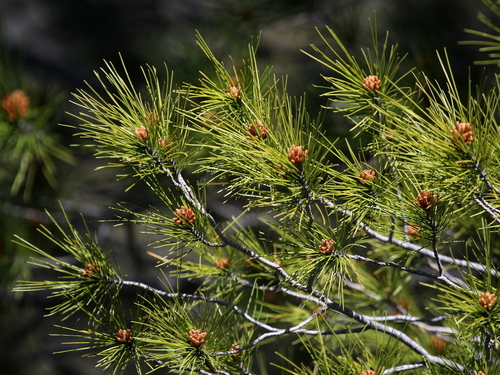


Mediterranean juniper
Juniperus turbinata
The Mediterranean juniper is a small, bushy plant that grows in warm, sunny places. Its green leaves are like tiny needles, and it produces small, round berries that are loved by birds.
Hábitat: Coastal areas
The Mediterranean juniper is a dense, evergreen shrub or small tree with a conical or columnar shape. It has distinctive reddish-brown bark that peels in strips and tiny, scale-like leaves. Its small, round 'berries' start green and ripen to a dark purplish-black color.
Categoría
PlantasRareza
Common
Peligro
1/5 · Muy bajo
Snaps
¡Sé la primera persona en hacer un snap!
Ancient people used juniper wood to build strong boats that lasted a long time.
Its small, dark 'berries' are actually tiny cones that many birds love to eat!
The fragrant wood of this tree smells amazing and helps keep insects away!
This super tough tree can live for hundreds of years, like a living landmark!
Mediterranean juniper has deep roots that help it find water in very dry, rocky places to survive.
Mediterranean juniper can grow on barren land, helping stabilize soil and allow other plants to grow.
Mediterranean juniper has special adaptations to tolerate salty air, helping it thrive near the sea.
Turdus merula
Its 'berries' provide a vital food source for these birds.

Capra aegagrus
Wild goats browse on its leaves and young shoots.
Phloeosinus aubei
Larvae tunnel and feed within the juniper's wood.
Lanius senator
Its dense canopy provides safe nesting and hunting perches.
Las plantas aromáticas producen y emiten compuestos orgánicos volátiles fragantes, a menudo como defensa o para atraer a los polinizadores.
Un arbusto es una planta leñosa más pequeña que un árbol, típicamente con múltiples tallos que se ramifican desde o cerca del suelo.
Las plantas coníferas suelen ser de hoja perenne, con agujas o escamas y conos reproductivos.
Las plantas de hoja perenne conservan su follaje durante todo el año, sin perder nunca todas sus hojas a la vez.

Las plantas frutales producen frutos, que son los ovarios maduros de las plantas con flores que contienen semillas.

Las plantas tolerantes a la sequía pueden sobrevivir y florecer en condiciones de escasa disponibilidad de agua.

Las plantas comestibles son aquellas partes de una planta que se consideran seguras para el consumo humano.

Este rasgo caracteriza a los organismos con una esperanza de vida excepcionalmente larga en comparación con otros de su especie.

Los hábitats costeros son entornos dinámicos situados a lo largo de la interfaz entre la tierra y el mar, influenciados por las mareas, las olas y el agua salada.

Describe una especie cuya presencia y papel tienen un efecto desproporcionadamente grande en su entorno.
Todavía no hay alias listados.
Peligro
1/5 · Muy bajo
Don't eat the berries without asking an adult, as some plants can be tricky!
200-1000 cm
100-500 cm
Late winter to early spring
No
Leve
Perenne
Viento
Coastal areas
Acércate para separar los grupos y explorar dónde se ha fotografiado este objeto.
Los snaps recientes aparecerán aquí a medida que se añadan nuevas observaciones.