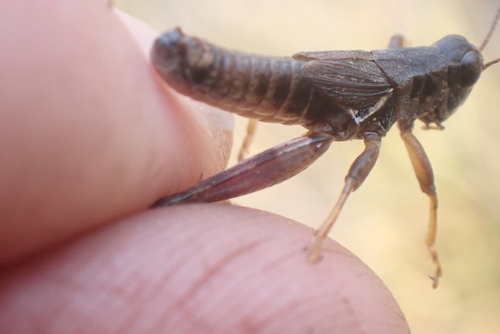





Melanoplus Molothrus
melanoplus molothrus
¡El Melanoplus Molothrus es un saltamontes vibrante conocido por sus saltos juguetones! A los niños les encantará ver a estas pequeñas criaturas saltar en la hierba.
Hábitat: Campos abiertos, pastizales y praderas.
El Melanoplus Molothrus es un saltamontes robusto, típicamente de 25-35 mm de largo, a menudo mostrando verdes y marrones terrosos. Presenta un prominente 'espolón' espinoso entre sus patas delanteras y sutiles bandas negras en sus potentes patas traseras, lo que lo hace visualmente distintivo.
Categoría
InsectosRareza
Común
Peligro
1/5 · Muy bajo
Snaps
¡Sé la primera persona en hacer un snap!
Las hembras de saltamontes ponen sus huevos bajo tierra en una cápsula espumosa, protegiéndolos durante el invierno.
¡Sus largas antenas son como súper sensores, ayudándoles a orientarse y detectar cambios!
¡Oyen sonidos usando órganos especiales llamados tímpanos, ubicados en su abdomen, no en su cabeza!
A diferencia de las mariposas, los saltamontes pasan por una metamorfosis incompleta, ¡lo que significa que las ninfas jóvenes parecen adultos pequeños!
Melanoplus Molothrus puede lanzarse alto en el aire gracias a sus poderosas patas traseras, lo que le ayuda a escapar de los depredadores rápidamente.
Melanoplus Molothrus tiene una coloración corporal que coincide perfectamente con la hierba y las hojas, lo que les ayuda a esconderse de las aves hambrientas.
Melanoplus Molothrus puede frotar sus patas y alas para producir sonidos chirriantes, lo que les ayuda a encontrar pareja.
Los Melanoplus Molothrus son herbívoros, alimentándose de hojas y pastos que encuentran en su hábitat.

Passer domesticus
Un ave común que con frecuencia depreda saltamontes.
Peromyscus maniculatus
Pequeños mamíferos como los ratones buscan insectos como parte de su dieta.

Dactylis glomerata
Se alimenta de las hojas de esta especie de pasto muy extendida.

Trifolium pratense
Le gusta mordisquear las hojas de esta planta con flores común.
Los animales solitarios viven solos durante la mayor parte de su vida y solo interactúan con otros para aparearse o cuidar de sus crías.
Colorido describe a organismos u objetos que exhiben una amplia variedad de colores brillantes y distintivos.
Este rasgo caracteriza a los organismos cuya dieta consiste total o principalmente en material vegetal.
Los hábitats de pastizales son biomas terrestres dominados por pastos y plantas herbáceas, que sustentan a una variedad de animales de pastoreo.
Los animales diurnos están activos principalmente durante el día y suelen descansar o dormir por la noche.
Peligro
1/5 · Muy bajo
Todavía no hay notas especiales de seguridad.
Busca seis patas, antenas, tres secciones en el cuerpo y la forma de las alas. Los escarabajos tienen las alas delanteras endurecidas; las moscas solo tienen un par que funciona. Los insectos diminutos pueden necesitar un primer plano antes de que se vea su grupo. Identificador de insectos: sube una foto y compara los detalles visibles.
40-60 mm
25-35 mm
60-120 días
5 km/h
Los Melanoplus Molothrus son herbívoros, alimentándose de hojas y pastos que encuentran en su hábitat.
Campos abiertos, pastizales y praderas.
Búsqueda De Alimento
Acércate para separar los grupos y explorar dónde se ha fotografiado este objeto.
Los snaps recientes aparecerán aquí a medida que se añadan nuevas observaciones.
Llévate el descubrimiento
Haz una foto con Snappit, identifica la especie y guarda el hallazgo en tu colección.