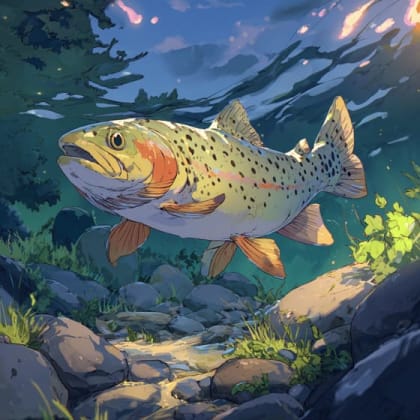
Melanotaenia splendida
Melanotaenia splendida
El pez arcoíris espléndido es un pez colorido al que le encanta nadar en grupos. Tiene colores brillantes que pueden hacer que parezca un pequeño arcoíris en el agua.
Hábitat: Ríos y arroyos de agua dulce
La Melanotaenia splendida es un pez alargado y de colores brillantes, que a menudo exhibe escamas iridiscentes y relucientes de color rojo, naranja, amarillo, azul o verde. Tiene dos aletas dorsales distintas y una cola bifurcada, y los machos suelen ser más vibrantes que las hembras.
Categoría
PecesRareza
Common
Peligro
1/5 · Muy bajo
Snaps
¡Sé la primera persona en hacer un snap!
¡Los machos de pez arcoíris realizan vibrantes danzas de colores para impresionar a posibles parejas!
¡Algunos pueden sobrevivir en agua mucho más cálida o fría de lo normal!
¡Estos peces son conocidos como 'Peces Arcoíris' por sus deslumbrantes y cambiantes colores!
¡Son excelentes nadadores, navegando por las rápidas corrientes de los ríos con sorprendente facilidad!
La Melanotaenia splendida tiene colores brillantes y cambiantes que ayudan a los machos a atraer parejas y definir territorios.
La Melanotaenia splendida tiene un cuerpo elegante y en forma de torpedo que les ayuda a moverse rápidamente para escapar de los depredadores o atrapar comida.
La Melanotaenia splendida puede tolerar diferentes niveles de oxígeno en el agua, lo que les permite prosperar en diversos entornos de agua dulce.
Estos pequeños peces son omnívoros, mordisqueando pequeños insectos, algas y trozos de plantas que encuentran.
Platalea regia
Las espátulas cazan peces pequeños en hábitats de agua dulce poco profundas.
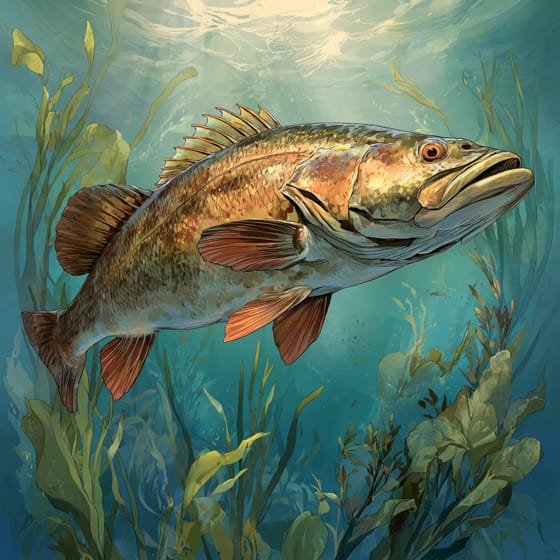
Lates calcarifer
El barramundi juvenil depreda peces más pequeños como los peces arcoíris.
Daphnia pulex
Los peces arcoíris se alimentan activamente de estos diminutos crustáceos.
Chironomus plumosus
Las larvas de mosquitos son una fuente de alimento común para estos peces.
Los animales sociales viven en grupos organizados, cooperando para obtener beneficios de supervivencia como la búsqueda de alimento, la defensa y la cría de descendencia.
Este rasgo identifica organismos cuya dieta incluye tanto materia vegetal como animal.
Colorido describe a organismos u objetos que exhiben una amplia variedad de colores brillantes y distintivos.
Los hábitats de agua dulce incluyen entornos acuáticos no salinos como ríos, lagos, estanques y humedales, vitales para numerosas especies.

Los animales diurnos están activos principalmente durante el día y suelen descansar o dormir por la noche.

Este rasgo identifica a los organismos que exhiben una rapidez excepcional en sus movimientos para cazar, escapar o desplazarse.

Los hábitats acuáticos abarcan entornos donde los organismos viven principalmente en el agua, incluidos océanos, ríos, lagos y humedales.
Peligro
1/5 · Muy bajo
Siempre miren dónde pisan cerca del agua para mantenerse seguros y secos.
La forma más fácil de identificar a Melanotaenia splendida es usar la aplicación de identificación de naturaleza Snappit.
8-15 cm
0.01-0.05 kg
3-5 años
Estos pequeños peces son omnívoros, mordisqueando pequeños insectos, algas y trozos de plantas que encuentran.
5 km/h
Ríos y arroyos de agua dulce
Forrajeo
Acércate para separar los grupos y explorar dónde se ha fotografiado este objeto.
Los snaps recientes aparecerán aquí a medida que se añadan nuevas observaciones.
Llévate el descubrimiento
Haz una foto con Snappit, identifica la especie y guarda el hallazgo en tu colección.