

Microcystis Aeruginosa
microcystis aeruginosa
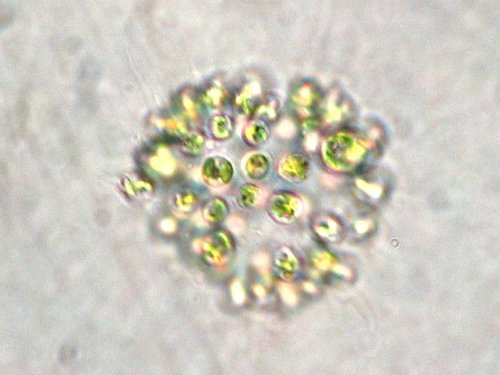
Microcystis aeruginosa es una cianobacteria de agua dulce ubicua, a menudo notoria por su capacidad de formar floraciones algales extensas y dañinas (FAN) en ambientes acuáticos ricos en nutrientes. Aunque individualmente microscópicas, estas bacterias se agregan en colonias visibles, creando natas verdes o verde-azuladas en la superficie del agua. Estas floraciones no son meramente antiestéticas; pueden producir potentes toxinas llamadas microcistinas, que plantean riesgos significativos para la salud de humanos, ganado y vida silvestre, y pueden afectar gravemente los ecosistemas acuáticos al agotar el oxígeno y bloquear la luz solar. Comprender Microcystis aeruginosa es crucial para gestionar la calidad del agua y mitigar las consecuencias ambientales y de salud pública de la eutrofización.
Hábitat: Esta cianobacteria se encuentra típicamente en cuerpos de agua dulce eutróficos (ricos en nutrientes), cálidos y relativamente quietos, como lagos, estanques, embalses y ríos de curso lento.
Las colonias de Microcystis aeruginosa aparecen como agregaciones macroscópicas, que van desde pequeños puntos granulares hasta grandes grupos de forma irregular o extensas esteras superficiales. Estas colonias son típicamente verdes o verde-azuladas, a veces de aspecto marrón verdoso, y tienen una textura gelatinosa o espumosa que flota en el agua. Las células individuales son esféricas u ovoides, miden de 3 a 8 micrómetros de diámetro, y están densamente empaquetadas dentro de una vaina mucilaginosa, lo que contribuye a la apariencia flotante y a menudo turbia de la colonia.
Categoría
AnimalRareza
Común
Peligro
1/5 · Muy bajo
Snaps
¡Sé la primera persona en hacer un snap!
Microcystis aeruginosa es una de las causas más comunes de floraciones algales nocivas (FAN) en cuerpos de agua dulce en todo el mundo.
Las floraciones de Microcystis a menudo contribuyen al agotamiento de oxígeno (hipoxia) en los cuerpos de agua cuando las grandes masas de bacterias mueren y se descomponen, dañando a los peces y otras formas de vida acuática.
Las toxinas producidas por Microcystis, llamadas microcistinas, son potentes hepatotoxinas que pueden causar daño hepático grave en animales y humanos.
Estas cianobacterias pueden controlar su flotabilidad usando vesículas de gas, lo que les permite moverse verticalmente en la columna de agua para optimizar la exposición a la luz y la absorción de nutrientes.
Microcystis aeruginosa es un fotoautótrofo, produciendo su propio alimento a través de la fotosíntesis al convertir la luz solar, el dióxido de carbono y los nutrientes inorgánicos en energía y materia orgánica.
Aún no hay insignias de rasgos asignadas a este objeto.
Todavía no hay alias listados.
Las colecciones para este objeto aparecerán aquí a medida que se añadan más temas.
Peligro
1/5 · Muy bajo
Todavía no hay notas especiales de seguridad.
La forma más fácil de identificar a Microcystis Aeruginosa es usar la aplicación de identificación de naturaleza Snappit.
0 cm
Microcystis aeruginosa es un fotoautótrofo, produciendo su propio alimento a través de la fotosíntesis al convertir la luz solar, el dióxido de carbono y los nutrientes inorgánicos en energía y materia orgánica.
Esta cianobacteria se encuentra típicamente en cuerpos de agua dulce eutróficos (ricos en nutrientes), cálidos y relativamente quietos, como lagos, estanques, embalses y ríos de curso lento.
Fotosíntesis, Absorción De Nutrientes
Acércate para separar los grupos y explorar dónde se ha fotografiado este objeto.
Los snaps recientes aparecerán aquí a medida que se añadan nuevas observaciones.
Llévate el descubrimiento
Haz una foto con Snappit, identifica la especie y guarda el hallazgo en tu colección.