Moreton Bay fig
Ficus macrophylla
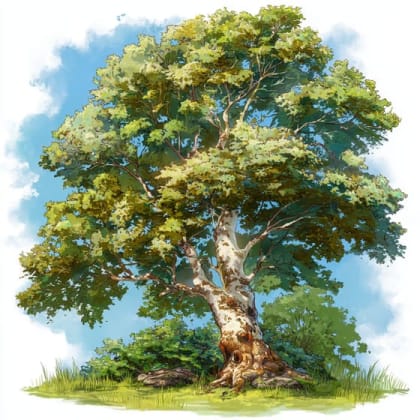
The Moreton Bay fig is a big, beautiful tree with wide branches and large, glossy leaves. It can grow very tall and provides shade for people and animals alike.
Hábitat: Urban areas
The Moreton Bay fig has a colossal, spreading canopy of glossy, dark green leaves atop a massive trunk with dramatic buttress roots. Its bark is smooth grey, and it produces small, purple-red figs hidden amongst the foliage, often with aerial roots descending from branches.
Categoría
ÁrbolesRareza
Common
Peligro
1/5 · Muy bajo
Snaps
¡Sé la primera persona en hacer un snap!
Each fig you see is actually hundreds of tiny flowers growing on the inside!
Its strong roots can grow so thick and wide they look like giant walls around the tree!
Some Moreton Bay figs can weigh as much as 10 elephants, making them super heavy!
This tree's leaves stay green all year long, providing constant shade and beauty!
Moreton Bay fig has enormous buttress roots that provide incredible stability for its giant size, preventing it from toppling over.
This fig can grow as a 'strangler' by germinating on other trees, sending roots down to the ground, eventually outcompeting its host for light.
Moreton Bay fig has a special partnership with a tiny fig wasp that helps it reproduce by pollinating its unique, inside-out flowers (figs).
Pleistodontes imperialis
essential for reproduction
Pteropus poliocephalus
consumes figs, disperses seeds
Macropygia phasianella
feeds on figs, helps dispersal
Chalcophaps longirostris
relies on figs for food
Las plantas ornamentales se cultivan principalmente por su atractivo estético, embelleciendo paisajes y jardines con su atractivo follaje, flores o forma.
Las plantas tolerantes a la sombra están adaptadas para crecer y prosperar en áreas con bajos niveles de luz, requiriendo menos luz solar directa.
Las plantas de hoja perenne conservan su follaje durante todo el año, sin perder nunca todas sus hojas a la vez.
Las plantas frutales producen frutos, que son los ovarios maduros de las plantas con flores que contienen semillas.

Los árboles de hoja ancha son angiospermas caracterizadas por hojas planas y anchas que típicamente se caen anualmente en climas templados.

Las plantas comestibles son aquellas partes de una planta que se consideran seguras para el consumo humano.

Este rasgo caracteriza a los organismos con una esperanza de vida excepcionalmente larga en comparación con otros de su especie.

Describe una especie cuya presencia y papel tienen un efecto desproporcionadamente grande en su entorno.

Gigante describe organismos u objetos de un tamaño significativamente mayor al promedio de su especie o tipo.

Esta característica de hábitat indica especies que pueden coexistir con los humanos en entornos urbanos y suburbanos, utilizando estructuras artificiales y espacios verdes.
Todavía no hay alias listados.
Peligro
1/5 · Muy bajo
Stay on paths and don't climb trees without an adult's help.
30-60 m
30-60 m
Sí
100-2000 cm
100-300 años
Urban areas
Fig (syconium)
Medio
Acércate para separar los grupos y explorar dónde se ha fotografiado este objeto.
Los snaps recientes aparecerán aquí a medida que se añadan nuevas observaciones.