






mousebird
Coliidae
Mousebirds are small, colorful birds that love to hop around in trees. They have long tails and can often be seen hanging upside down while they eat fruits and leaves.
Hábitat: Forests
The mousebird is a small, slender bird with a distinctive crest on its head and an extremely long, stiff tail, often making up half its total length. They have soft, dull grey-brown plumage, sometimes with a touch of olive, blending seamlessly into their arboreal habitats. Their appearance, combined with their scuttling movements, gives them their mouse-like name.
Categoría
AvesRareza
Common
Peligro
1/5 · Muy bajo
Snaps
¡Sé la primera persona en hacer un snap!
Mousebirds are rare birds that regurgitate food to feed other adults!
They often eat in a head-down position, which is unusual for birds!
They use strong claws to hold onto fruit like tiny hands while feeding.
Young mousebirds leave the nest early but are still fed by their diligent parents!
Mousebirds can rotate their outer toes forward and backward that helps them cling to branches in any direction.
Mousebirds have an incredibly long, stiff tail that helps them balance perfectly while climbing, even upside down.
Mousebirds can enter a temporary torpor state that helps them save energy on cold nights or when food is scarce.
They are fruit and plant-eaters, feasting on berries, leaves, and flowers in Africa.
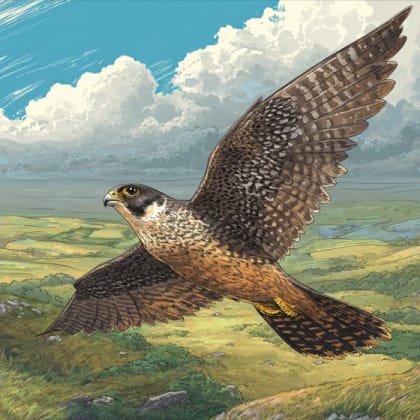
Falco peregrinus
Swift predator of small birds, including mousebirds.
Bubo africanus
Nocturnal owl that preys on many small animals and birds.
Ficus sycomorus
Mousebirds eagerly feast on the abundant fruit of this fig tree.
Acacia karroo
Mousebirds consume the buds, flowers, and pods of this common tree.
Diospyros mespiliformis
Mousebirds enjoy the sweet fruits of the Jackalberry tree.
Describe a los animales, principalmente aves, que poseen una cubierta de plumas.
Los animales sociales viven en grupos organizados, cooperando para obtener beneficios de supervivencia como la búsqueda de alimento, la defensa y la cría de descendencia.
Los animales arborícolas viven principalmente en los árboles, utilizándolos como refugio, alimento y protección contra los depredadores.
Colorido describe a organismos u objetos que exhiben una amplia variedad de colores brillantes y distintivos.

Este rasgo caracteriza a los organismos cuya dieta consiste total o principalmente en material vegetal.

Los hábitats boscosos son entornos terrestres dominados por una densa cubierta arbórea, que sustentan una gran diversidad de vida animal y vegetal.

Los animales diurnos están activos principalmente durante el día y suelen descansar o dormir por la noche.

Describe organismos que transfieren polen, permitiendo la fertilización y reproducción de las plantas.
Todavía no hay alias listados.
Peligro
1/5 · Muy bajo
Always watch birds from a distance and don't try to touch them.
29-38 cm
20-25 cm
0.03-0.07 kg
5-10 años
40 km/h
They are fruit and plant-eaters, feasting on berries, leaves, and flowers in Africa.
Forests
Foraging
Acércate para separar los grupos y explorar dónde se ha fotografiado este objeto.
Los snaps recientes aparecerán aquí a medida que se añadan nuevas observaciones.





.jpg&width=800)





.jpg&width=800)
