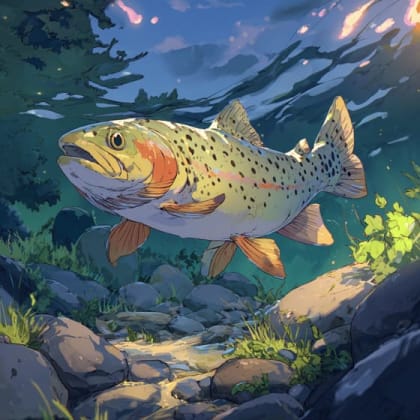
Mummichog
fundulus heteroclitus
El mummichog es un pez pequeño que nada en las aguas poco profundas de marismas y estuarios. ¡Estos coloridos pececillos son divertidos de observar mientras se mueven buscando comida!
Hábitat: Los mummichogs viven en marismas costeras, estuarios y marismas intermareales.
El Mummichog tiene un cuerpo robusto, típicamente de color verde oliva a marrón en la parte superior con un vientre amarillento. Los machos muestran barras verticales oscuras y aletas de color amarillo-naranja brillante durante la temporada de cría, lo que los diferencia de las hembras, que son más uniformemente moteadas.
Categoría
PecesRareza
Common
Peligro
0/5 · Sin peligro conocido
Snaps
9
¡Las hembras de Mummichog ponen sus huevos en nidos escondidos entre la hierba de la marisma!
Los Mummichogs son peces resistentes, ¡a menudo utilizados por los científicos para estudiar los efectos de la contaminación!
¡Estos peces pueden cambiar el color de su cuerpo para mimetizarse perfectamente con su entorno!
¡Pueden respirar aire brevemente usando su piel, si saltan fuera del agua!
Estos pequeños peces son omnívoros, comiendo pequeños insectos, crustáceos e incluso trozos de plantas en aguas poco profundas.
Los animales sociales viven en grupos organizados, cooperando para obtener beneficios de supervivencia como la búsqueda de alimento, la defensa y la cría de descendencia.
Colorido describe a organismos u objetos que exhiben una amplia variedad de colores brillantes y distintivos.
Los animales diurnos están activos principalmente durante el día y suelen descansar o dormir por la noche.
Los hábitats acuáticos abarcan entornos donde los organismos viven principalmente en el agua, incluidos océanos, ríos, lagos y humedales.

Los hábitats marinos abarcan todos los entornos de agua salada de los océanos de la Tierra, sustentando una inmensa diversidad de vida acuática.
Peligro
0/5 · Sin peligro conocido
Todavía no hay notas especiales de seguridad.
La forma más fácil de identificar a Mummichog es usar la aplicación de identificación de naturaleza Snappit.
7.5-15 cm
0.005-0.03 kg
2-5 años
Estos pequeños peces son omnívoros, comiendo pequeños insectos, crustáceos e incluso trozos de plantas en aguas poco profundas.
8 km/h
Los mummichogs viven en marismas costeras, estuarios y marismas intermareales.
Búsqueda De Alimento
Acércate para separar los grupos y explorar dónde se ha fotografiado este objeto.

Maryland, US
Puedes ver águila Pescadora, Pato y Mosca Linterna Moteada.
Ver guía →

District of Columbia, US
Puedes ver Mosca Linterna Moteada y Ardilla Gris Oriental.
Ver guía →

District of Columbia, US
Puedes ver Pato, Ardilla Gris Oriental y Gorrión Común.
Ver guía →

District of Columbia, US
Puedes ver Ardilla Gris Oriental, Mosca Linterna Moteada y Pato.
Ver guía →

District of Columbia, US
Puedes ver Ardilla Gris Oriental, Mosca Linterna Moteada y Pato.
Ver guía →

District of Columbia, US
Puedes ver Mosca Linterna Moteada, Ardilla Gris Oriental y Gorrión Común.
Ver guía →
Llévate el descubrimiento
Haz una foto con Snappit, identifica la especie y guarda el hallazgo en tu colección.