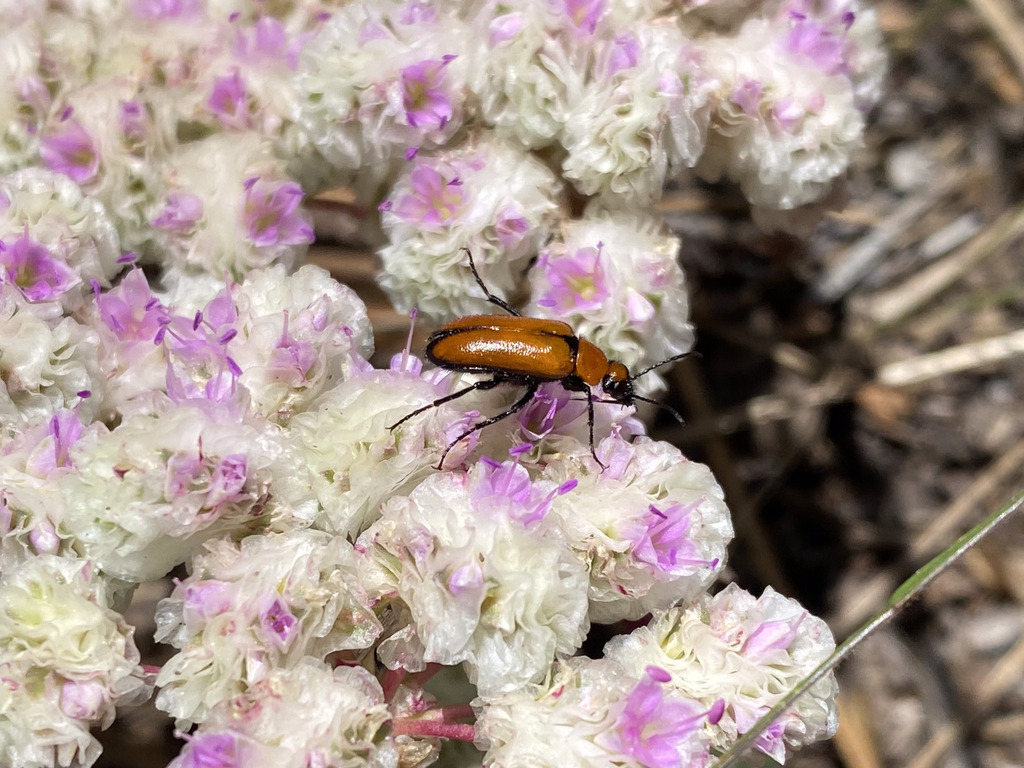





Nemognatha scutellaris
Nemognatha scutellaris
La Nemognatha scutellaris es un tipo especial de escarabajo con un cuerpo brillante y colorido. Le encanta esconderse en las flores y a menudo se encuentra en jardines, ¡lo que lo convierte en un pequeño amigo divertido de avistar al explorar la naturaleza!
Hábitat: Jardines
La Nemognatha scutellaris tiene una probóscide distintiva, larga y similar a un snorkel que se extiende desde su cabeza. Su cuerpo a menudo muestra una cabeza y tórax de color amarillo anaranjado, con élitros negros contrastantes y un escutelo negro, lo que la hace destacar visualmente en las flores.
Categoría
InsectosRareza
Común
Peligro
1/5 · Muy bajo
Snaps
¡Sé la primera persona en hacer un snap!
¡Pertenece a una familia de escarabajos llamados 'escarabajos de la ampolla'!
¡Las larvas son maestras en colarse en los nidos de abejas!
A menudo se parecen a otros insectos para engañar a los depredadores.
¡Este escarabajo tiene una pieza bucal más larga que su cabeza!
La Nemognatha scutellaris tiene una probóscide súper larga que les ayuda a alcanzar el néctar profundo en flores tubulares, dándoles acceso a alimentos especiales.
Las larvas de Nemognatha scutellaris pueden viajar como autoestopistas en abejas desprevenidas porque esta estrategia les ayuda a encontrar una guardería y un suministro de alimentos seguros.
La Nemognatha scutellaris a menudo puede imitar a las abejas en apariencia y movimiento, lo que les ayuda a evitar a los depredadores.
¡Los adultos sorben néctar dulce y mordisquean polen de las flores, pero las larvas se deleitan con las provisiones de las abejas!
Diferencias por edad: Las larvas (triungulinas) son parasitarias, buscando nidos de abejas para alimentarse de su polen almacenado y a veces de las larvas o huevos de las abejas.

Helianthus annuus
Los adultos se alimentan de su néctar y polen.
Andrena erythrogastra
Las larvas se desarrollan en su nido, consumiendo provisiones.
Solidago canadensis
Proporciona néctar y polen para los adultos.
Los animales solitarios viven solos durante la mayor parte de su vida y solo interactúan con otros para aparearse o cuidar de sus crías.
Colorido describe a organismos u objetos que exhiben una amplia variedad de colores brillantes y distintivos.
Este rasgo caracteriza a los organismos cuya dieta consiste total o principalmente en material vegetal.
Describe plantas que son particularmente atractivas y beneficiosas para una amplia variedad de organismos polinizadores.
Los animales diurnos están activos principalmente durante el día y suelen descansar o dormir por la noche.
Esta característica de hábitat indica especies que pueden coexistir con los humanos en entornos urbanos y suburbanos, utilizando estructuras artificiales y espacios verdes.
Describe organismos que transfieren polen, permitiendo la fertilización y reproducción de las plantas.
Todavía no hay alias listados.
Peligro
1/5 · Muy bajo
Sé amable y mira dónde pisas al explorar jardines para proteger a las pequeñas criaturas.
Busca élitros duros que se juntan en una línea por el lomo y compara después las antenas, la forma del cuerpo, las patas y las marcas. Los colores metálicos cambian mucho con la luz. Identificador de escarabajos: sube una foto y compara los detalles visibles.
12-24 mm
6-12 mm
20-40 días
¡Los adultos sorben néctar dulce y mordisquean polen de las flores, pero las larvas se deleitan con las provisiones de las abejas!
Jardines
6
Acércate para separar los grupos y explorar dónde se ha fotografiado este objeto.
Los snaps recientes aparecerán aquí a medida que se añadan nuevas observaciones.
Llévate el descubrimiento
Haz una foto con Snappit, identifica la especie y guarda el hallazgo en tu colección.