

Neuroterus Fragilis
neuroterus fragilis
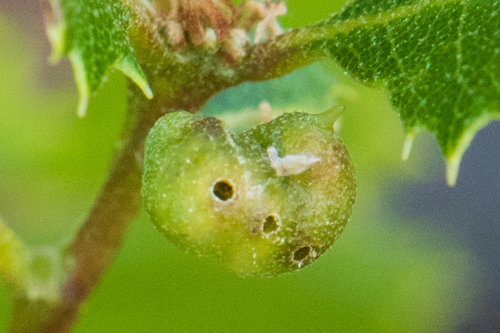
The fragile gall wasp (Neuroterus fragilis) is a tiny, highly specialized stingless wasp belonging to the family Cynipidae. This microscopic insect is famous not for its physical appearance, which is rarely seen by the average observer, but for the delicate structures it induces on its host trees. Operating as a master of biological engineering, the female wasp inserts her eggs into the leaf tissues of oaks, particularly the Blue Oak (Quercus douglasii). This action triggers a fascinating response in the tree, causing it to grow tiny, thin-walled, translucent galls that serve as both a protective fortress and a food source for the developing larvae. Despite their minuscule size, these wasps play a significant role in their local woodland ecosystems. Their intricate lifecycle, which seamlessly alternates between sexual and asexual generations, showcases the complexity of evolutionary adaptation. Observing their fragile galls provides a fascinating glimpse into the complex chemical conversations that occur between plants and insects.
Hábitat: Found in oak woodlands and chaparral habitats, specifically where blue oaks grow.
Adults of Neuroterus fragilis are extremely small, typically measuring only 1 to 2 millimeters in length. They possess a glossy, dark brown to black body, transparent wings with minimal veining, and delicate, pale-colored legs. Because of their tiny size, they are rarely identified by sight in the wild. Instead, the species is recognized by its distinctive leaf galls. These galls are small, thin-walled, spherical or oval swellings, often appearing translucent, pale green, or pinkish-cream. They are usually found clustered on the veins or blades on the underside of blue oak leaves, looking like delicate, miniature water droplets or bubbles.
Categoría
InsectosRareza
Common
Peligro
1/5 · Muy bajo
Snaps
¡Sé la primera persona en hacer un snap!
Like many gall wasps, they biochemically hijack the host tree's genes to build a customized nursery, forcing the oak to do all the work.
The galls made by Neuroterus fragilis are incredibly thin and delicate, earning the species its name 'fragilis'.
They exhibit a complex reproductive cycle where one generation reproduces sexually, and the next reproduces entirely parthenogenetically without mating.
Chemical compounds injected during egg-laying manipulate the oak's growth hormones, forcing the host tree to build a bespoke, protective nursery.
They alternate between a spring sexual generation and a winter parthenogenetic generation to maximize genetic diversity and reproductive speed.
They possess highly sensitive chemical receptors that allow them to target the exact leaf veins of specific host oak species with microscopic precision.
Larvae feed exclusively on the rich, nutritive inner tissues of the galls engineered from the host oak, while adults rarely feed at all.
Diferencias por edad: Larvae feed continuously on the specialized plant tissue within their gall, whereas the short-lived adult wasps do not feed, relying entirely on energy stored during their larval stage.
Quercus douglasii
Serves as the vital host tree where the wasp deposits eggs and induces larval galls on leaf veins.
Torymus californicus
A parasitoid wasp that drills into the delicate gall to lay its own eggs, eventually consuming the Neuroterus larva.
Polioptila caerulea
A small woodland bird that opportunistically preys upon adult wasps during their short mating flights.
Aún no hay insignias de rasgos asignadas a este objeto.
Todavía no hay alias listados.
Las colecciones para este objeto aparecerán aquí a medida que se añadan más temas.
Peligro
1/5 · Muy bajo
Todavía no hay notas especiales de seguridad.
La forma más fácil de identificar a Neuroterus Fragilis es usar la aplicación de identificación de naturaleza Snappit.
0+ cm
0+ cm
0+ kg
0+ años
1 km/h
Larvae feed exclusively on the rich, nutritive inner tissues of the galls engineered from the host oak, while adults rarely feed at all.
Found in oak woodlands and chaparral habitats, specifically where blue oaks grow.
Acércate para separar los grupos y explorar dónde se ha fotografiado este objeto.
Los snaps recientes aparecerán aquí a medida que se añadan nuevas observaciones.




















