Newts
Salamandridae
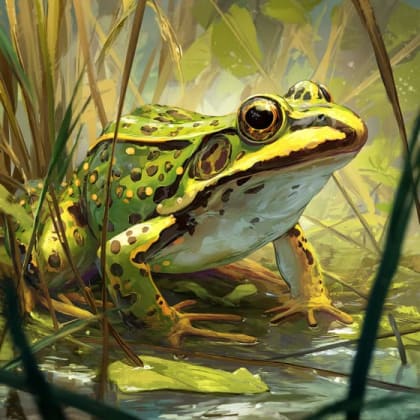
Newts are small, colorful amphibians that love to live near water. They have smooth skin and can often be seen swimming or resting on leaves in ponds and wetlands.
Hábitat: Wetlands
The Newt has a slender body, often with smooth or slightly warty skin, and a flattened tail, especially when aquatic. Their colors range from dull browns and greens to vibrant orange or yellow bellies, often with spots or markings, differing from rougher-skinned toads.
Categoría
AnfibiosRareza
Common
Peligro
1/5 · Muy bajo
Snaps
¡Sé la primera persona en hacer un snap!
A female newt can lay hundreds of tiny eggs, wrapping each one carefully in a plant leaf!
Many newts have bright orange or yellow bellies that flash to scare away hungry birds!
Newts are born with gills for water, but most grow lungs and live on land as adults!
Some newts migrate miles to find the perfect pond for breeding each year!
Newts can regrow lost limbs, tails, jaws, and even parts of their brain or eyes, that helps them recover from injuries.
Many newt species have glands in their skin that produce toxins, that helps them deter predators from eating them.
Newts can absorb oxygen through their moist skin and mouth lining, which helps them breathe underwater for long periods.
Newts are tiny hunters, eating small insects, worms, and tadpoles both in water and on land.
Diferencias por edad: Larvae eat even tinier aquatic creatures; adults expand to land insects.
.jpg&width=800)
Ardea cinerea
Common pond predator for adult newts.
Anax imperator
Dragonfly nymphs prey on newt larvae.
Lumbricus terrestris
Adult newts actively hunt earthworms on land.
Daphnia pulex
Newt larvae filter feed on tiny crustaceans like these.
Los animales solitarios viven solos durante la mayor parte de su vida y solo interactúan con otros para aparearse o cuidar de sus crías.
Colorido describe a organismos u objetos que exhiben una amplia variedad de colores brillantes y distintivos.
Este rasgo identifica a los organismos cuya dieta consiste principalmente en insectos y otros pequeños invertebrados.
Este rasgo de hábitat identifica especies que se encuentran en humedales, que son áreas de tierra saturadas de agua, ya sea permanente o estacionalmente, e incluyen marismas, pantanos y ciénagas.

Los hábitats de agua dulce incluyen entornos acuáticos no salinos como ríos, lagos, estanques y humedales, vitales para numerosas especies.

Este rasgo identifica a los organismos cuya dieta consiste total o principalmente en tejido animal.

Los animales diurnos están activos principalmente durante el día y suelen descansar o dormir por la noche.
Los organismos regenerativos poseen la capacidad de volver a desarrollar partes del cuerpo, tejidos u órganos perdidos o dañados.

El estado de peligro de extinción indica que una especie corre un riesgo muy alto de extinguirse en estado silvestre en un futuro próximo.
Todavía no hay alias listados.
Peligro
1/5 · Muy bajo
Always wash your hands after touching newts, as they can have slippery skin.
6-18 cm
0.002-0.015 kg
5-15 años
0.5 km/h
Newts are tiny hunters, eating small insects, worms, and tadpoles both in water and on land.
Wetlands
Foraging
50-400
Acércate para separar los grupos y explorar dónde se ha fotografiado este objeto.
Los snaps recientes aparecerán aquí a medida que se añadan nuevas observaciones.




.jpg&width=800)