
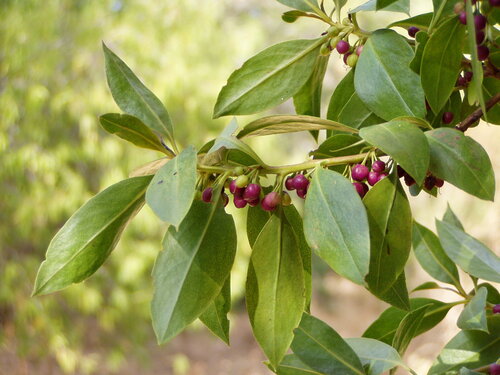


Ngaio
myoporum laetum
El Ngaio es un arbusto o árbol pequeño de hoja perenne, resistente y de crecimiento rápido, nativo de la costa de Nueva Zelanda. Ampliamente conocido por su increíble tolerancia a los fuertes vientos costeros y la niebla salina, esta especie juega un papel ecológico vital en la estabilización de dunas y acantilados. A menudo se cultiva como un seto robusto o cortavientos en jardines costeros expuestos. Aunque proporciona un excelente refugio y produce bayas favoritas de las aves nativas, casi todas las partes de la planta —especialmente las hojas— contienen 'ngaiona', un aceite esencial tóxico que protege a la planta de los herbívoros mamíferos.
Hábitat: Se encuentra comúnmente en ambientes costeros, incluyendo acantilados, dunas de arena, costas rocosas y bosques costeros de tierras bajas en toda Nueva Zelanda.
El Ngaio generalmente crece como un arbusto extendido o un árbol redondeado que alcanza alturas de 1 a 10 metros. Presenta hojas lanceoladas de color verde brillante que se sienten algo carnosas o coriáceas al tacto y están cubiertas de puntos glandulares translúcidos únicos, visibles al trasluz. En primavera y verano, produce pequeñas flores blancas en forma de estrella salpicadas con distintas manchas moradas, que luego se desarrollan en frutos oblongos (drupas) suculentos de color púrpura rojizo, de unos 5 a 8 milímetros de largo.
Categoría
PlantasRareza
Común
Peligro
1/5 · Muy bajo
Snaps
¡Sé la primera persona en hacer un snap!
A pesar de sus usos medicinales y repelentes de insectos, la planta es altamente tóxica para el ganado como caballos y ovejas, causando daño hepático severo si se consume.
Históricamente, los maoríes indígenas frotaban las hojas magulladas del árbol ngaio directamente sobre su piel para repeler mosquitos y jejenes.
Los puntos translúcidos en las hojas son en realidad diminutas glándulas secretoras de aceite, haciendo que las hojas parezcan perforadas con alfileres cuando se sostienen a la luz.
El Ngaio es una planta fotosintética que fabrica sus propios compuestos orgánicos y energía utilizando la luz solar, el agua, el dióxido de carbono y los nutrientes esenciales absorbidos del suelo.
Aún no hay insignias de rasgos asignadas a este objeto.
Todavía no hay alias listados.
Las colecciones para este objeto aparecerán aquí a medida que se añadan más temas.
Peligro
1/5 · Muy bajo
Todavía no hay notas especiales de seguridad.
Empieza por la planta entera y luego compara la disposición de las hojas, sus bordes, los tallos y las flores o frutos, si los hay. Las hojas opuestas crecen en parejas; las alternas salen de una en una a lo largo del tallo. Juntos, estos detalles dicen mucho más que una sola hoja verde. Identificador de plantas: sube una foto y compara los detalles visibles.
100-1000 cm
30-80 años
El Ngaio es una planta fotosintética que fabrica sus propios compuestos orgánicos y energía utilizando la luz solar, el agua, el dióxido de carbono y los nutrientes esenciales absorbidos del suelo.
Se encuentra comúnmente en ambientes costeros, incluyendo acantilados, dunas de arena, costas rocosas y bosques costeros de tierras bajas en toda Nueva Zelanda.
Acércate para separar los grupos y explorar dónde se ha fotografiado este objeto.
Los snaps recientes aparecerán aquí a medida que se añadan nuevas observaciones.
Llévate el descubrimiento
Haz una foto con Snappit, identifica la especie y guarda el hallazgo en tu colección.

















