

Northern Arrowwood
viburnum recognitum
Northern Arrowwood (Viburnum recognitum) is a resilient, deciduous shrub native to eastern North America, renowned for its ecological value and historical significance. Flourishing in a variety of environments from stream banks to woodland edges, this plant brings seasonal beauty to its surroundings, displaying striking white flower clusters in the spring and deeply colored foliage in the autumn. Historically, Native American tribes sought out the plant's exceptionally straight young stems to craft arrow shafts, giving the species its memorable common name. Today, it remains a beloved landscape plant and a vital cornerstone of local ecosystems, providing crucial food and shelter for native wildlife.
Hábitat: Typically found in moist woodlands, swamp borders, stream banks, and thickets throughout eastern North America.
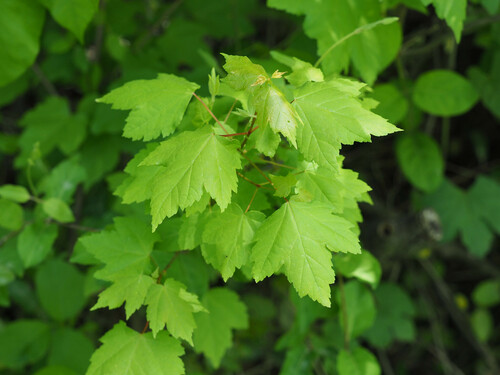
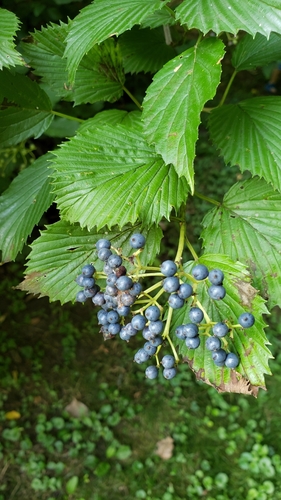
Northern Arrowwood is a dense, multi-stemmed shrub typically growing between 1.5 to 3 meters in height. It features distinctively opposite, oval to lance-shaped leaves with coarsely toothed margins and deeply impressed, straight veins that run directly to the leaf edges. In late spring to early summer, it produces showy, flat-topped cymes (clusters) of tiny, five-petaled white flowers. By late summer and fall, these blossoms give way to drooping clusters of small, fleshy drupes that mature to a rich, dark blue or bluish-black, contrasting beautifully against autumn foliage that turns vivid shades of yellow, red, and burgundy.
Categoría
PlantasRareza
Common
Peligro
1/5 · Muy bajo
Snaps
¡Sé la primera persona en hacer un snap!
Despite being a single plant, a large Northern Arrowwood shrub can act as an entire micro-ecosystem, supporting dozens of insect and bird species simultaneously.
In the autumn, its foliage acts as a natural calendar, turning stunning shades of yellow, red, and burgundy to visually signal the changing seasons.
Native American tribes prized the straight young stems of this shrub for crafting high-quality arrow shafts, which directly inspired the common name 'Arrowwood'.
Rapidly produces exceptionally straight basal shoots and suckers, which were historically favored by indigenous peoples for making arrows.
Capable of thriving in a wide range of soil conditions, from heavy, wet clay to well-drained loams, making it highly resilient to environmental shifts.
Produces highly nectar-rich floral clusters that bloom en masse, heavily attracting local bees, butterflies, and other vital pollinators.
As a photosynthetic plant, it generates its own energy using sunlight, water, and carbon dioxide from the environment.
Bombycilla cedrorum
Migratory and resident birds consume the nutrient-rich blue drupes in autumn.
Pyrrhalta viburni
An invasive beetle species that feeds heavily on the leaves, sometimes completely defoliating the shrub.
Celastrina ladon
Serves as a valuable larval host plant for the caterpillars of this early spring butterfly.
Aún no hay insignias de rasgos asignadas a este objeto.
Todavía no hay alias listados.
Las colecciones para este objeto aparecerán aquí a medida que se añadan más temas.
Peligro
1/5 · Muy bajo
Todavía no hay notas especiales de seguridad.
La forma más fácil de identificar a Northern Arrowwood es usar la aplicación de identificación de naturaleza Snappit.
150-300 cm
20-50 años
As a photosynthetic plant, it generates its own energy using sunlight, water, and carbon dioxide from the environment.
Typically found in moist woodlands, swamp borders, stream banks, and thickets throughout eastern North America.
Photosynthesis
Acércate para separar los grupos y explorar dónde se ha fotografiado este objeto.
Los snaps recientes aparecerán aquí a medida que se añadan nuevas observaciones.