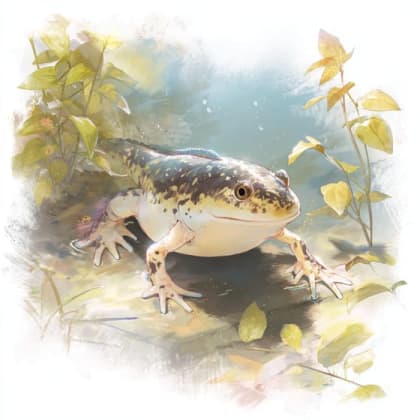
Northern Dusky Salamander
Desmognathus fuscus
The Northern Dusky Salamander is a small, slimy creature that loves to live in cool, wet places. They have smooth skin and can be found hiding under rocks or logs in the forest.
Hábitat: Forests
The Northern Dusky Salamander is dark brown or grayish, often with faint darker spots or blotches. It has a distinctive pale line extending from its eye to the corner of its jaw. Its tail is keeled, appearing somewhat flattened from top to bottom.
Categoría
AnfibiosRareza
Common
Peligro
1/5 · Muy bajo
Snaps
¡Sé la primera persona en hacer un snap!
Larvae have gills, but adults breathe through skin and lungs.
Northern Dusky Salamanders use special organs to 'smell' their surroundings.
Their sticky tongue shoots out super fast to catch unsuspecting bugs!
They can squish into tiny cracks to hide from danger!
Northern Dusky Salamander can breathe underwater and on land through its moist skin, because it has specialized pores that absorb oxygen.
Northern Dusky Salamander can drop its tail when caught by a predator, because this distraction helps it escape danger and grow a new one.
Northern Dusky Salamander has amazing mothers that guard their eggs for weeks, helping them stay safe until they hatch.
These tiny hunters eat small bugs and worms they find hiding near streams and moist places.
Diferencias por edad: Young larvae mostly eat tiny aquatic invertebrates in the water.
Thamnophis sirtalis
A common predator in its moist woodland habitat.
Micropterus salmoides
Larger fish may prey on salamanders in streams.
Sorex cinereus
Small mammals sometimes prey on ground-dwelling salamanders.
Orchesella cincta
A common small insect prey found in damp leaf litter.
Los animales solitarios viven solos durante la mayor parte de su vida y solo interactúan con otros para aparearse o cuidar de sus crías.
El camuflaje describe a los organismos que poseen colores o patrones que les permiten mezclarse con su entorno.
Este rasgo identifica a los organismos cuya dieta consiste principalmente en insectos y otros pequeños invertebrados.
Los hábitats boscosos son entornos terrestres dominados por una densa cubierta arbórea, que sustentan una gran diversidad de vida animal y vegetal.

Describe a los organismos que descomponen la materia orgánica muerta, reciclando los nutrientes de vuelta al ecosistema.

Este rasgo de hábitat identifica especies que se encuentran en humedales, que son áreas de tierra saturadas de agua, ya sea permanente o estacionalmente, e incluyen marismas, pantanos y ciénagas.

Los organismos regenerativos poseen la capacidad de volver a desarrollar partes del cuerpo, tejidos u órganos perdidos o dañados.

Los animales nocturnos están principalmente activos durante la noche, y suelen descansar o dormir durante el día.

El estado de peligro de extinción indica que una especie corre un riesgo muy alto de extinguirse en estado silvestre en un futuro próximo.
Todavía no hay alias listados.
Peligro
1/5 · Muy bajo
If you see a salamander, watch it from a distance and don't touch it, as they can be sensitive.
7.5-14 cm
0.003-0.015 kg
10-15 años
These tiny hunters eat small bugs and worms they find hiding near streams and moist places.
Forests
Ambush
15-30
270-540 días
Acércate para separar los grupos y explorar dónde se ha fotografiado este objeto.
Los snaps recientes aparecerán aquí a medida que se añadan nuevas observaciones.

New York, US
Puedes ver Eastern Red-Backed Salamander y Eastern Poison Ivy.
Ver guía →

Pennsylvania, US
Puedes ver Grey Alder, Sensitive Fern y Interrupted Clubmoss.
Ver guía →
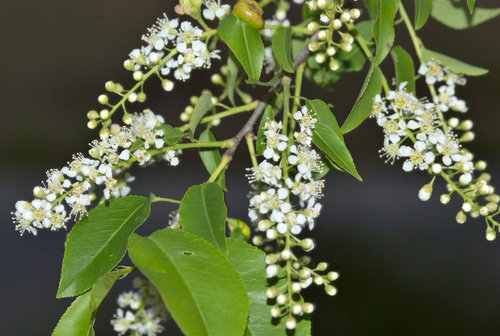
New York, US
Puedes ver Cerezo Negro y Allegheny Mountain Dusky Salamander.
Ver guía →