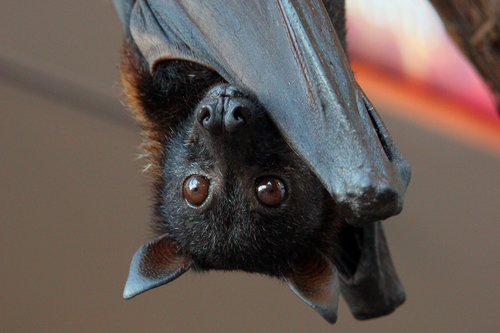


Old World Fruit Bats
pteropodidae
Old World Fruit Bats, belonging to the family Pteropodidae, are a diverse and ecologically vital group of mammals found throughout the tropical and subtropical regions of the Eastern Hemisphere. Often referred to as 'flying foxes' due to their remarkably dog-like facial features, these bats play a monumental role in their ecosystems as primary pollinators and seed dispersers. Unlike their insect-eating microbat relatives, megabats have evolved to rely on a specialized plant-based diet consisting of fruits, nectar, and pollen. Their activities are crucial for the regeneration of tropical rainforests and the survival of numerous tree species. Many species gather in immense, noisy colonies known as camps, which can number in the thousands, creating a spectacular sight as they take to the evening skies in unison to forage.
Hábitat: Found in tropical and subtropical forests, swamps, woodlands, and urban parks near fruiting trees.
Old World Fruit Bats are easily identified by their fox-like or dog-like faces, featuring large, expressive eyes and relatively simple, pointed ears that lack a tragus. They exhibit a wide range of sizes, with head-body lengths from 6 to 40 centimeters and wingspans ranging from a modest 15 centimeters to a massive 1.7 meters. Their fur is typically dense and can be shades of brown, grey, black, or even bright orange and yellow, often with a lighter mantle around the neck. Unlike microbats, most species of pteropodids possess a small claw on the second digit (index finger) of each wing, and they either completely lack a tail or have only a very short, rudimentary one.
Categoría
MamíferosRareza
Common
Peligro
1/5 · Muy bajo
Snaps
¡Sé la primera persona en hacer un snap!
Some species act as 'keystone species' in island ecosystems, where they are the sole pollinators for many local plant species.
The largest species, the Giant Golden-crowned Flying Fox, can have a wingspan reaching up to 1.7 meters.
The majority of Old World fruit bats are completely unable to echolocate, relying entirely on sight and smell to find food.
They do not eat the whole fruit; instead, they squeeze out the juice with their tongues against the roof of their mouths and discard the dry pulp.
Unlike most bats, they possess large eyes with excellent low-light vision, allowing them to navigate and locate food without relying on echolocation.
By flying long distances and excreting seeds during flight, they facilitate the reforestation of degraded landscapes.
Several species have elongated tongues tipped with brush-like papillae adapted for extracting nectar and pollen from deep flowers.
They feed primarily on the juices of tropical fruits, nectar, and pollen, using their teeth to crush pulp and spitting out the fibrous remains.
Diferencias por edad: Pups feed exclusively on maternal milk before transitioning to soft fruits as they mature.
Ficus sycomorus
Feeds on the fruit of this tree and subsequently disperses its seeds throughout the canopy.
Adansonia digitata
Pollinates the flowers of this iconic tree species during nocturnal feeding visits.
Haliaeetus leucogaster
Preys upon roosting or flying fruit bats, especially during daylight hours if they are exposed.
Aún no hay insignias de rasgos asignadas a este objeto.
Todavía no hay alias listados.
Las colecciones para este objeto aparecerán aquí a medida que se añadan más temas.
Peligro
1/5 · Muy bajo
Todavía no hay notas especiales de seguridad.
La forma más fácil de identificar a Old World Fruit Bats es usar la aplicación de identificación de naturaleza Snappit.
6+ cm
15+ cm
0.015+ kg
15+ años
40 km/h
They feed primarily on the juices of tropical fruits, nectar, and pollen, using their teeth to crush pulp and spitting out the fibrous remains.
Found in tropical and subtropical forests, swamps, woodlands, and urban parks near fruiting trees.
Acércate para separar los grupos y explorar dónde se ha fotografiado este objeto.
Los snaps recientes aparecerán aquí a medida que se añadan nuevas observaciones.













.jpg&width=800)



