

Orviedo Bellflower
campanula arvatica
The Orviedo Bellflower (Campanula arvatica) is a charming, low-growing alpine perennial endemic to the limestone cliffs and rocky crevices of northern Spain, particularly within the Cantabrian Mountains and the Picos de Europa. Belonging to the bellflower family, Campanulaceae, this hardy little plant forms dense, creeping mats that cling tenaciously to vertical rock faces and loose scree where few other plants can survive. Despite its delicate appearance, it is remarkably resilient, braving harsh mountain winds, intense UV radiation, and freezing winter temperatures.
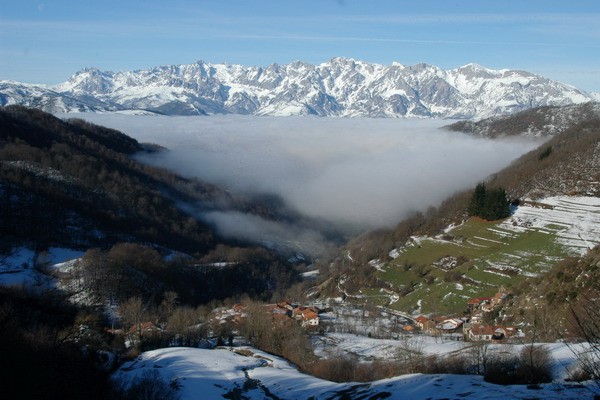
Hábitat: Found nestled in limestone rock crevices, alpine screes, and rocky pavements of high-altitude mountain ranges.
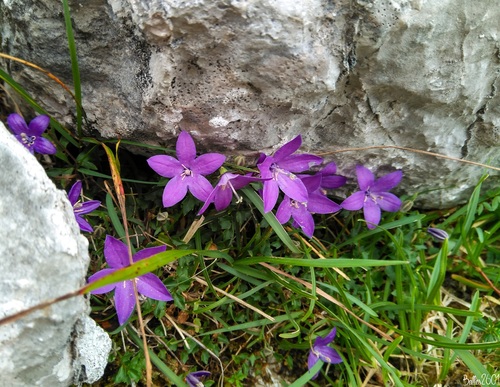
This diminutive perennial grows in low, spreading mats usually under 10 to 15 centimeters in height. Its thin, creeping stems bear small, ovate to lanceolate, slightly tooth-edged green leaves. The most striking feature is its star-shaped or upward-facing, shallowly bell-shaped flowers, which measure about 1.5 to 2.5 centimeters across. These blossoms typically display a rich, deep violet-blue hue, complete with five distinct, pointed lobes radiating outward from a pale, creamy-white center that holds a prominent pistil.
Categoría
PlantasRareza
Common
Peligro
1/5 · Muy bajo
Snaps
¡Sé la primera persona en hacer un snap!
Despite living in extreme alpine environments, it forms delicate, paper-thin petals that are surprisingly resilient against heavy mountain rains and wind.
Its scientific name 'arvatica' refers to Arvas, a high-altitude mountain pass in the Cantabrian Mountains where the plant is natively found.
This species is a strict calcicole, meaning it is entirely restricted to calcium-rich limestone soils and rock formations.
It thrives in narrow limestone cracks, using a fine, probing root system to secure anchorage and tap deep moisture reserves in sheer rock faces.
Its low-lying, cushion-like growth form minimizes exposure to harsh alpine winds and helps retain heat and humidity close to the rock surface.
It is a calcicole plant, possessing specialized cellular biochemistry to thrive in extremely calcium-rich, highly alkaline soils.
As a photoautotrophic plant, the Orviedo Bellflower synthesizes its own food using sunlight, carbon dioxide, and water through the process of photosynthesis.
Bombus monticola
Visits the star-shaped flowers for nectar and pollen, acting as a primary pollinator in high-altitude alpine zones.
Saxifraga canaliculata
Competes for limited space, anchorage, and scarce soil nutrients within the narrow limestone crevices of the Cantabrian Mountains.
Aún no hay insignias de rasgos asignadas a este objeto.
Todavía no hay alias listados.
Las colecciones para este objeto aparecerán aquí a medida que se añadan más temas.
Peligro
1/5 · Muy bajo
Todavía no hay notas especiales de seguridad.
La forma más fácil de identificar a Orviedo Bellflower es usar la aplicación de identificación de naturaleza Snappit.
5-15 cm
3-10 años
As a photoautotrophic plant, the Orviedo Bellflower synthesizes its own food using sunlight, carbon dioxide, and water through the process of photosynthesis.
Found nestled in limestone rock crevices, alpine screes, and rocky pavements of high-altitude mountain ranges.
Acércate para separar los grupos y explorar dónde se ha fotografiado este objeto.
Los snaps recientes aparecerán aquí a medida que se añadan nuevas observaciones.