Osage-orange
Maclura pomifera
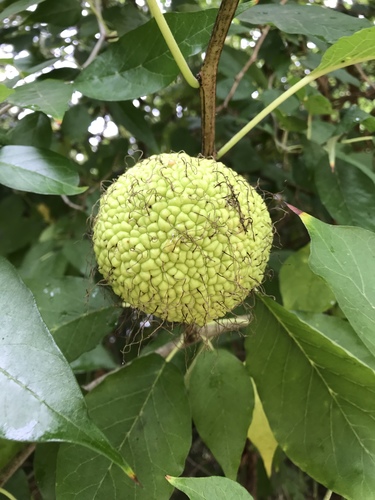
The Osage-orange tree is known for its bright green, bumpy fruit that looks like a big orange! It has strong wood and beautiful leaves that turn yellow in the fall.
Hábitat: Grasslands
The Osage-orange tree has glossy, oval leaves and sharp thorns along its branches. Its bark is deeply furrowed and turns an orange-brown with age. Most distinctively, it produces large, bumpy, citrus-green fruits that resemble brains.
Categoría
PlantasRareza
Common
Peligro
1/5 · Muy bajo
Snaps
¡Sé la primera persona en hacer un snap!
Its wood is one of the densest in North America, even denser than oak!
People once planted these thorny trees as 'living fences' to keep livestock in.
The bright orange heartwood of this tree glows under a blacklight!
You can extract a vibrant yellow dye from the tree's bark and roots!
Osage-orange has sharp thorns that help it defend its branches from grazing animals.
Osage-orange produces incredibly dense and durable wood that resists decay, making it last a long time.
Its huge, hard fruits evolved to be spread by large, now-extinct megafauna like mammoths.
Odocoileus virginianus
browses young leaves and twigs
Cardinalis cardinalis
builds nests in its thorny branches

Thomomys bottae
gnaws on its roots underground
Las plantas caducifolias pierden periódicamente todas sus hojas, por lo general durante el otoño o las estaciones secas.
Las plantas tolerantes a la sombra están adaptadas para crecer y prosperar en áreas con bajos niveles de luz, requiriendo menos luz solar directa.
Las plantas frutales producen frutos, que son los ovarios maduros de las plantas con flores que contienen semillas.
Los árboles de hoja ancha son angiospermas caracterizadas por hojas planas y anchas que típicamente se caen anualmente en climas templados.

Los colores otoñales se refieren al cambio estacional en la pigmentación del follaje, principalmente en plantas de hoja caduca, mostrando tonos vibrantes.

Los hábitats de pastizales son biomas terrestres dominados por pastos y plantas herbáceas, que sustentan a una variedad de animales de pastoreo.

Se refiere a la madera que ha sido preparada para su uso en la construcción y la carpintería.

Describe una especie cuya presencia y papel tienen un efecto desproporcionadamente grande en su entorno.
Peligro
1/5 · Muy bajo
Don't eat the fruit, as it's not safe for people.
600-1800 cm
600-1200 cm
0.3-0.5 cm
Late spring to early summer
No
Leve
Perenne
Viento
Acércate para separar los grupos y explorar dónde se ha fotografiado este objeto.
Los snaps recientes aparecerán aquí a medida que se añadan nuevas observaciones.
















.jpg&width=800)