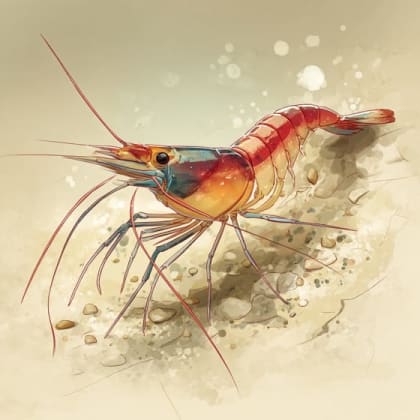
Pacific Hairy Hermit Crab
pagurus hirsutiusculus
The Pacific Hairy Hermit Crab is a tiny, colorful creature that loves to explore the ocean floor! With its soft body tucked inside a shell, it scuttles along in search of food and new homes.
Hábitat: They live in tide pools and sandy ocean floors along the Pacific coast.
The Pacific Hairy Hermit Crab has a mottled reddish-brown or greenish body covered in stiff hairs, especially on its legs. It has long, slender antennae and prominent eyestalks. Its soft abdomen is curled, protected inside a salvaged snail shell, making it visually distinct from true crabs.
Categoría
InvertebrateRareza
Common
Peligro
0/5 · Sin peligro conocido
Snaps
¡Sé la primera persona en hacer un snap!
Hermit crabs aren't true crabs; their soft, asymmetrical bodies don't grow their own shell!
Its soft, spiraling abdomen needs a shell to protect it from hungry predators!
Sometimes, crabs fight over the perfect empty snail shell for a new home!
They use their amazing sense of smell to find food, even buried under sand!
Pacific Hairy Hermit Crab can switch into new, larger shells as it grows because this protects its soft abdomen.
Pacific Hairy Hermit Crab has stiff hairs on its legs and body that help it grip surfaces and deter predators.
Pacific Hairy Hermit Crab can peek above its shell using long eyestalks to spot both food and danger quickly.
They are omnivores, munching on tiny bits of plants and dead animals found in the ocean.
Enteroctopus dofleini
A common predator that can pull crabs from their shells.

Pycnopodia helianthoides
A large sea star that preys on many intertidal invertebrates.
Ulva lactuca
Grazes on this common seaweed found in tide pools.
Mytilus californianus
Scavenges on dead mussels found in the tide pools.
Los animales sociales viven en grupos organizados, cooperando para obtener beneficios de supervivencia como la búsqueda de alimento, la defensa y la cría de descendencia.
Colorido describe a organismos u objetos que exhiben una amplia variedad de colores brillantes y distintivos.
Este rasgo identifica a los organismos cuya dieta consiste total o principalmente en tejido animal.
Los animales diurnos están activos principalmente durante el día y suelen descansar o dormir por la noche.

Los hábitats marinos abarcan todos los entornos de agua salada de los océanos de la Tierra, sustentando una inmensa diversidad de vida acuática.
Peligro
0/5 · Sin peligro conocido
Todavía no hay notas especiales de seguridad.
2.5-6.5 cm
1-5 años
They are omnivores, munching on tiny bits of plants and dead animals found in the ocean.
They live in tide pools and sandy ocean floors along the Pacific coast.
Foraging
Acércate para separar los grupos y explorar dónde se ha fotografiado este objeto.
Los snaps recientes aparecerán aquí a medida que se añadan nuevas observaciones.