
.jpg&width=800)





Pearl Crescent
Phyciodes tharos
The Pearl Crescent is a beautiful butterfly with orange and black patterns on its wings. It flutters around gardens and fields, bringing joy to everyone who sees it!
Hábitat: Grasslands
The Pearl Crescent is a small butterfly with a vibrant orange and black checkered pattern on its upper wings. Its most distinguishing feature is a small, pale crescent shape near the margin of its hindwings, particularly noticeable on the underside, giving it its name.
Categoría
InsectosRareza
Common
Peligro
1/5 · Muy bajo
Snaps
¡Sé la primera persona en hacer un snap!
Males often perch in the same sunny spot each day, waiting for a female.
Some Pearl Crescent butterflies undertake short migratory flights to new habitats.
The unique 'pearl' spot is easiest to see on the underside of their hindwings.
Their spiky, dark caterpillars mostly feed at night, resting hidden during the day.
Pearl Crescent can sip sweet flower nectar with its long, coiled proboscis, which helps it gain energy for flying and laying eggs.
Pearl Crescent has mottled orange and brown wings that help it blend perfectly with dried leaves or patchy flowers, hiding from hungry birds.
Pearl Crescent can fly quickly and erratically, using its agility to dodge predators and make swift getaways through dense vegetation.
Male Pearl Crescents can fiercely guard small sunny spots, chasing away rival butterflies to attract mates.
Caterpillars munch on aster leaves, while adult butterflies enjoy sipping sweet flower nectar.
Diferencias por edad: Caterpillars primarily eat plant leaves, while adults only consume liquid nectar.
.jpg&width=800)
Symphyotrichum novae-angliae
Adults visit for nectar, helping the plant reproduce.
Symphyotrichum pilosum
Caterpillars munch its leaves as their primary food source.
Cyanocitta cristata
A common bird that preys on adult butterflies.
Misumena vatia
Often ambushes adult butterflies visiting flowers for nectar.
Los animales solitarios viven solos durante la mayor parte de su vida y solo interactúan con otros para aparearse o cuidar de sus crías.
El camuflaje describe a los organismos que poseen colores o patrones que les permiten mezclarse con su entorno.
Colorido describe a organismos u objetos que exhiben una amplia variedad de colores brillantes y distintivos.
Este rasgo caracteriza a los organismos cuya dieta consiste total o principalmente en material vegetal.

Describe plantas que son particularmente atractivas y beneficiosas para una amplia variedad de organismos polinizadores.

Los hábitats de pastizales son biomas terrestres dominados por pastos y plantas herbáceas, que sustentan a una variedad de animales de pastoreo.

Los animales diurnos están activos principalmente durante el día y suelen descansar o dormir por la noche.

Describe organismos que transfieren polen, permitiendo la fertilización y reproducción de las plantas.
Todavía no hay alias listados.
Peligro
1/5 · Muy bajo
Butterflies are gentle creatures, but it's best to watch them from a distance and not touch them.
25-40 mm
12-20 mm
5-10 días
12 km/h
Caterpillars munch on aster leaves, while adult butterflies enjoy sipping sweet flower nectar.
Grasslands
Foraging
6
Acércate para separar los grupos y explorar dónde se ha fotografiado este objeto.
Los snaps recientes aparecerán aquí a medida que se añadan nuevas observaciones.
.JPG)
Massachusetts, US
Puedes ver Virginia Bluebells y Great Golden Digger Wasp.
Ver guía →

Virginia, US
Puedes ver Pato, Pato Joyuyo y Chlorosplenium Chlora.
Ver guía →

Ohio, US
Puedes ver Petirrojo Americano, Ciervo De Cola Blanca y Halcón Peregrino.
Ver guía →
.jpg)
Virginia, US
Puedes ver Garza Azulada, Fan Clubmoss y Barnacla Canadiense.
Ver guía →

Pennsylvania, US
Puedes ver Ciervo De Cola Blanca y Mile-A-Minute Weed.
Ver guía →
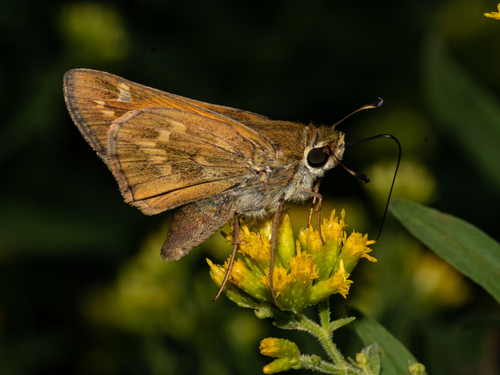
Virginia, US
Puedes ver Huron Skipper, Escarabajo Japonés y Peck's Skipper.
Ver guía →













