


Peperomia Hesperomannii
peperomia hesperomannii
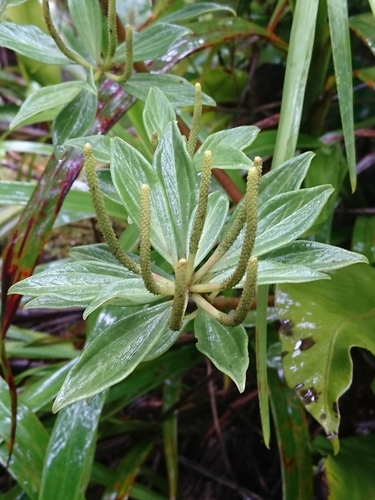
Peperomia hesperomannii es una hierba suculenta rara y encantadora, endémica de los húmedos y musgosos bosques de Kauai, Hawái. Conocida localmente como 'ala'ala wai nui, esta planta perenne amante de la sombra prospera en el sotobosque húmedo, adhiriéndose a rocas húmedas o troncos de árboles cubiertos de musgo. Sus hojas carnosas de color verde oscuro y sus espigas florales delgadas de color verde claro son características clásicas de la familia Piperaceae. Esta delicada especie juega un papel importante en su frágil ecosistema isleño, proporcionando microhábitats para invertebrados nativos y participando en complejas redes alimentarias forestales.
Hábitat: Se encuentra en los bosques montanos húmedos de Hawái, creciendo típicamente como epífita en troncos de árboles cubiertos de musgo o como litófita en rocas húmedas.
Esta hierba compacta suele alcanzar de 10 a 30 cm de altura, con tallos suculentos erguidos o extendidos. Sus hojas están dispuestas de forma opuesta o agrupadas en verticilos, presentando una forma alargada, de elíptica a lanceolada, con una superficie lisa y brillante y un rico tono verde bosque. La planta produce pequeñas flores verdes, discretas, densamente agrupadas a lo largo de estrechas inflorescencias en espiga (espádices) que se elevan sobre el follaje, presentando una textura distintiva y aterciopelada.
Categoría
PlantasRareza
Común
Peligro
1/5 · Muy bajo
Snaps
¡Sé la primera persona en hacer un snap!
Sus semillas están cubiertas de una sustancia pegajosa que funciona como velcro natural, adhiriéndose a las aves forestales nativas para colonizar nuevas ramas musgosas.
El nombre hawaiano de Peperomia es 'ala'ala wai nui, que poéticamente se refiere a su naturaleza suculenta y de retención de agua.
A diferencia de muchas plantas de interior comunes del género Peperomia, Peperomia hesperomannii es extremadamente sensible y rara vez se encuentra fuera de su hábitat natural prístino en la selva tropical hawaiana.
Produce semillas extremadamente pegajosas que se adhieren fácilmente a las plumas de las aves forestales nativas, facilitando una dispersión eficiente de las semillas.
Las hojas y tallos carnosos almacenan agua, permitiendo a la planta sobrevivir a períodos secos temporales en sus perchas epífitas de gran altitud.
Especialmente adaptada para prosperar en el sotobosque forestal profundamente sombreado, maximizando la mínima penetración de luz solar a través del dosel.
Como planta fotosintética, sintetiza su propio alimento utilizando luz solar, agua y dióxido de carbono, complementado con nutrientes absorbidos de los residuos orgánicos circundantes.
Chlorodrepanis stejnegeri
Dispersa las semillas pegajosas de la planta mediante epizocoria cuando el ave roza las espigas de semillas maduras.
Succinea caduca
Ocasionalmente pastorea las hojas carnosas y los microhongos asociados que crecen en los tallos húmedos de Peperomia.
Aún no hay insignias de rasgos asignadas a este objeto.
Todavía no hay alias listados.
Las colecciones para este objeto aparecerán aquí a medida que se añadan más temas.
Peligro
1/5 · Muy bajo
Todavía no hay notas especiales de seguridad.
Empieza por la planta entera y luego compara la disposición de las hojas, sus bordes, los tallos y las flores o frutos, si los hay. Las hojas opuestas crecen en parejas; las alternas salen de una en una a lo largo del tallo. Juntos, estos detalles dicen mucho más que una sola hoja verde. Identificador de plantas: sube una foto y compara los detalles visibles.
10-30 cm
0.05-0.25 kg
3-10 años
Como planta fotosintética, sintetiza su propio alimento utilizando luz solar, agua y dióxido de carbono, complementado con nutrientes absorbidos de los residuos orgánicos circundantes.
Se encuentra en los bosques montanos húmedos de Hawái, creciendo típicamente como epífita en troncos de árboles cubiertos de musgo o como litófita en rocas húmedas.
Acércate para separar los grupos y explorar dónde se ha fotografiado este objeto.
Los snaps recientes aparecerán aquí a medida que se añadan nuevas observaciones.
Llévate el descubrimiento
Haz una foto con Snappit, identifica la especie y guarda el hallazgo en tu colección.


















