

Perching Birds
passeriformes
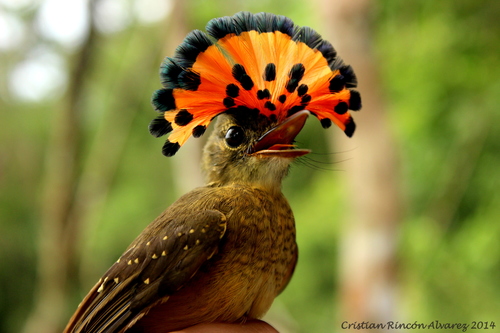
Perching birds, belonging to the order Passeriformes, represent the most diverse and successful group of birds on Earth, accounting for more than half of all avian species. Renowned for their incredible vocal abilities, complex social structures, and specialized foot structure, these birds have successfully colonized almost every terrestrial habitat. From tiny, vibrant colorful finches and warblers to highly intelligent, imposing crows and ravens, perching birds exhibit an astonishing array of behaviors and evolutionary adaptations. Their songs are a defining soundscape of the natural world, playing critical roles in territorial defense and courtship. Their sheer adaptability makes them both ecological linchpins and a joy for nature enthusiasts to observe.
Hábitat: Found across diverse terrestrial ecosystems worldwide, ranging from dense tropical rainforests and temperate woodlands to urban parks and arid shrublands.
Perching birds are distinguished by their anisodactyl foot structure, featuring three toes pointing forward and one strong toe pointing backward, which is perfectly adapted for gripping branches. They vary dramatically in size from the tiny short-tailed pygmy tyrant at just 8 centimeters to the common raven, which can reach up to 70 centimeters in length. Plumage colors span the entire spectrum, from cryptic browns and grays designed for camouflage to brilliant iridescent blues, yellows, and reds. Their bills are highly specialized, ranging from short, thick conical shapes for cracking seeds to thin, pointed needles for plucking insects or sipping nectar.
Categoría
AvesRareza
Common
Peligro
1/5 · Muy bajo
Snaps
¡Sé la primera persona en hacer un snap!
Passeriformes is the largest order of birds, containing more than 6,000 distinct species.
Their specialized brain pathways for song learning are highly studied as a model for human speech development.
They are often collectively referred to as songbirds, though not all species produce complex melodic songs.
A specialized tendon-locking mechanism automatically clamps their toes around a perch when they bend their legs, letting them sleep securely on branches without falling.
Possessing a highly developed syrinx, many species can control the left and right sides of this vocal organ independently to produce two distinct notes simultaneously.
Certain families within this order, particularly corvids, exhibit exceptional problem-solving abilities, tool use, and long-term memory.
Highly varied feeding habits encompassing seeds, fruits, insects, small vertebrates, nectar, and carrion depending on the species' ecological niche.
Cuculus canorus
Common Cuckoos act as brood parasites, laying eggs in the nests of smaller songbirds to raise.
Falco peregrinus
Peregrine Falcons act as major avian predators, hunting songbirds mid-flight.
Quercus robur
Eurasian Jays cache acorns in forest soils, facilitating forest regeneration.
Aún no hay insignias de rasgos asignadas a este objeto.
Todavía no hay alias listados.
Las colecciones para este objeto aparecerán aquí a medida que se añadan más temas.
Peligro
1/5 · Muy bajo
Todavía no hay notas especiales de seguridad.
La forma más fácil de identificar a Perching Birds es usar la aplicación de identificación de naturaleza Snappit.
8-70 cm
15-130 cm
0.005-1.5 kg
1-20 años
80 km/h
Highly varied feeding habits encompassing seeds, fruits, insects, small vertebrates, nectar, and carrion depending on the species' ecological niche.
Found across diverse terrestrial ecosystems worldwide, ranging from dense tropical rainforests and temperate woodlands to urban parks and arid shrublands.
Acércate para separar los grupos y explorar dónde se ha fotografiado este objeto.
Los snaps recientes aparecerán aquí a medida que se añadan nuevas observaciones.



.jpg&width=800)




.jpg&width=800)