





Phlox
Phlox divaricata
La Phlox es una hermosa planta con flores que tiene racimos de coloridas floraciones. Atrae a mariposas y abejas con su dulce aroma y colores vibrantes, haciendo que los jardines parezcan un arcoíris.
Hábitat: Jardines, Bosques
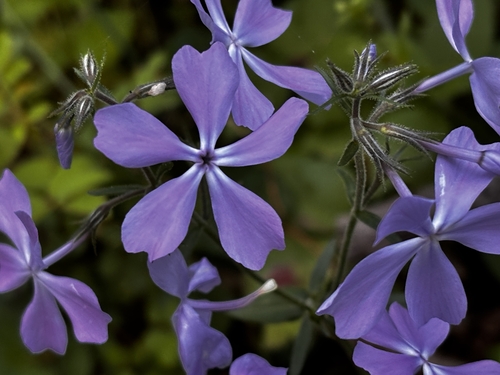
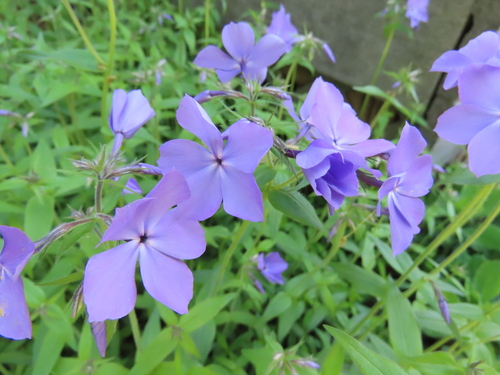
La Phlox tiene racimos de delicadas flores de cinco pétalos en forma de estrella que florecen en vibrantes tonos de rosa, púrpura, azul y blanco. Sus esbeltos tallos llevan hojas estrechas en forma de lanza, creando un suave y colorido espectáculo en jardines y bosques.
Categoría
PlantasRareza
Common
Peligro
1/5 · Muy bajo
Snaps
23
¡Muchas especies de Phlox silvestres son nativas de América del Norte, prosperando en bosques y praderas!
¡Algunas flores de Phlox brillan bajo la luz UV, haciéndolas aún más visibles para los insectos polinizadores!
¡El nombre 'Phlox' proviene de una palabra griega que significa 'llama', refiriéndose a los colores ardientes de algunas especies!
A los pequeños colibríes les encanta sorber el dulce néctar de las altas y coloridas flores del phlox de jardín.
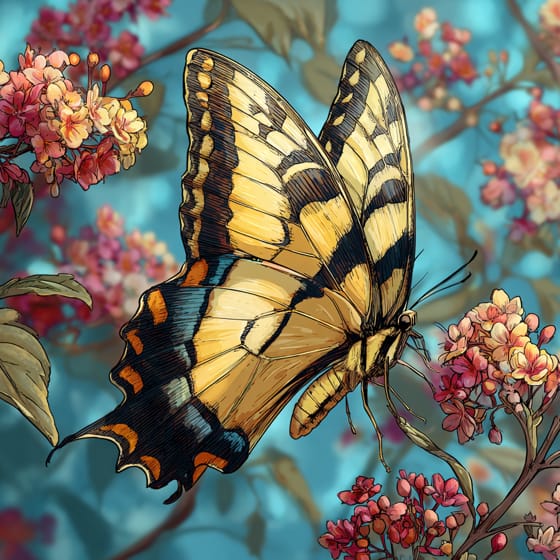
Papilio glaucus
Una fuente crucial de néctar para estas grandes y coloridas mariposas.
Bombus impatiens
Las abejas visitan las flores de Phlox para recolectar néctar y polen vital.
Hyles lineata
Atraído por las flores fragantes, especialmente activo al anochecer.
Las plantas perennes viven más de dos años, y normalmente vuelven a crecer y florecer cada año desde sus raíces.
Las plantas con flores son cualquier planta que produce flores como parte de su ciclo reproductivo.
Las plantas ornamentales se cultivan principalmente por su atractivo estético, embelleciendo paisajes y jardines con su atractivo follaje, flores o forma.
Las flores en racimo son inflorescencias donde las flores individuales están dispuestas muy juntas en un tallo común.

Las plantas de floración primaveral producen sus flores durante la temporada de primavera, lo que a menudo significa el final del invierno y el comienzo de un nuevo crecimiento.

Las plantas tolerantes a la sombra están adaptadas para crecer y prosperar en áreas con bajos niveles de luz, requiriendo menos luz solar directa.

Las flores fragantes emiten un aroma agradable, a menudo para atraer polinizadores o como defensa.
Peligro
1/5 · Muy bajo
Disfruta de la belleza de la phlox desde una distancia segura y evita tocar o comer cualquier parte de la planta.
La forma más fácil de identificar a Phlox es usar la aplicación de identificación de naturaleza Snappit.
30-120 cm
30-90 cm
1-3 cm
Spring to late Summer
No
Ninguna
Perenne
Acércate para separar los grupos y explorar dónde se ha fotografiado este objeto.
28 abr 2026
Morristown Historic DistrictFuente abierta (iNaturalist) ↗
Créditos de la foto
(c) William J. Deml, some rights reserved (CC BY)
Licencia: CC BY 4.0 ↗
La imagen puede mostrarse recortada dentro del marco de la carta.
11 may 2025
Salem Historic DistrictFuente abierta (iNaturalist) ↗
Créditos de la foto
(c) Chelsea Carroll, some rights reserved (CC BY)
Licencia: CC BY 4.0 ↗
La imagen puede mostrarse recortada dentro del marco de la carta.
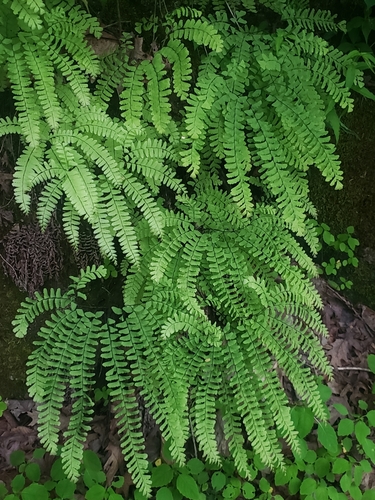
Iowa, US
Puedes ver Helecho Culantrillo Del Norte y Ortiga De Bosque.
Ver guía →

Michigan, US
Puedes ver Polilla De Penacho Del Nogal, Manzana De Mayo y Evónimo Alado.
Ver guía →

Minnesota, US
Puedes ver Abejorro Oriental Común, Pavo y Abejorro De Banda Marrón.
Ver guía →

New York, US
Puedes ver Picogordo Piñero y Polilla Atadora De Hojas De Hortensia.
Ver guía →

Kentucky, US
Puedes ver Jicotea Elegante, Orquídea Mosca Grulla y Sanguinaria.
Ver guía →

Iowa, US
Puedes ver Monarch y Pelícano Blanco Americano.
Ver guía →
Llévate el descubrimiento
Haz una foto con Snappit, identifica la especie y guarda el hallazgo en tu colección.







.jpg&width=800)


_001.jpg&width=800)



