




Phytomyza penstemonis
Phytomyza penstemonis
Phytomyza penstemonis es una pequeña mosca a la que le encanta masticar las hojas de las plantas penstemon. Estos pequeños insectos son importantes para la naturaleza, ayudando a mantener el equilibrio en jardines y áreas silvestres.
Hábitat: Jardines y zonas de flores silvestres
La Phytomyza penstemonis es una mosca diminuta de cuerpo oscuro, típicamente negra o marrón grisácea, con alas claras e iridiscentes que presentan patrones de venas notables. Tiene ojos compuestos grandes, de color marrón rojizo, que destacan sobre su pequeña cabeza, lo que la hace visualmente distinta de muchas otras moscas pequeñas uniformemente oscuras.
Categoría
InsectosRareza
Común
Peligro
1/5 · Muy bajo
Snaps
¡Sé la primera persona en hacer un snap!
Los minadores de hojas de Penstemon adultos son tan diminutos que muchos cabrían en la cabeza de un alfiler.
Las moscas hembras crean pequeños agujeros en las hojas para 'probar' si una planta es adecuada para sus huevos.
La larva en realidad mueve todo su cuerpo para masticar, haciendo que su largo túnel sea aún más ancho.
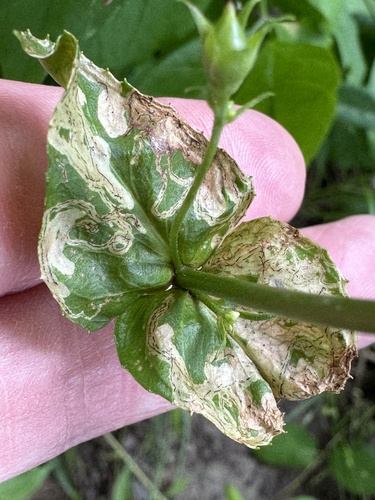
¡Sus túneles larvales se llaman 'minas' y parecen mapas pálidos y ondulados dentro de las hojas!
Phytomyza penstemonis puede excavar túneles a través de las hojas de las plantas porque sus larvas tienen piezas bucales especializadas que les ayudan a comer y crear túneles intrincados.
Phytomyza penstemonis tiene un asombroso sentido del olfato que le ayuda a localizar plantas Penstemon específicas para poner sus huevos.
Phytomyza penstemonis puede completar todo su ciclo de vida en solo unas pocas semanas, lo que le ayuda a tener muchas generaciones al año.
Las larvas jóvenes se alimentan de hojas de plantas, mientras que las moscas adultas sorben néctar y savia de plantas.
Diferencias por edad: Las larvas consumen tejido foliar de las plantas, mientras que los adultos se alimentan de néctar y savia de las plantas.
Penstemon digitalis
Las larvas minan las hojas de esta planta huésped.
Diglyphus isaea
Las larvas son parasitadas por esta diminuta especie de avispa.
Poecile atricapillus
Las aves pequeñas pueden depredar sobre las moscas adultas.
Los animales solitarios viven solos durante la mayor parte de su vida y solo interactúan con otros para aparearse o cuidar de sus crías.
Este rasgo caracteriza a los organismos cuya dieta consiste total o principalmente en material vegetal.
Los animales diurnos están activos principalmente durante el día y suelen descansar o dormir por la noche.
Describe una especie cuya presencia y papel tienen un efecto desproporcionadamente grande en su entorno.
Relativo a especies que son significativamente más pequeñas que lo típico o promedio de su tipo.
Describe organismos que transfieren polen, permitiendo la fertilización y reproducción de las plantas.
Todavía no hay alias listados.
Peligro
1/5 · Muy bajo
¡Estas moscas son inofensivas, pero es mejor dejarlas solas para que hagan su trabajo!
Busca seis patas, antenas, tres secciones en el cuerpo y la forma de las alas. Los escarabajos tienen las alas delanteras endurecidas; las moscas solo tienen un par que funciona. Los insectos diminutos pueden necesitar un primer plano antes de que se vea su grupo. Identificador de insectos: sube una foto y compara los detalles visibles.
2-5 mm
1-3 mm
20-40 días
Las larvas jóvenes se alimentan de hojas de plantas, mientras que las moscas adultas sorben néctar y savia de plantas.
Jardines y zonas de flores silvestres
Forrajeo
6
Acércate para separar los grupos y explorar dónde se ha fotografiado este objeto.
Los snaps recientes aparecerán aquí a medida que se añadan nuevas observaciones.
Llévate el descubrimiento
Haz una foto con Snappit, identifica la especie y guarda el hallazgo en tu colección.