






Pink Honeysuckle
Lonicera hispidula
The Pink Honeysuckle is a lovely plant with sweet-smelling flowers that attract butterflies and hummingbirds. Its pink blooms add a splash of color to gardens and wild areas, making it a favorite among nature lovers.
Hábitat: Forests
The Pink Honeysuckle is a deciduous, twining vine that features clusters of delicate, tubular flowers, typically salmon-pink to reddish-pink with yellow interiors. Its distinctive two-lipped blooms create a unique, open-mouthed appearance, standing out against its oval green leaves.
Categoría
PlantasRareza
Common
Peligro
1/5 · Muy bajo
Snaps
¡Sé la primera persona en hacer un snap!
Even though its berries are bright red, they are best left for the birds, not for humans!
Its unique two-lipped flowers look like tiny open mouths, perfect for sipping nectar!
Some say its sweet scent is stronger at night, attracting nighttime moth pollinators!
The vine often twists itself tightly in one direction, like a natural corkscrew!
Pink Honeysuckle can twine its flexible stems around other plants or structures, helping it climb high to reach ample sunlight.
Pink Honeysuckle has sweet, sugary nectar that draws in hummingbirds and various insects, ensuring its pollination success.
Pink Honeysuckle produces bright red berries, offering a vital food source for many bird species and small forest mammals.

Calypte anna
attracted to its nectar
.jpg&width=800)
Selasphorus rufus
visits flowers for nectar
Turdus migratorius
consumes the plant's berries

Papilio rutulus
feeds on flower nectar
Odocoileus hemionus
browses on foliage
Las plantas aromáticas producen y emiten compuestos orgánicos volátiles fragantes, a menudo como defensa o para atraer a los polinizadores.
Las plantas caducifolias pierden periódicamente todas sus hojas, por lo general durante el otoño o las estaciones secas.
Las plantas con flores son cualquier planta que produce flores como parte de su ciclo reproductivo.
Un arbusto es una planta leñosa más pequeña que un árbol, típicamente con múltiples tallos que se ramifican desde o cerca del suelo.

Las plantas de floración primaveral producen sus flores durante la temporada de primavera, lo que a menudo significa el final del invierno y el comienzo de un nuevo crecimiento.

Las flores fragantes emiten un aroma agradable, a menudo para atraer polinizadores o como defensa.

Colorido describe a organismos u objetos que exhiben una amplia variedad de colores brillantes y distintivos.

Describe plantas que son particularmente atractivas y beneficiosas para una amplia variedad de organismos polinizadores.

Los hábitats boscosos son entornos terrestres dominados por una densa cubierta arbórea, que sustentan una gran diversidad de vida animal y vegetal.
Todavía no hay alias listados.
Peligro
1/5 · Muy bajo
Always ask an adult before picking flowers, and remember to enjoy them in nature!
300-600 cm
100-300 cm
2-4 cm
Spring to early summer
No
Leve
Perenne
Insectos
Acércate para separar los grupos y explorar dónde se ha fotografiado este objeto.
Los snaps recientes aparecerán aquí a medida que se añadan nuevas observaciones.
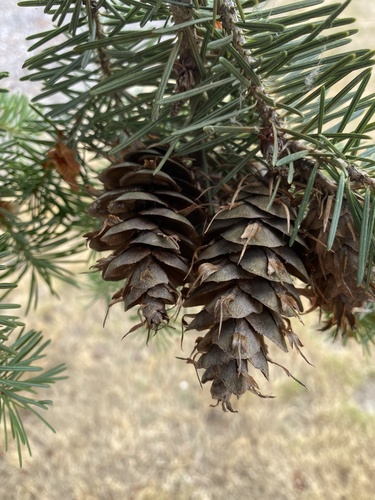
British Columbia, CA
Puedes ver Abeto De Douglas, Purple Foxglove y Oregon Oak.
Ver guía →
British Columbia, CA
Puedes ver Abeto De Douglas, Pacific Madrone y Tritón De Piel Rugosa.
Ver guía →
California, US
Puedes ver Pacific Hound's Tongue, Pacific Trillium y Secuoya.
Ver guía →

British Columbia, CA
Puedes ver Salal, Evergreen Huckleberry y Abeto De Douglas.
Ver guía →
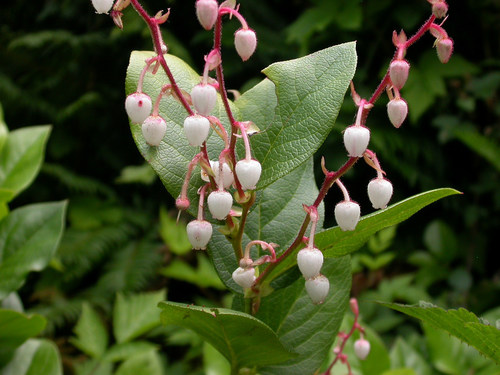
British Columbia, CA
Puedes ver Salal, Western Rattlesnake Plantain y Cascade Oregon-Grape.
Ver guía →
British Columbia, CA
Puedes ver Salal, Small Ground-Cone y Evergreen Huckleberry.
Ver guía →
















