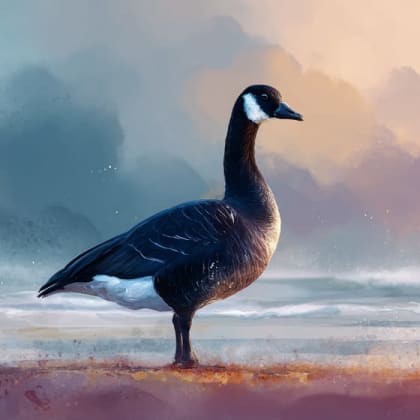
Piping Plover
Charadrius melodus
The Piping Plover is a small, sandy-colored bird that loves to live on beaches. It has a sweet, whistling call and is known for its tiny size and cute appearance.
Hábitat: Coastal areas
The Piping Plover is a small, pale shorebird with sand-colored plumage on its back and white underparts. It has a short, stout black bill, distinctive orange legs, and a single black band across its breast and a black bar on its forehead during breeding season, making it blend perfectly with its beach habitat.
Categoría
AvesRareza
Rare
Peligro
1/5 · Muy bajo
Snaps
¡Sé la primera persona en hacer un snap!
Piping Plover chicks can leave the nest and find their own food just hours after hatching!
Their nests are just shallow scrapes in the sand, sometimes lined with small pebbles!
These tiny birds migrate thousands of kilometers, flying from Canada all the way to the Caribbean!
They nest directly on sandy beaches, making their camouflaged eggs nearly invisible!
Piping Plover can disappear into its sandy surroundings because its pale feathers perfectly match the beach environment.
Piping Plover can pretend to have a broken wing that helps them lure predators away from their hidden nests and chicks.
Piping Plover can detect tiny vibrations in the sand that helps them find hidden insect prey without seeing them.
These small birds dash along beaches to gobble up tiny marine worms, insects, and crustaceans.
Larus argentatus
Preys on eggs and chicks.
Vulpes vulpes
Hunts adult plovers and their young.
Nereis virens
Forages for these marine worms.
Carcinus maenas
Consumes small crab species.
El camuflaje describe a los organismos que poseen colores o patrones que les permiten mezclarse con su entorno.
Este rasgo identifica a los organismos cuya dieta consiste principalmente en insectos y otros pequeños invertebrados.
Los hábitats costeros son entornos dinámicos situados a lo largo de la interfaz entre la tierra y el mar, influenciados por las mareas, las olas y el agua salada.
Los animales diurnos están activos principalmente durante el día y suelen descansar o dormir por la noche.

Relativo a especies que son significativamente más pequeñas que lo típico o promedio de su tipo.

Este rasgo identifica a los organismos que exhiben una rapidez excepcional en sus movimientos para cazar, escapar o desplazarse.

Los animales migratorios emprenden movimientos estacionales de una región a otra, típicamente en respuesta a cambios en el clima o la disponibilidad de alimentos.

El estado de protección significa que una especie o área está salvaguardada por medidas legales y esfuerzos de conservación para evitar daños o pérdidas.

El estado de peligro de extinción indica que una especie corre un riesgo muy alto de extinguirse en estado silvestre en un futuro próximo.
Peligro
1/5 · Muy bajo
Always be gentle and quiet around birds so they feel safe.
17-18 cm
38-48 cm
0.043-0.063 kg
5-10 años
40 km/h
These small birds dash along beaches to gobble up tiny marine worms, insects, and crustaceans.
Coastal areas
Foraging
Acércate para separar los grupos y explorar dónde se ha fotografiado este objeto.
Los snaps recientes aparecerán aquí a medida que se añadan nuevas observaciones.





.jpg&width=800)



_-_Meleagris_gallopavo%2C_Occoquan_Bay_National_Wildlife_Refuge%2C_Woodbridge%2C_Virginia.jpg&width=800)



.jpg&width=800)