


Plains Hognose Snake
Heterodon nasicus
The Plains Hognose Snake is a fun and friendly snake that loves to dig in the sand. It has a special upturned nose that helps it burrow and find food. When scared, it can puff up and play dead to trick its enemies!
Hábitat: Grasslands
The Plains Hognose Snake has a stout body, typically light brown, tan, or gray, with dark, rounded blotches down its back. Its most distinct feature is an upturned, shovel-like snout that aids in digging. Its underside is usually lighter, often speckled.
Categoría
ReptilesRareza
Common
Peligro
1/5 · Muy bajo
Snaps
¡Sé la primera persona en hacer un snap!
Their scales are keeled, meaning they feel rough, not smooth!
They can burrow backwards into soft sand using strong muscles in seconds!
They expertly eat toxic toads that most other animals avoid!
When playing dead, they release a musky smell to convince predators!
Plains Hognose Snake can burrow quickly because of its specialized, upturned nose that acts like a tiny shovel.
Plains Hognose Snake can fool predators by rolling over and playing dead, making them seem less appealing.
Plains Hognose Snake can flatten its neck like a cobra, appearing bigger and more threatening.
Plains Hognose Snake can subdue toxic toads using mild, rear-fanged venom that aids digestion.
This snake mainly eats amphibians like toads and frogs, often digging them out of their hiding spots.

Anaxyrus woodhousii
A primary food source for the snake.
Buteo jamaicensis
A common avian predator of these snakes.

Taxidea taxus
Preys on snakes it unearths while digging.
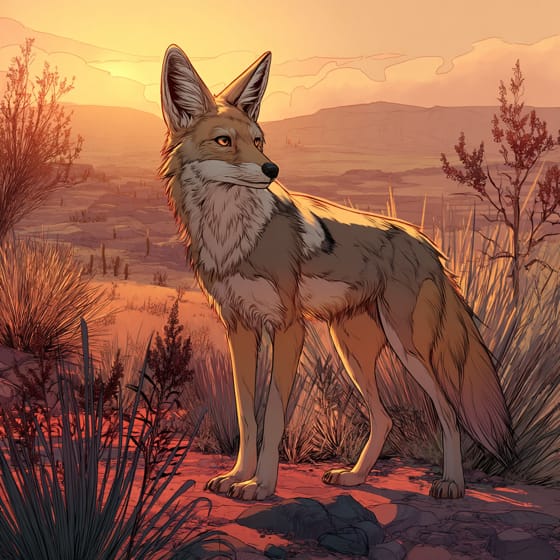
Canis latrans
Opportunistically preys on snakes.
Los animales solitarios viven solos durante la mayor parte de su vida y solo interactúan con otros para aparearse o cuidar de sus crías.
Los carroñeros consumen materia orgánica muerta, ayudando a descomponer los cadáveres y otros desechos en el ecosistema.
El camuflaje describe a los organismos que poseen colores o patrones que les permiten mezclarse con su entorno.
Los animales excavadores cavan túneles y cámaras en el suelo y utilizan estas estructuras subterráneas para refugiarse, cazar o reproducirse.

Los hábitats de pastizales son biomas terrestres dominados por pastos y plantas herbáceas, que sustentan a una variedad de animales de pastoreo.

Este rasgo identifica a los organismos cuya dieta consiste total o principalmente en tejido animal.
Todavía no hay alias listados.
Peligro
1/5 · Muy bajo
If you see a snake, it's best to watch from a distance and not touch it.
38-75 cm
0.05-0.2 kg
8-12 años
5 km/h
This snake mainly eats amphibians like toads and frogs, often digging them out of their hiding spots.
Grasslands
Foraging
4-23
Acércate para separar los grupos y explorar dónde se ha fotografiado este objeto.
Los snaps recientes aparecerán aquí a medida que se añadan nuevas observaciones.