




Podabrus
podabrus
Podabrus es un género fascinante de escarabajos soldado, ampliamente reconocido por sus cuerpos blandos y alargados y sus hábitos depredadores altamente beneficiosos. Comúnmente encontrados en jardines, prados y bosques, estos escarabajos son excelentes controladores naturales de plagas. Consumen vorazmente pulgones, pequeñas orugas y otras plagas de insectos de cuerpo blando, lo que los convierte en el mejor amigo de un jardinero. Su delicada apariencia desmiente su papel como cazadores formidables y activos en los microecosistemas que habitan. Como forrajeadores diurnos, los escarabajos Podabrus se ven con frecuencia posados sobre flores vibrantes y follaje denso. Más allá de la caza, ocasionalmente complementan su dieta con néctar y polen, actuando casualmente como polinizadores menores mientras viajan de flor en flor.
Hábitat: Típicamente se encuentran en prados, jardines, campos agrícolas y bordes de bosques donde abundan las plantas con flores y las presas de insectos de cuerpo blando.
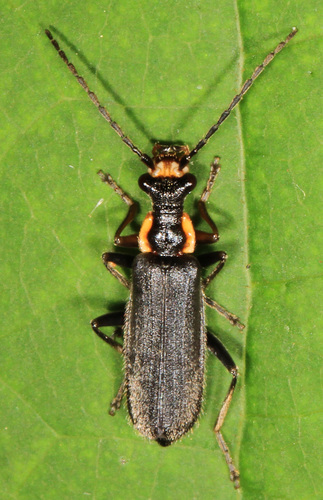
Los escarabajos Podabrus son relativamente pequeños, miden típicamente entre 0.5 y 1.5 centímetros de largo, y se definen por sus formas alargadas y de cuerpo blando con cubiertas alares coriáceas (élitros). Su coloración suele ser una mezcla de negro, marrón, gris o amarillo. A diferencia de muchos otros escarabajos soldado, los miembros del género Podabrus tienen una cabeza que es claramente visible y no está completamente oculta por el pronoto (la placa que cubre el tórax), dándoles la apariencia distintiva de tener un 'cuello'. Poseen antenas largas y filiformes y patas delgadas perfectamente adaptadas para trepar a través del follaje complejo.
Categoría
InsectosRareza
Común
Peligro
1/5 · Muy bajo
Snaps
¡Sé la primera persona en hacer un snap!
Son muy valorados por jardineros y agricultores como agentes de control biológico natural porque un solo escarabajo puede consumir docenas de pulgones en un solo día.
Para diferenciar a Podabrus de los escarabajos soldado estrechamente relacionados, los entomólogos buscan su distintivo 'cuello', ya que su cabeza no está completamente oculta debajo de su escudo torácico.
A diferencia de la mayoría de los escarabajos que están fuertemente acorazados, los Podabrus tienen cubiertas alares blandas y coriáceas, lo que les valió el apodo común de 'alas de cuero'.
Cuando son amenazados por depredadores, pueden exudar compuestos químicos nocivos de glándulas especiales para volverse inapetecibles.
Sus élitros flexibles y coriáceos y la falta de armadura rígida les permiten colarse fácilmente en estructuras florales estrechas para cazar plagas escondidas.
Poseen mandíbulas especializadas adaptadas para atrapar, perforar y consumir rápidamente plagas agrícolas de cuerpo blando como los pulgones.
Tanto los adultos como las larvas son principalmente depredadores, alimentándose en gran medida de insectos de cuerpo blando, aunque los adultos ocasionalmente consumen néctar y polen.
Diferencias por edad: Las larvas son estrictamente depredadores terrestres, mientras que los adultos forrajean en las partes superiores de las plantas y complementan su dieta carnívora con néctar.
Acyrthosiphon pisum
Los escarabajos Podabrus son importantes depredadores de pulgones que dañan las plantas.

Hirundo rustina
Las aves insectívoras con frecuencia depredan escarabajos soldado adultos.
Solidago canadensis
Forrajean y polinizan ocasionalmente plantas con flores mientras cazan.
Peludo describe a los animales que poseen una cubierta densa de pelo o pelaje suave.
Los animales solitarios viven solos durante la mayor parte de su vida y solo interactúan con otros para aparearse o cuidar de sus crías.
Este rasgo caracteriza a los organismos cuya dieta consiste total o principalmente en material vegetal.
Los hábitats boscosos son entornos terrestres dominados por una densa cubierta arbórea, que sustentan una gran diversidad de vida animal y vegetal.
Los animales nocturnos están principalmente activos durante la noche, y suelen descansar o dormir durante el día.
Todavía no hay alias listados.
Las colecciones para este objeto aparecerán aquí a medida que se añadan más temas.
Peligro
1/5 · Muy bajo
Todavía no hay notas especiales de seguridad.
Busca élitros duros que se juntan en una línea por el lomo y compara después las antenas, la forma del cuerpo, las patas y las marcas. Los colores metálicos cambian mucho con la luz. Identificador de escarabajos: sube una foto y compara los detalles visibles.
0-1 cm
1-2 cm
0.0001-0.0005 kg
1 años
5 km/h
Tanto los adultos como las larvas son principalmente depredadores, alimentándose en gran medida de insectos de cuerpo blando, aunque los adultos ocasionalmente consumen néctar y polen.
Típicamente se encuentran en prados, jardines, campos agrícolas y bordes de bosques donde abundan las plantas con flores y las presas de insectos de cuerpo blando.
Acércate para separar los grupos y explorar dónde se ha fotografiado este objeto.
Los snaps recientes aparecerán aquí a medida que se añadan nuevas observaciones.
Llévate el descubrimiento
Haz una foto con Snappit, identifica la especie y guarda el hallazgo en tu colección.