

Pointleaf Manzanita
arctostaphylos pungens
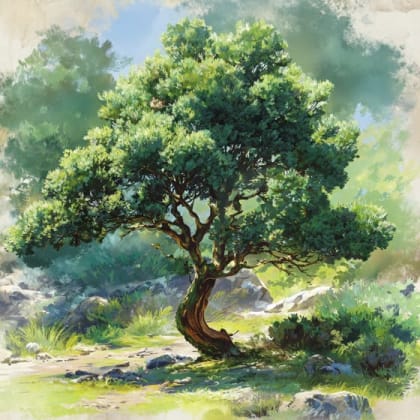
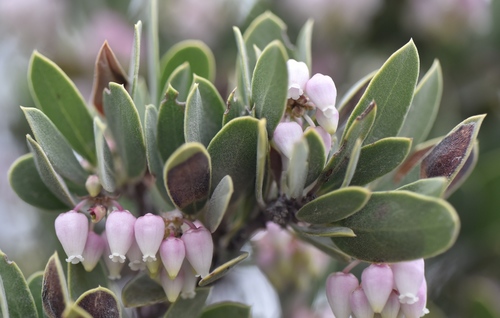
The Pointleaf Manzanita (Arctostaphylos pungens) is a striking, evergreen shrub native to the arid chaparral, pinyon-juniper woodlands, and desert mountain ranges of the southwestern United States and Mexico. Renowned for its smooth, mahogany-red bark and twisting branches, this resilient plant plays a vital ecological role in its dry, fire-prone habitat. It provides crucial cover and sustenance for a variety of desert wildlife, from small mammals to foraging birds. In late winter and early spring, the plant erupts in clusters of delicate, urn-shaped pink or white flowers that attract native pollinators, eventually giving way to brownish-red, apple-like berries.
Hábitat: Found in arid chaparral, desert grasslands, and dry pinyon-juniper woodlands, typically growing on dry, rocky slopes and well-drained soils.
Pointleaf Manzanita is a dense, upright shrub growing up to 1 to 3 meters tall, characterized by its remarkably smooth, polished reddish-brown to deep mahogany bark. The leaves are bright green, leathery, and distinctly pointed at the tips, measuring about 1.5 to 4 centimeters in length. Its small, waxy, urn-shaped flowers are white to pale pink, hanging in drooping clusters that mature into small, round, fleshy berries that turn a dark orange-red or brown when ripe.
Categoría
PlantasRareza
Common
Peligro
1/5 · Muy bajo
Snaps
¡Sé la primera persona en hacer un snap!
Indigenous peoples historically used the leaves of this plant to brew a medicinal tea for treating kidney and urinary tract ailments.
The name 'manzanita' is Spanish for 'little apple,' referring to the shape and appearance of the plant's small, edible berries.
Unlike some other manzanita species, Pointleaf Manzanita lacks a basal burl and cannot resprout from its roots after a severe wildfire, relying entirely on fire-activated seeds in the soil to regenerate.
The thick, waxy, and vertically-oriented leaves reduce water loss by limiting direct exposure to the harsh midday desert sun.
It forms mutualistic relationships with soil fungi, significantly enhancing its ability to absorb scarce water and nutrients in poor, rocky soils.
Its seeds remain dormant in the soil for years, relying on the heat and chemical cues of wildfire to trigger successful germination.
As a photoautotroph, this plant produces its own energy through photosynthesis, utilizing sunlight, carbon dioxide, and water while absorbing essential minerals from the soil.
Bombus vosnesenskii
The flowers provide nectar to native bees, who are the primary pollinators of this shrub.
Aphelocoma woodhouseii
Birds feed on the apple-like berries, helping disperse the seeds across the landscape.
Neotoma albigula
The foliage and sweet berries are a key food source and building material for desert woodrats.
Aún no hay insignias de rasgos asignadas a este objeto.
Todavía no hay alias listados.
Las colecciones para este objeto aparecerán aquí a medida que se añadan más temas.
Peligro
1/5 · Muy bajo
Todavía no hay notas especiales de seguridad.
La forma más fácil de identificar a Pointleaf Manzanita es usar la aplicación de identificación de naturaleza Snappit.
100-300 cm
25-100 años
As a photoautotroph, this plant produces its own energy through photosynthesis, utilizing sunlight, carbon dioxide, and water while absorbing essential minerals from the soil.
Found in arid chaparral, desert grasslands, and dry pinyon-juniper woodlands, typically growing on dry, rocky slopes and well-drained soils.
Acércate para separar los grupos y explorar dónde se ha fotografiado este objeto.
Los snaps recientes aparecerán aquí a medida que se añadan nuevas observaciones.

Arizona, US
Puedes ver Yarrow's Spiny Lizard y Mexican Jay.
Ver guía →

Arizona, US
Puedes ver Mexican Jay, Yarrow's Spiny Lizard y Ciervo De Cola Blanca.
Ver guía →

Nevada, US
Puedes ver Engelmann's Hedgehog Cactus.
Ver guía →



.jpg&width=800)