Poplar
Populus nigra
Poplars are tall trees with leaves that shimmer and rustle in the wind. They grow near rivers and streams, providing shade and homes for birds and insects.
Hábitat: Riversides
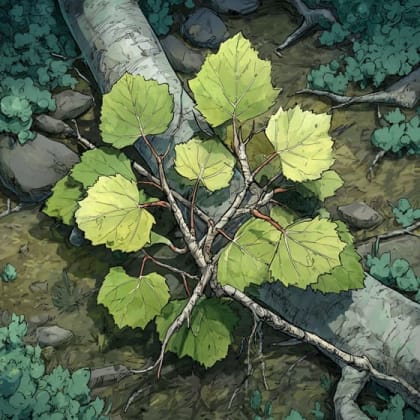
The Poplar is a tall, slender tree often with pale or grayish bark, sometimes furrowed, and a distinctive upright or conical shape. Its shimmering, usually heart-shaped or triangular leaves flutter easily in the breeze, often revealing a lighter underside, creating a unique visual effect.
Categoría
ÁrbolesRareza
Common
Peligro
1/5 · Muy bajo
Snaps
¡Sé la primera persona en hacer un snap!
Poplar leaves have flattened stalks that make them shiver and "clap" in the breeze!
Poplar wood is used to make popsicle sticks and even matchsticks!
The Pando 'tree' in Utah is a giant Poplar clone, the world's heaviest organism!
Their fluffy, cottony seeds are carried by wind, sometimes looking like summer snow!
Poplar has flattened leaf stems that make its leaves flutter and "whisper" in the wind, helping reduce drag and reflect sunlight.
Poplar can grow incredibly fast, reaching impressive heights quickly to outcompete other plants for vital sunlight.
Poplar has a wide-spreading root system that can stabilize soil, preventing erosion, especially along riverbanks.
Some Poplars can create entire groves of genetically identical trees by sprouting new trunks from their roots.
Castor canadensis
Chews down Poplar for food and building dams.
Odocoileus virginianus
Browses on young Poplar shoots and leaves.

Chrysomela scripta
Feeds on Poplar leaves, especially young ones.
Melampsora medusae
Causes orange spots and damage on Poplar leaves.
Las plantas caducifolias pierden periódicamente todas sus hojas, por lo general durante el otoño o las estaciones secas.
Las plantas tolerantes a la sombra están adaptadas para crecer y prosperar en áreas con bajos niveles de luz, requiriendo menos luz solar directa.
Los árboles de hoja ancha son angiospermas caracterizadas por hojas planas y anchas que típicamente se caen anualmente en climas templados.
Las plantas de crecimiento rápido exhiben tasas de crecimiento aceleradas, aumentando rápidamente de tamaño y biomasa en un corto período de tiempo.

Los hábitats boscosos son entornos terrestres dominados por una densa cubierta arbórea, que sustentan una gran diversidad de vida animal y vegetal.
Peligro
1/5 · Muy bajo
Enjoy the beauty of poplar trees from a safe distance and avoid climbing them.
20-40 m
8-20 m
No
50-200 cm
50-150 años
Riversides
Capsule
Rápido
Acércate para separar los grupos y explorar dónde se ha fotografiado este objeto.
Los snaps recientes aparecerán aquí a medida que se añadan nuevas observaciones.





_6192.jpg&width=800)