



Pristepyris
Pristepyris
Pristepyris es un insecto único al que le encanta esconderse entre hojas y flores. Tiene colores brillantes que le ayudan a camuflarse con la naturaleza, ¡lo que lo convierte en una pequeña criatura divertida de descubrir!
Hábitat: Bosques
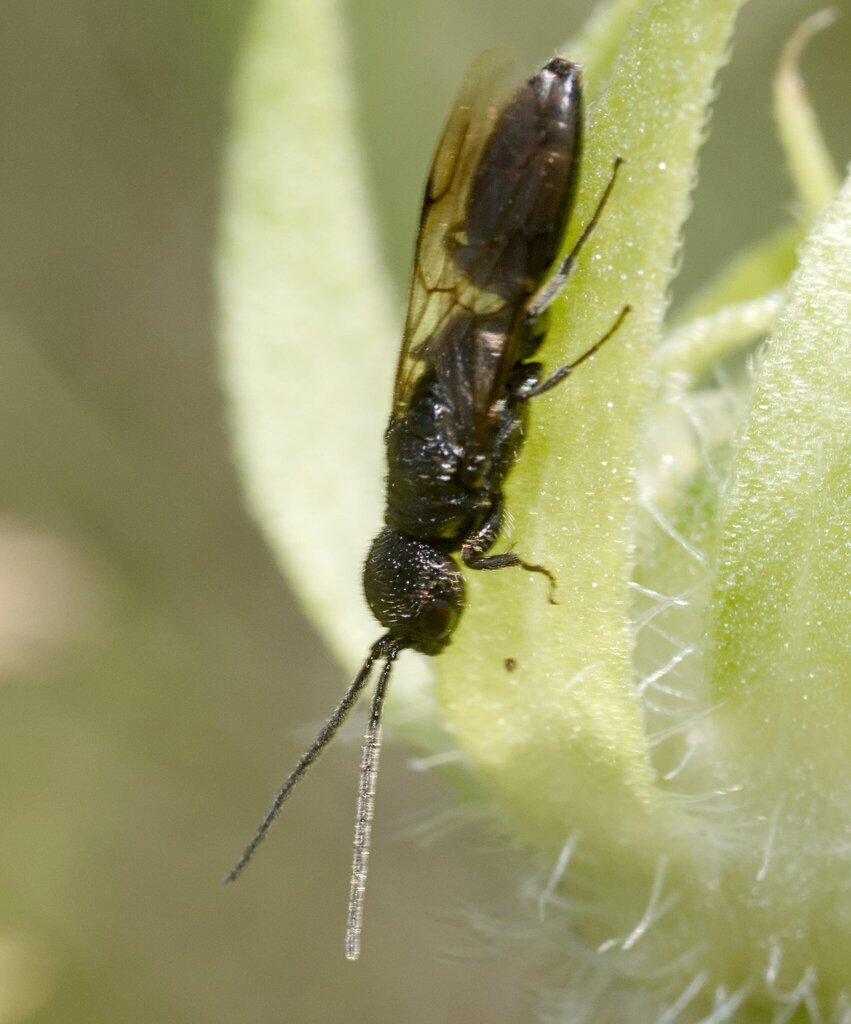
El Pristepyris es una avispa esbelta de cuerpo oscuro, a menudo de color negro brillante o negro parduzco. Las hembras pueden ser completamente ápteras o poseer alas muy cortas, contrastando fuertemente con los machos con alas completas, y ambos sexos tienen antenas distintivas.
Categoría
InsectosRareza
Común
Peligro
1/5 · Muy bajo
Snaps
¡Sé la primera persona en hacer un snap!
¡Las crías de Pristepyris crecen comiendo a su huésped de adentro hacia afuera!
¡En lugar de volar, muchas hembras de Pristepyris caminan como hormigas para encontrar a sus presas escondidas!
¡Algunas madres Pristepyris pueden poner solo un huevo en una sola larva de escarabajo!
¡Estas diminutas avispas son detectives expertos, rastreando escarabajos perforadores de madera en tu casa!
Pristepyris puede localizar larvas de escarabajos escondidas detectando sutiles olores químicos gracias a sus antenas sensibles, lo que les ayuda a encontrar alimento para sus crías.
Las hembras de Pristepyris a menudo no tienen alas en absoluto, mientras que los machos tienen alas completas, lo que ayuda a las hembras a explorar espacios reducidos y a los machos a encontrar pareja.
Pristepyris puede paralizar a su presa huésped con una picadura venenosa, lo que ayuda a asegurar que el huésped permanezca inmóvil para que el huevo de la avispa se desarrolle de forma segura.
Las larvas de Pristepyris se alimentan de larvas de insectos paralizadas, principalmente larvas de escarabajos, que su madre encuentra.
Diferencias por edad: Las larvas comen a sus huéspedes; los adultos pueden beber néctar o agua.

Stegobium paniceum
Pristepyris parasita sus larvas.
Lasioderma serricorne
La avispa busca sus larvas como huéspedes.
Argiope aurantia
Las avispas adultas pueden convertirse en presa en sus telarañas.

Parus major
Las aves forrajeras pueden comer avispas adultas.
Los animales solitarios viven solos durante la mayor parte de su vida y solo interactúan con otros para aparearse o cuidar de sus crías.
El camuflaje describe a los organismos que poseen colores o patrones que les permiten mezclarse con su entorno.
Colorido describe a organismos u objetos que exhiben una amplia variedad de colores brillantes y distintivos.
Este rasgo caracteriza a los organismos cuya dieta consiste total o principalmente en material vegetal.
Describe plantas que son particularmente atractivas y beneficiosas para una amplia variedad de organismos polinizadores.
Los hábitats boscosos son entornos terrestres dominados por una densa cubierta arbórea, que sustentan una gran diversidad de vida animal y vegetal.
Los animales diurnos están activos principalmente durante el día y suelen descansar o dormir por la noche.
Relativo a especies que son significativamente más pequeñas que lo típico o promedio de su tipo.
Describe organismos que transfieren polen, permitiendo la fertilización y reproducción de las plantas.
Todavía no hay alias listados.
Peligro
1/5 · Muy bajo
¡Siempre mira pero no toques a los insectos a menos que sepas que son seguros!
Busca seis patas, antenas, tres secciones en el cuerpo y la forma de las alas. Los escarabajos tienen las alas delanteras endurecidas; las moscas solo tienen un par que funciona. Los insectos diminutos pueden necesitar un primer plano antes de que se vea su grupo. Identificador de insectos: sube una foto y compara los detalles visibles.
4-10 mm
2-6 mm
10-30 días
2 km/h
Las larvas de Pristepyris se alimentan de larvas de insectos paralizadas, principalmente larvas de escarabajos, que su madre encuentra.
Bosques
Emboscada
Acércate para separar los grupos y explorar dónde se ha fotografiado este objeto.
Los snaps recientes aparecerán aquí a medida que se añadan nuevas observaciones.
Llévate el descubrimiento
Haz una foto con Snappit, identifica la especie y guarda el hallazgo en tu colección.