

Pua Kala
argemone glauca
Pua Kala (Argemone glauca), también conocida como la amapola hawaiana, es una llamativa especie de planta endémica nativa de las Islas Hawaianas. Esta resistente perenne es reconocida por sus brillantes flores blancas contrastadas con un centro de numerosos estambres de color amarillo brillante. Prosperando en los duros y áridos ambientes de dunas costeras, matorrales secos y laderas volcánicas, se destaca como una de las pocas plantas nativas hawaianas equipadas con espinas defensivas afiladas. Históricamente, Pua Kala tuvo un valor cultural y medicinal significativo para los nativos hawaianos, quienes utilizaban su savia de color amarillo brillante, similar al látex, para aliviar dolores de muelas y afecciones cutáneas. Hoy en día, sirve como un componente vital de los frágiles ecosistemas de tierras secas de Hawái, proporcionando alimento para polinizadores nativos y actuando como una especie pionera en terrenos volcánicos secos.
Hábitat: Típicamente se encuentra en laderas secas, rocosas y expuestas al sol, campos de lava y matorrales costeros en todas las Islas Hawaianas.
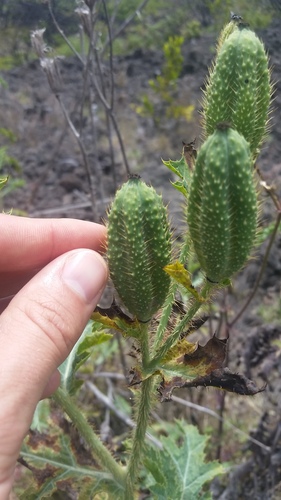
Esta hierba erguida y tupida suele alcanzar alturas entre 60 y 120 cm. Se identifica fácilmente por sus espectaculares y grandes flores blancas con pétalos parecidos a papel crepé que miden hasta 8 cm de ancho, rodeando un denso racimo central de estambres de color amarillo dorado. Su follaje es profundamente lobulado, de color verde azulado pálido (glauco) y está fuertemente armado con espinas afiladas y rígidas a lo largo de los márgenes de las hojas y los tallos. Después de la floración, produce vainas de semillas oblongas y espinosas que se abren para liberar numerosas semillas negras pequeñas.
Categoría
PlantasRareza
Común
Peligro
1/5 · Muy bajo
Snaps
¡Sé la primera persona en hacer un snap!
Los antiguos hawaianos usaban la brillante savia de látex amarilla de la planta como analgésico para tratar dolores de muelas y neuralgias dolorosas.
Su nombre científico, Argemone glauca, se refiere a sus hojas glaucas o cerosas de color verde azulado que le ayudan a sobrevivir la intensa luz solar hawaiana.
Pua Kala es una de las pocas plantas nativas hawaianas que desarrolló defensas físicas como espinas, lo cual es inusual ya que Hawái históricamente carecía de herbívoros mamíferos nativos.
Produce una capa cerosa y polvorienta en sus hojas que les da un tono azulado y ayuda a reducir la pérdida de agua en condiciones áridas.
Disuade a los herbívoros potenciales con espinas afiladas y formidables que cubren densamente sus tallos, hojas y vainas de semillas.
Desarrolla un sistema de raíz pivotante profundo y robusto para asegurar la humedad y estabilizarse en suelos volcánicos sueltos.
Como planta fotoautótrofa, Pua Kala genera su propio alimento utilizando la luz solar, el dióxido de carbono, el agua y los minerales a través del proceso de fotosíntesis.
Hylaeus anthracinus
La abeja de cara amarilla endémica de Hawái recolecta polen de los grandes centros amarillos de las flores de Pua Kala.
Xylocopa sonorina
La abeja carpintera de Sonora introducida visita las flores en busca de néctar y actúa como polinizador eficaz.
Aún no hay insignias de rasgos asignadas a este objeto.
Todavía no hay alias listados.
Las colecciones para este objeto aparecerán aquí a medida que se añadan más temas.
Peligro
1/5 · Muy bajo
Todavía no hay notas especiales de seguridad.
Empieza por la planta entera y luego compara la disposición de las hojas, sus bordes, los tallos y las flores o frutos, si los hay. Las hojas opuestas crecen en parejas; las alternas salen de una en una a lo largo del tallo. Juntos, estos detalles dicen mucho más que una sola hoja verde. Identificador de plantas: sube una foto y compara los detalles visibles.
60-120 cm
2-5 años
Como planta fotoautótrofa, Pua Kala genera su propio alimento utilizando la luz solar, el dióxido de carbono, el agua y los minerales a través del proceso de fotosíntesis.
Típicamente se encuentra en laderas secas, rocosas y expuestas al sol, campos de lava y matorrales costeros en todas las Islas Hawaianas.
50-150
14-28 días
Acércate para separar los grupos y explorar dónde se ha fotografiado este objeto.
Los snaps recientes aparecerán aquí a medida que se añadan nuevas observaciones.
Llévate el descubrimiento
Haz una foto con Snappit, identifica la especie y guarda el hallazgo en tu colección.