

Puerto Rican Crested Toad
peltophryne lemur
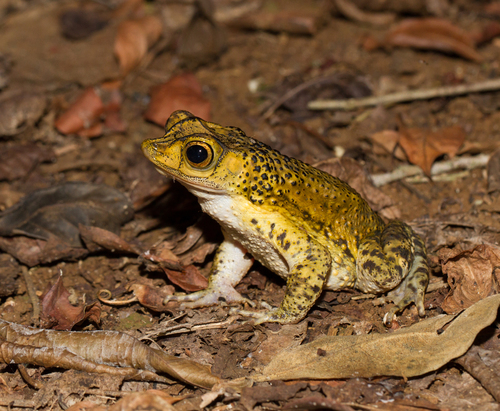
The Puerto Rican Crested Toad (Peltophryne lemur) holds the unique distinction of being the only toad species native to Puerto Rico. Once thought to be entirely extinct, this remarkably resilient amphibian was miraculously rediscovered in the late 20th century, sparking vital conservation efforts to save it from the brink. It spends most of its life hidden away in deep limestone fissures and burrows, emerging only during intense rainstorms to breed in temporary seasonal pools. With its rugged, ancient appearance and intense golden eyes, the Puerto Rican Crested Toad looks like a miniature relic from a bygone era, serving as a vital emblem for Caribbean amphibian conservation and the delicate balance of island ecosystems.
Hábitat: Typically found in low-elevation subtropical dry forests and rocky karst landscapes, hiding deep within limestone crevices or burrows.
This medium-sized toad is instantly recognizable by the prominent, bony crests located above its eyes and a distinctively upturned snout, giving it a somewhat grumpy, prehistoric expression. Females are significantly larger and feature much more pronounced crests than males. Their granular, warty skin is typically mottled in shades of yellowish-brown, olive, and dark blackish-brown, providing excellent camouflage against rocky terrain and leaf litter. They possess strikingly bright golden or brassy irises and have large, raised parotoid glands positioned just behind their heads.
Categoría
AnfibiosRareza
Common
Peligro
1/5 · Muy bajo
Snaps
¡Sé la primera persona en hacer un snap!
Because they only breed during extreme rain events, they can sometimes remain dormant in their rocky burrows for over a year without reproducing.
Over 300,000 captive-bred tadpoles have been released back into Puerto Rico by North American zoos to help save the species from extinction.
This elusive toad was believed to be completely extinct from 1931 until a surviving population was miraculously rediscovered in 1967.
To survive the harsh Caribbean dry season, they wedge themselves deep into porous limestone rock, which maintains a humid microclimate.
During long dry spells, the toad retreats deep into porous limestone crevices to conserve moisture, entering a state of dormancy until heavy rains return.
It possesses large parotoid glands behind its head that can secrete a milky, toxic substance to deter predators when threatened.
Its heavily textured skin and mottled brown-and-olive coloring perfectly mimic the rocky, leaf-strewn forest floor, making it nearly invisible to visually-hunting predators.
Adults feed primarily on a variety of terrestrial invertebrates, while tadpoles consume algae and detritus.
Diferencias por edad: Tadpoles are aquatic herbivores feeding on algae and detritus, transitioning to terrestrial insectivores after metamorphosis.
Urva auropunctata
Preys on the native toad, significantly impacting its small, vulnerable populations.
Rhinella marina
Competes for resources and breeding pools, often outcompeting the native toad.
Carabidae
Hunted by the crested toad as a primary source of protein.
Aún no hay insignias de rasgos asignadas a este objeto.
Las colecciones para este objeto aparecerán aquí a medida que se añadan más temas.
Peligro
1/5 · Muy bajo
Todavía no hay notas especiales de seguridad.
La forma más fácil de identificar a Puerto Rican Crested Toad es usar la aplicación de identificación de naturaleza Snappit.
6-12 cm
0.02-0.08 kg
10-15 años
Adults feed primarily on a variety of terrestrial invertebrates, while tadpoles consume algae and detritus.
Typically found in low-elevation subtropical dry forests and rocky karst landscapes, hiding deep within limestone crevices or burrows.
Ambush
1000-3000
Acércate para separar los grupos y explorar dónde se ha fotografiado este objeto.
Los snaps recientes aparecerán aquí a medida que se añadan nuevas observaciones.















