





purple crownvetch
Securigera varia
Purple crownvetch is a beautiful plant with lovely purple flowers that bloom in spring and summer. It grows low to the ground and is often found in fields and along roadsides.
Hábitat: Grasslands
The purple crownvetch has clusters of small, delicate pinkish-purple flowers that resemble tiny crowns. Its long, slender stems vine across the ground, covered with compound leaves made up of many small, oval leaflets, creating dense green mats.
Categoría
PlantasRareza
Common
Peligro
1/5 · Muy bajo
Snaps
¡Sé la primera persona en hacer un snap!
Crownvetch can grow so fast and thick, it can cover and shade out other plants nearby!
Each little flower looks just like a tiny pea, but it grows in a bundle, not a pod!
Its strong roots can grow down several feet, making it super tough to remove!
The unique flower clusters are shaped like a small 'crown,' giving the plant its royal name.
Purple crownvetch has deep, spreading roots that help it hold soil firmly, preventing erosion on slopes and disturbed ground.
Purple crownvetch can take nitrogen from the air and put it into the soil, making it richer for itself and other plants.
Apis mellifera
Visits flowers for nectar and pollen.
Rhizobium leguminosarum
Lives in roots, converting atmospheric nitrogen into nutrients.
Odocoileus virginianus
White-tailed deer may browse foliage, especially when other food is scarce.
Describe a los organismos capaces de convertir el nitrógeno atmosférico en compuestos utilizables por las plantas.
Las plantas con flores son cualquier planta que produce flores como parte de su ciclo reproductivo.
Las plantas de floración de verano producen sus flores durante la temporada estival, a menudo aportando un color vibrante cuando muchas otras plantas ya han terminado de florecer.
Las plantas de floración primaveral producen sus flores durante la temporada de primavera, lo que a menudo significa el final del invierno y el comienzo de un nuevo crecimiento.

Las flores fragantes emiten un aroma agradable, a menudo para atraer polinizadores o como defensa.

Las plantas tolerantes a la sequía pueden sobrevivir y florecer en condiciones de escasa disponibilidad de agua.

Colorido describe a organismos u objetos que exhiben una amplia variedad de colores brillantes y distintivos.

Describe plantas que son particularmente atractivas y beneficiosas para una amplia variedad de organismos polinizadores.

Los hábitats de pastizales son biomas terrestres dominados por pastos y plantas herbáceas, que sustentan a una variedad de animales de pastoreo.
Todavía no hay alias listados.
Peligro
1/5 · Muy bajo
Always look but don't touch plants unless you know they are safe!
30-90 cm
150-400 cm
0.5-1 cm
Late spring to early fall
No
Moderada
Perenne
Insectos
Acércate para separar los grupos y explorar dónde se ha fotografiado este objeto.
Los snaps recientes aparecerán aquí a medida que se añadan nuevas observaciones.
.jpg)
Pennsylvania, US
Puedes ver Mariposa Almirante y Allegheny Mountain Dusky Salamander.
Ver guía →

Iowa, US
Puedes ver Ciervo De Cola Blanca, Rana Toro Americana y Cup Plant.
Ver guía →
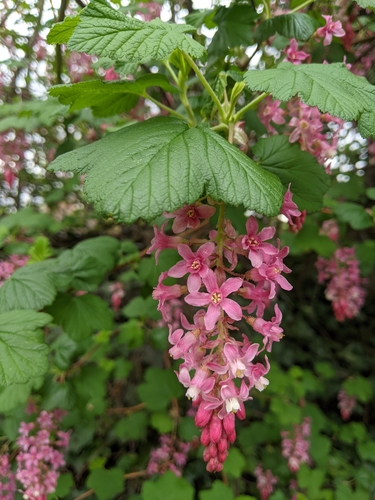
Kansas, US
Puedes ver Grosellero Espinoso, Arce Rojo y Virginia Creeper.
Ver guía →
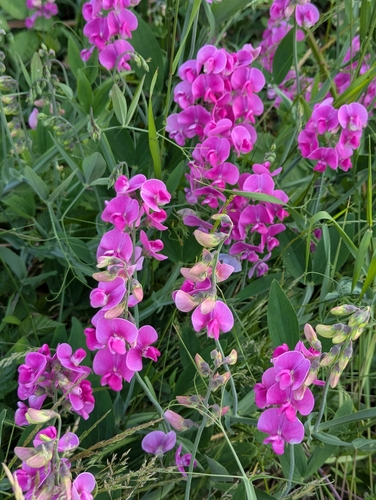
Michigan, US
Puedes ver Broad-Leaved Sweet Pea, Garlic Mustard y White Baneberry.
Ver guía →

New York, US
Puedes ver Red Deadnettle, Common Milkweed y águila Pescadora.
Ver guía →

New York, US
Puedes ver Spotted Lanternfly, Common Reed y Oriental Bittersweet.
Ver guía →



















