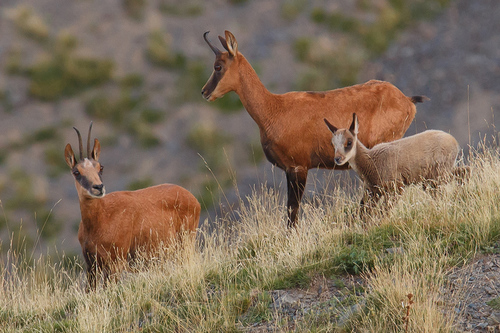


Pyrenean Chamois
rupicapra pyrenaica
The Pyrenean chamois (Rupicapra pyrenaica) is a remarkable goat-antelope endemic to the rugged mountain ranges of southwestern Europe, particularly the Pyrenees, Cantabrian Mountains, and Apennines. Renowned for their incredible agility, these animals are perfectly adapted to life on sheer, dizzying precipices where few predators dare to tread. They play a vital role in alpine ecosystems as selective grazers and are a sought-after sight for mountain hikers. Observing a Pyrenean chamois effortlessly scaling a near-vertical cliff is a breathtaking experience. Their specialized physiology, from unique gripping hooves to a highly insulating winter coat, allows them to thrive in harsh, high-altitude conditions. While they were historically threatened by overhunting, strong conservation efforts have allowed populations to bounce back, making them a true symbol of alpine wilderness survival.
Hábitat: Found primarily in steep alpine and subalpine rocky environments, high-altitude meadows, and bordering montane forests.
The Pyrenean chamois is a medium-sized bovid, standing about 70 to 80 cm at the shoulder. Both males and females sport distinctive, slender black horns that rise straight up before hooking sharply backward at the tips. Their coat undergoes a striking seasonal transformation: in the summer, it is a vibrant reddish-brown, while in winter, it darkens to a thick, blackish-brown to absorb solar heat. A key identifying feature is their pale white face marked with a stark, dark stripe that runs across each eye to the snout, giving them a distinct masked appearance.
Categoría
MamíferosRareza
Common
Peligro
1/5 · Muy bajo
Snaps
¡Sé la primera persona en hacer un snap!
Both male and female Pyrenean chamois grow the iconic backward-hooking horns, although the males' horns are slightly thicker and more curved.
Their heart is disproportionately large for their body size, pumping oxygen-rich blood efficiently to support their strenuous leaping and climbing in thin mountain air.
To survive freezing winter temperatures, their coat turns almost completely black, helping them absorb and retain maximum heat from the alpine sun.
Their hooves feature a hard outer edge for digging into small crevices and a soft, rubbery inner pad that grips slick rock surfaces.
Their coat dramatically changes from a light reddish-brown in summer to a dense, dark brown in winter, providing both camouflage in varied seasonal terrains and vital thermoregulation.
Extremely powerful hind legs allow them to jump up to 2 meters high and 6 meters far across treacherous, rocky gaps with pinpoint precision.
They are selective grazers and browsers, feeding on a variety of mountain vegetation that changes with the seasons.
Diferencias por edad: Kids rely on their mother's milk for the first five to six months before transitioning entirely to solid vegetation.
Aquila chrysaetos
Golden eagles are a primary aerial predator, occasionally snatching newborn chamois kids from exposed cliff edges.
Canis lupus
Wolves are apex predators in the region that hunt both adult and young chamois in overlapping mountain territories.
Festuca alpina
Provides a crucial grazing food source for the chamois during the summer months when snow retreats.
Marmota marmota
Competes with the chamois for similar alpine herbaceous vegetation in high-altitude meadows.
Aún no hay insignias de rasgos asignadas a este objeto.
Todavía no hay alias listados.
Las colecciones para este objeto aparecerán aquí a medida que se añadan más temas.
Peligro
1/5 · Muy bajo
Todavía no hay notas especiales de seguridad.
La forma más fácil de identificar a Pyrenean Chamois es usar la aplicación de identificación de naturaleza Snappit.
90-130 cm
20-50 kg
14-22 años
50 km/h
They are selective grazers and browsers, feeding on a variety of mountain vegetation that changes with the seasons.
Found primarily in steep alpine and subalpine rocky environments, high-altitude meadows, and bordering montane forests.
Grazing
Acércate para separar los grupos y explorar dónde se ha fotografiado este objeto.
Los snaps recientes aparecerán aquí a medida que se añadan nuevas observaciones.

Spain, ES
Puedes ver Androsace Ciliata, Purple Saxifrage y Helecho Vejiga Frágil.
Ver guía →
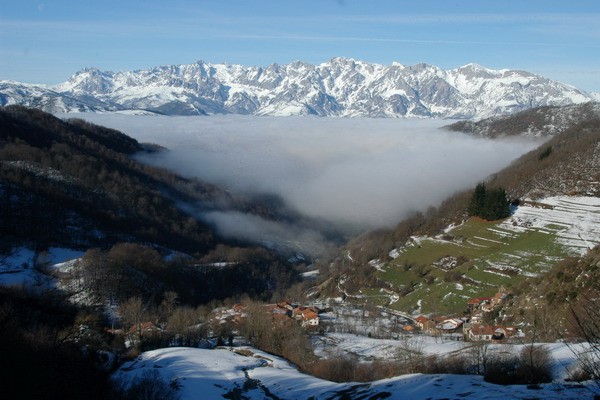
Spain, ES
Puedes ver Pyrenean Chamois, Alpine Toadflax y Pyrenean Eryngo.
Ver guía →