

Pyrenean Eryngo
eryngium bourgatii
The Pyrenean Eryngo is a striking, perennial herb renowned for its structural beauty and intense metallic blue-violet coloration. Native to the rugged mountain slopes and subalpine meadows of the Pyrenees and the Iberian Peninsula, this thistle-like plant belongs surprisingly to the carrot and parsley family (Apiaceae). It forms dense, ornamental clumps of deeply carved, spiny foliage, culminating in dazzling starburst flowers that attract a wide array of high-altitude pollinators. Its dramatic aesthetic has made it a favorite among rock gardeners and botanists alike.
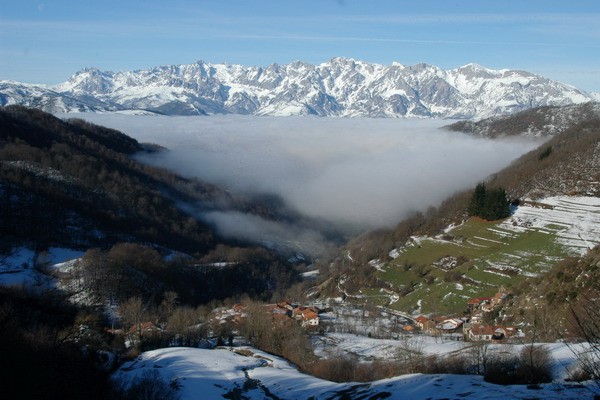
Hábitat: Found in rocky limestone pastures, mountain screes, and sunny alpine meadows.
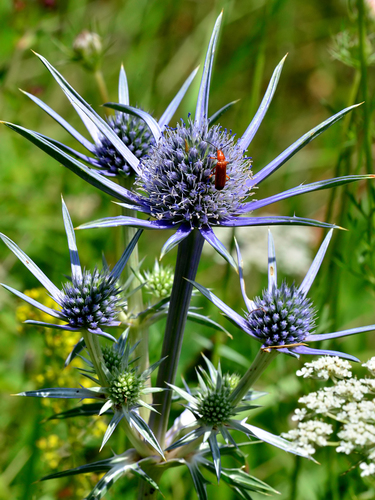
This plant stands between 30 to 60 centimeters tall, featuring deeply lobed, spiny leaves marked with prominent silver-white veins. In mid to late summer, the stiff, branching stems and the dome-shaped flower heads transform into an eye-catching, iridescent metallic blue or violet. The small flowers are clustered in tight, egg-shaped heads, which are framed by a prominent, spikey collar of long, narrow, steel-blue bracts.
Categoría
PlantasRareza
Common
Peligro
1/5 · Muy bajo
Snaps
¡Sé la primera persona en hacer un snap!
Despite its extremely prickly appearance, it is a close relative of carrots, parsley, and celery.
Its tough, dried flower heads are often collected for long-lasting, rustic floral arrangements.
The striking blue color of the stems and flower heads intensifies when the plant is exposed to full sunlight and cold alpine nights.
The brilliant blue pigmentation acts as a natural sunscreen, protecting the plant's tissues from intense ultraviolet radiation at high altitudes.
Its thick, waxy, and highly spiny leaves drastically reduce water loss and deter herbivores in arid mountain climates.
A long, resilient taproot system secures the plant in unstable limestone scree and accesses deep water reservoirs.
As a photosynthetic plant, it generates its own energy from sunlight, water, and carbon dioxide, while absorbing essential minerals from alpine soil.
Apis mellifera
Provides rich nectar for high-altitude bees, assisting in pollination.
Rupicapra pyrenaica
The tough, spiny stems protect the plant from being heavily grazed by alpine mammals.
Aún no hay insignias de rasgos asignadas a este objeto.
Todavía no hay alias listados.
Las colecciones para este objeto aparecerán aquí a medida que se añadan más temas.
Peligro
1/5 · Muy bajo
Todavía no hay notas especiales de seguridad.
La forma más fácil de identificar a Pyrenean Eryngo es usar la aplicación de identificación de naturaleza Snappit.
30-60 cm
0.1-0.5 kg
3-10 años
As a photosynthetic plant, it generates its own energy from sunlight, water, and carbon dioxide, while absorbing essential minerals from alpine soil.
Found in rocky limestone pastures, mountain screes, and sunny alpine meadows.
Acércate para separar los grupos y explorar dónde se ha fotografiado este objeto.
Los snaps recientes aparecerán aquí a medida que se añadan nuevas observaciones.