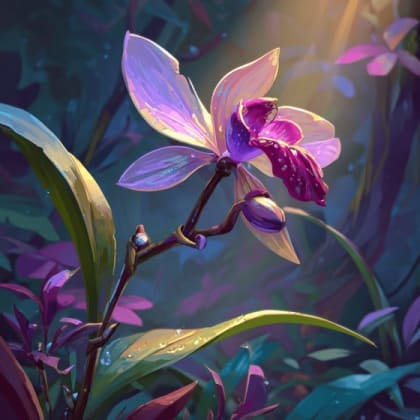
rattlesnake master
Eryngium yuccifolium
Rattlesnake master is a unique plant with spiky, green leaves and round, blue flowers. It grows tall and is often found in prairies and open fields, making it a special sight in nature.
Hábitat: Prairies and open fields
The rattlesnake master has stiff, sword-like blue-green leaves resembling a yucca plant. Its unique, spherical flower heads are greenish-white, covered in small, spiky bracts, making it stand out in prairies and savannas. The overall appearance is architectural and tough.
Categoría
PlantasRareza
Common
Peligro
1/5 · Muy bajo
Snaps
¡Sé la primera persona en hacer un snap!
Despite its fearsome name, this plant has no direct connection to rattlesnakes, only old folklore!
Its scientific name, Eryngium yuccifolium, means 'yucca-leaved thistle' even though it's not a true thistle!
Native Americans historically used its fibrous leaves to weave ropes and mats, showing great resourcefulness!
The plant's deep root system can extend over 15 feet underground, helping it find water in dry seasons!
Rattlesnake master has incredibly tough, extensive roots that anchor it firmly, helping it withstand strong winds in open habitats.
Its stiff, pointy leaves act like a spiky shield, helping to deter hungry animals from nibbling on the plant.
The unique, globe-like, thistle-esque flower heads attract a wide variety of bees, wasps, and butterflies for pollination.
Danaus plexippus
Monarch butterflies visit its flowers for nectar.
Apis mellifera
Honey bees are frequent visitors to its nectar-rich blooms.
Odocoileus virginianus
Deer occasionally browse its foliage, especially new growth.
Scolia dubia
These beneficial wasps gather nectar and pollen from the flowers.
Las plantas con flores son cualquier planta que produce flores como parte de su ciclo reproductivo.
Las plantas de floración de verano producen sus flores durante la temporada estival, a menudo aportando un color vibrante cuando muchas otras plantas ya han terminado de florecer.
Las plantas medicinales poseen compuestos químicos que pueden utilizarse con fines terapéuticos para tratar enfermedades o mantener la salud.
Las plantas tolerantes a la sequía pueden sobrevivir y florecer en condiciones de escasa disponibilidad de agua.

Describe plantas que son particularmente atractivas y beneficiosas para una amplia variedad de organismos polinizadores.

Los hábitats de pastizales son biomas terrestres dominados por pastos y plantas herbáceas, que sustentan a una variedad de animales de pastoreo.

Posee proyecciones puntiagudas y afiladas o espinas en el cuerpo o en la superficie.
Todavía no hay alias listados.
Peligro
1/5 · Muy bajo
Always look but don't touch the sharp leaves to stay safe.
50-200 cm
30-60 cm
1-2 cm
Verano
No
Ninguna
Perenne
Insectos
Acércate para separar los grupos y explorar dónde se ha fotografiado este objeto.
Los snaps recientes aparecerán aquí a medida que se añadan nuevas observaciones.