






Red-footed Tortoise
Chelonoidis carbonarius
The Red-footed Tortoise is a colorful tortoise with bright red and yellow markings on its legs and shell. They are gentle creatures that love to munch on fruits and vegetables in warm, sunny places.
Hábitat: Rainforests
The Red-footed Tortoise has a dark, domed shell, often with yellowish or orange patches on its scutes. Its legs, head, and tail are distinctively marked with bright red, orange, or yellow scales, giving it a vibrant appearance unlike other duller tortoises.
Categoría
ReptilesRareza
Common
Peligro
1/5 · Muy bajo
Snaps
¡Sé la primera persona en hacer un snap!
Despite their slow speed, Red-footed Tortoises are surprisingly good climbers, scaling low branches.
Their vibrant color markings are unique to each tortoise, like human fingerprints!
These tortoises can sometimes live longer than your grandparents, reaching 60 years or more!
They are sometimes called "forest recyclers" because they help clear decaying plants and even carrion!
Red-footed Tortoises can dig shallow burrows that help them escape the heat and hide from predators in their environment.
This tortoise flashes its brightly colored legs and head to signal its presence to other tortoises and express itself.
Red-footed Tortoises have an excellent sense of smell that helps them locate ripe, fallen fruits and other foods on the forest floor.
They eat a mix of plants, fruits, and even small animals, making them very adaptable omnivores.
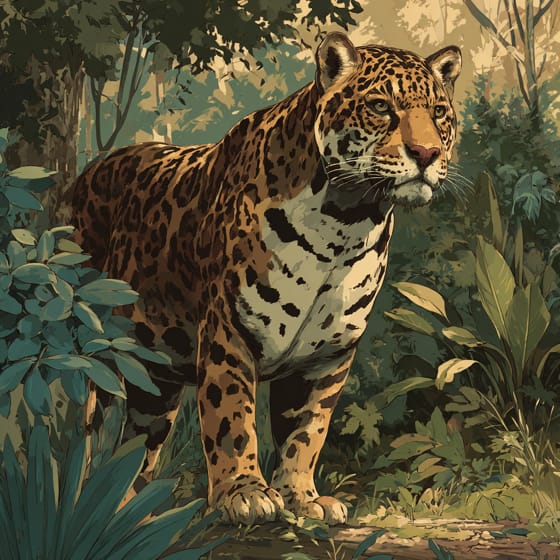
Panthera onca
Juvenile tortoises can be prey for jaguars.
Boa constrictor
Young Red-footed Tortoises are vulnerable to snakes.
Ficus citrifolia
They commonly eat fallen fruits from fig trees.
Los animales solitarios viven solos durante la mayor parte de su vida y solo interactúan con otros para aparearse o cuidar de sus crías.
Los animales arborícolas viven principalmente en los árboles, utilizándolos como refugio, alimento y protección contra los depredadores.
Colorido describe a organismos u objetos que exhiben una amplia variedad de colores brillantes y distintivos.
Este rasgo caracteriza a los organismos cuya dieta consiste total o principalmente en material vegetal.

Este rasgo caracteriza a los organismos con una esperanza de vida excepcionalmente larga en comparación con otros de su especie.
Este rasgo de hábitat se refiere a las especies que se encuentran en las selvas tropicales, caracterizadas por una alta precipitación anual, gran biodiversidad y una densa cubierta arbórea.

Acorazado describe a los animales protegidos por una cubierta externa dura o caparazón para defenderse.

Los animales diurnos están activos principalmente durante el día y suelen descansar o dormir por la noche.

El estado de peligro de extinción indica que una especie corre un riesgo muy alto de extinguirse en estado silvestre en un futuro próximo.
Todavía no hay alias listados.
Peligro
1/5 · Muy bajo
Always watch from a distance and never try to pick up a tortoise.
30-45 cm
6-15 kg
30-60 años
0.8 km/h
They eat a mix of plants, fruits, and even small animals, making them very adaptable omnivores.
Rainforests
Foraging
2-15
Acércate para separar los grupos y explorar dónde se ha fotografiado este objeto.
Los snaps recientes aparecerán aquí a medida que se añadan nuevas observaciones.

Pennsylvania, US
Puedes ver Zorro Rojo, Western Barn Owl y Jaguar.
Ver guía →

Texas, US
Puedes ver León Africano, Equus Africanus Asinus y Tigre.
Ver guía →
Florida, US
Puedes ver León Africano, Guepardos y Mainland Clouded Leopard.
Ver guía →

California, US
Puedes ver Yellow-Footed Tortoise, Ajolote y Panda Rojo.
Ver guía →

Northern Ireland, UK
Puedes ver León Africano, Ardilla Roja y Jirafas.
Ver guía →

Spain, ES
Puedes ver Panda Gigante, Panda Rojo y Elefante Asiático.
Ver guía →















