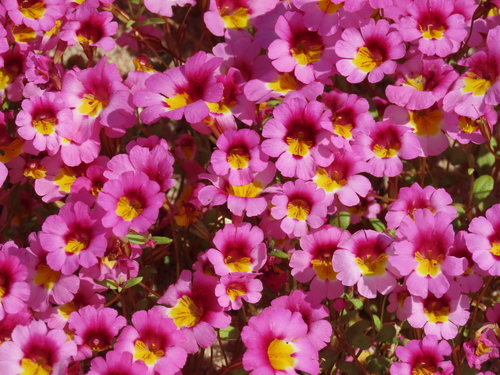


Red Rock Canyon Monkeyflower
erythranthe rhodopetra
The Red Rock Canyon Monkeyflower (Erythranthe rhodopetra) is a charming, rare annual herb native to the arid desert regions of western North America. Hugging the rugged, sandstone-carved terrain of southern Nevada and eastern California, this resilient botanical gem bursts into bloom after brief seasonal rains, painting the stark Mojave landscape with vibrant splashes of color. Despite its delicate appearance, this specialized member of the Phrymaceae family has adapted to withstand intense sun, parched soils, and volatile desert weather. Because of its highly localized habitat requirements, the Red Rock Canyon Monkeyflower is a treasured sight for botanists and hikers alike. Its sudden, fleeting appearance during the spring months highlights the fragile beauty of desert ecosystems, serving as a reminder of the unique biodiversity tucked away in remote canyon cracks and gravelly washes.
Hábitat: Typically found nestled in damp sandstone crevices, gravelly desert washes, and rocky slopes within Mojave desert canyons.
This petite annual herb typically grows only 2 to 15 centimeters tall, featuring slender, reddish-green stems coated in glandular hairs that give it a sticky feel. Its oppositely arranged leaves are small, ovate to lanceolate, and often display a subtle purplish tint under intense sunlight. The defining feature of the plant is its trumpet-shaped, bilateral flower, which ranges in color from deep pinkish-red to vibrant magenta. The throat of the flower is often marked with intricate yellow ridges and fine purple spots, acting as a guide for tiny insect pollinators.
Categoría
PlantasRareza
Common
Peligro
1/5 · Muy bajo
Snaps
¡Sé la primera persona en hacer un snap!
Because of its highly seasonal nature, seeds of this species can remain dormant in the scorching desert soil for several years waiting for the perfect rainfall.
Its sticky, hairy coating acts like a natural sunscreen and dust shield, trapping fine particles to help insulate the plant from intense desert heat.
The name 'monkeyflower' comes from the shape of the blossoms, which some early botanists thought resembled the face of a smiling monkey.
The plant quickly germinates, flowers, and sets seed within a brief window following winter rains to avoid the harsh summer heat.
Stems and leaves produce sticky, glandular secretions that deter crawling insects and help reduce transpiration.
Exhibits an exceptional ability to colonize nutrient-poor sandstone cracks where water temporarily accumulates.
Like most plants, this species generates its own energy through photosynthesis, utilizing sunlight, carbon dioxide, water, and minerals.
Bombylius major
Pollinates the flowers while foraging for nectar in early spring.
Ovis canadensis nelsoni
Occasionally grazes on the delicate foliage when desert resources are scarce.
Glomus intraradices
Forms underground symbiotic networks that help the plant absorb scarce water and minerals.
Aún no hay insignias de rasgos asignadas a este objeto.
Todavía no hay alias listados.
Las colecciones para este objeto aparecerán aquí a medida que se añadan más temas.
Peligro
1/5 · Muy bajo
Todavía no hay notas especiales de seguridad.
La forma más fácil de identificar a Red Rock Canyon Monkeyflower es usar la aplicación de identificación de naturaleza Snappit.
2-15 cm
0.001-0.01 kg
0-1 años
Like most plants, this species generates its own energy through photosynthesis, utilizing sunlight, carbon dioxide, water, and minerals.
Typically found nestled in damp sandstone crevices, gravelly desert washes, and rocky slopes within Mojave desert canyons.
Acércate para separar los grupos y explorar dónde se ha fotografiado este objeto.
Los snaps recientes aparecerán aquí a medida que se añadan nuevas observaciones.












_001.jpg&width=800)



.jpg&width=800)