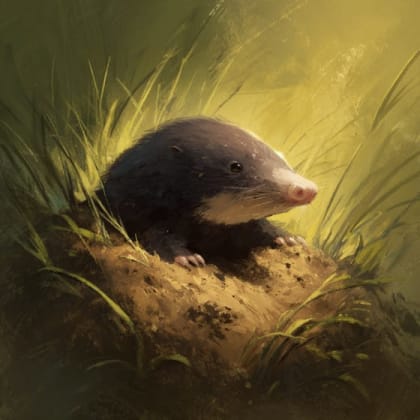
Rock Hyrax
Procavia capensis
Rock hyraxes are small, furry animals that look a bit like fluffy guinea pigs! They love to live on rocky cliffs and can often be seen basking in the sun with their friends.
Hábitat: Mountain regions
The Rock Hyrax is a small, stout mammal with a rabbit-like appearance but no visible tail. It has dense, brownish-grey fur, small rounded ears, and a blunt snout. Its feet feature soft, padded soles that provide excellent grip on rocky surfaces.
Categoría
MamíferosRareza
Common
Peligro
1/5 · Muy bajo
Snaps
¡Sé la primera persona en hacer un snap!
Despite their size, hyraxes are closely related to elephants and manatees!
Hyraxes have a 'thermostat' spot on their back that helps them feel the sun's warmth.
These social animals often huddle together for warmth and safety on cold nights.
They have special teeth that grow constantly, just like rodents, for munching tough plants.
Rock Hyrax has specialized padded feet that secrete a sticky fluid, helping them cling securely to steep, rocky cliffs.
Rock Hyrax can sunbathe in groups to warm up their bodies because they cannot regulate their temperature well on their own.
Rock Hyrax can use a wide range of calls, including loud shrieks, that help them warn others of danger or claim territory.
These herbivores munch on a variety of plants, from grasses and leaves to fruits and bark!
Aquila verreauxii
a primary aerial predator
Panthera pardus
a powerful ground predator
Python sebae
large snakes hunt young hyraxes
Peludo describe a los animales que poseen una cubierta densa de pelo o pelaje suave.
Los animales sociales viven en grupos organizados, cooperando para obtener beneficios de supervivencia como la búsqueda de alimento, la defensa y la cría de descendencia.
Los animales cantores producen vocalizaciones complejas, a menudo con el propósito de atraer parejas, defender el territorio o comunicarse dentro de su especie.
Este rasgo caracteriza a los organismos cuya dieta consiste total o principalmente en material vegetal.

Este rasgo de hábitat identifica a las especies que se encuentran en regiones montañosas, caracterizadas por su gran altitud, pendientes pronunciadas y zonas climáticas variables.

Los animales diurnos están activos principalmente durante el día y suelen descansar o dormir por la noche.
Peligro
1/5 · Muy bajo
Always observe wild animals from a distance and never try to touch them.
30-50 cm
2-5 kg
9-14 años
30 km/h
These herbivores munch on a variety of plants, from grasses and leaves to fruits and bark!
Mountain regions
Foraging
1-6
Acércate para separar los grupos y explorar dónde se ha fotografiado este objeto.
Los snaps recientes aparecerán aquí a medida que se añadan nuevas observaciones.