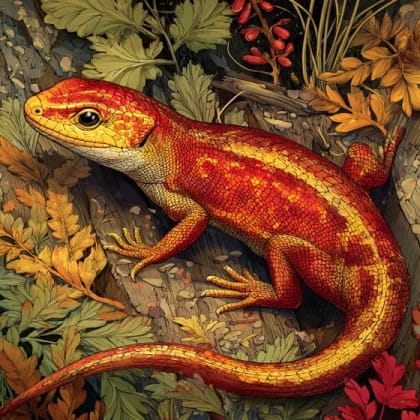
Rough Earthsnake
Virginia striatula
The Rough Earthsnake is a small, friendly snake that loves to hide in the grass and under leaves. It has a smooth, brownish body and can be found slithering around in gardens and forests.
Hábitat: Forests
The Rough Earthsnake is a small, slender reptile, typically grey, brown, or reddish-brown with a pale belly. Its keeled scales give it a distinctive rough texture, differentiating it from smoother-scaled species.
Categoría
ReptilesRareza
Common
Peligro
1/5 · Muy bajo
Snaps
¡Sé la primera persona en hacer un snap!
Rough Earthsnakes lay their eggs underground, keeping them safe and warm from harm!
These tiny snakes help gardens by eating pests like slugs and insect larvae!
They are completely harmless to humans, preferring to hide rather than bite!
When scared, they "play dead" by flipping over and staying perfectly still!
Rough Earthsnake has keeled scales that give it a rough texture, helping it grip soil and move through burrows.
Rough Earthsnake can burrow into soft soil using its pointed snout, helping it find food and shelter.
Rough Earthsnake has dull, earthy colors that help it blend perfectly with leaf litter and soil, hiding it from predators.
These small snakes love to snack on soft-bodied invertebrates found in moist soil and leaf litter.
Thamnophis sirtalis
Larger snakes like gartersnakes may prey on these small reptiles.
Coluber constrictor
Fast-moving racers will actively hunt and consume smaller snakes.
Didelphis virginiana
Opportunistic mammals like opossums may eat them if encountered.
Lumbricus terrestris
Earthsnakes primarily feed on soft-bodied invertebrates like earthworms.
Limax maximus
They actively forage for slugs and their eggs in moist leaf litter.
Los animales solitarios viven solos durante la mayor parte de su vida y solo interactúan con otros para aparearse o cuidar de sus crías.
El camuflaje describe a los organismos que poseen colores o patrones que les permiten mezclarse con su entorno.
Este rasgo identifica a los organismos cuya dieta consiste principalmente en insectos y otros pequeños invertebrados.
Los hábitats boscosos son entornos terrestres dominados por una densa cubierta arbórea, que sustentan una gran diversidad de vida animal y vegetal.

Los animales diurnos están activos principalmente durante el día y suelen descansar o dormir por la noche.
Todavía no hay alias listados.
Peligro
1/5 · Muy bajo
If you see a snake, it's best to watch from a distance and not touch it.
18-30 cm
0.005-0.02 kg
5-7 años
0.5 km/h
These small snakes love to snack on soft-bodied invertebrates found in moist soil and leaf litter.
Forests
Foraging
3-10
Acércate para separar los grupos y explorar dónde se ha fotografiado este objeto.
Los snaps recientes aparecerán aquí a medida que se añadan nuevas observaciones.




_close-up_(14085684563).jpg&width=800)