_fem%2C_oso_flaco%2C_sloco%2C_ca_oso_(1)_(8718083235).jpg&width=800)





Ruddy Duck
Oxyura jamaicensis
The Ruddy Duck is a small, colorful bird known for its bright blue bill and rusty-red body. Male Ruddy Ducks are especially striking during mating season when they show off their beautiful colors.
Hábitat: Wetlands
The Ruddy Duck is a small, stout duck with a distinctive stiff tail often held upright. Breeding males have a bright blue bill and rusty-red body, while females are duller brown with a dark bill stripe and paler cheek.
Categoría
AvesRareza
Common
Peligro
1/5 · Muy bajo
Snaps
¡Sé la primera persona en hacer un snap!
A male Ruddy Duck’s bill turns a super bright sky blue during mating season!
Ruddy Duck eggs are surprisingly huge, making them one of the biggest duck eggs!
Ruddy Ducks are very clumsy on land but are amazing underwater swimmers!
These ducks can hold their stiff tail feathers straight up in the air!
Ruddy Duck has a stiff, fan-like tail that helps them steer expertly underwater and when performing unique courtship displays.
Ruddy Duck can slow its heart rate and oxygen use, allowing them to stay underwater for surprisingly long periods.
They mostly eat tiny aquatic insects and plants found by diving deep underwater.
Diferencias por edad: Young chicks eat more insects, while adults consume more plant material.
Haliaeetus leucocephalus
Bald Eagles are aerial predators that hunt adult Ruddy Ducks.
Bubo virginianus
Great Horned Owls can snatch ducks from the water at night.
Anas platyrhynchos
Ruddy Ducks sometimes lay their eggs in the nests of other ducks.
Chironomus plumosus
Ruddy Ducks dive for midge larvae and other tiny aquatic insects.
Describe a los animales, principalmente aves, que poseen una cubierta de plumas.
Los animales sociales viven en grupos organizados, cooperando para obtener beneficios de supervivencia como la búsqueda de alimento, la defensa y la cría de descendencia.
Colorido describe a organismos u objetos que exhiben una amplia variedad de colores brillantes y distintivos.
Los filtradores obtienen nutrientes filtrando partículas de alimentos suspendidos y pequeños organismos del agua.

Este rasgo identifica a los organismos cuya dieta consiste principalmente en insectos y otros pequeños invertebrados.

Este rasgo de hábitat identifica especies que se encuentran en humedales, que son áreas de tierra saturadas de agua, ya sea permanente o estacionalmente, e incluyen marismas, pantanos y ciénagas.

Los animales diurnos están activos principalmente durante el día y suelen descansar o dormir por la noche.

Este rasgo identifica a los organismos que exhiben una rapidez excepcional en sus movimientos para cazar, escapar o desplazarse.

Los hábitats acuáticos abarcan entornos donde los organismos viven principalmente en el agua, incluidos océanos, ríos, lagos y humedales.

Los animales migratorios emprenden movimientos estacionales de una región a otra, típicamente en respuesta a cambios en el clima o la disponibilidad de alimentos.
Todavía no hay alias listados.
Peligro
1/5 · Muy bajo
Always watch birds from a distance and do not try to touch them.
35-43 cm
53-62 cm
0.42-0.85 kg
5-13 años
60 km/h
They mostly eat tiny aquatic insects and plants found by diving deep underwater.
Wetlands
Foraging
Acércate para separar los grupos y explorar dónde se ha fotografiado este objeto.
Los snaps recientes aparecerán aquí a medida que se añadan nuevas observaciones.
Florida, US
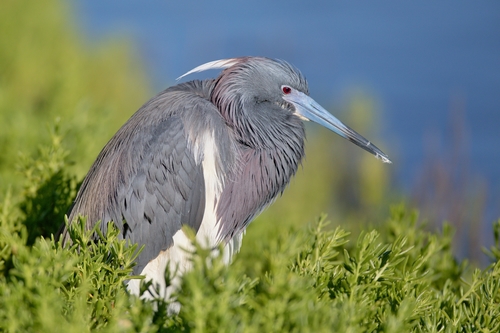
Puedes ver Tricolored Heron, Roseate Spoonbill y Wood Stork.
Ver guía →

New York, US
Puedes ver Spotted Lanternfly, Common Reed y Oriental Bittersweet.
Ver guía →

California, US
Puedes ver Pato, Black Phoebe y Acorn Woodpecker.
Ver guía →

South Carolina, US
Puedes ver León Africano, Jirafas y Ocelote.
Ver guía →