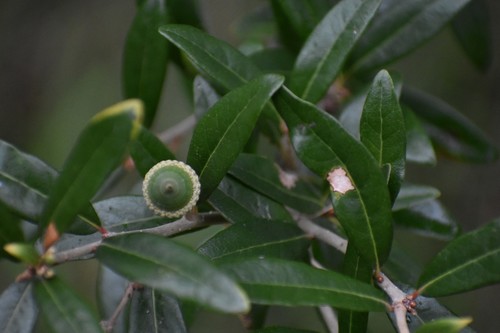
rusty staggerbush
Lyonia ferruginea
The rusty staggerbush is a small shrub with beautiful, bell-shaped flowers. It grows in sandy areas and is known for its rusty-colored stems, which give it a unique look!
Hábitat: Coastal areas
The rusty staggerbush has distinctive leathery, evergreen leaves with dense, reddish-brown hairs on their undersides and young stems, giving it a rusty appearance. Its small, white to pinkish, bell-shaped flowers hang in clusters, resembling tiny lanterns.
Categoría
PlantasRareza
Common
Peligro
1/5 · Muy bajo
Snaps
¡Sé la primera persona en hacer un snap!
Its bell-shaped flowers are perfectly designed for "buzz pollination" by visiting bumblebees.
Its nectar can make "mad honey" if bees gather enough, which can cause people to feel dizzy!
Some butterflies, like the Frosted Elfin, lay their eggs only on this plant's leaves!
The plant's scientific name, *ferruginea*, means "rusty" because of its hairy, reddish parts.
Rusty staggerbush produces special toxins called grayanotoxins that make its leaves and nectar poisonous, protecting it from many hungry animals.
Rusty staggerbush can grow in very dry, sandy soils thanks to its tough, leathery leaves that help it hold onto precious water.
Rusty staggerbush thrives in highly acidic and nutrient-poor soils where most other plants would struggle to find enough food.
Apis mellifera
Gathers nectar, which can result in toxic "mad honey."
Bombus impatiens
Performs "buzz pollination" to release pollen from its flowers.
Callophrys irus
Its caterpillars feed exclusively on the leaves of the rusty staggerbush.
Las flores en forma de campana poseen pétalos fusionados o dispuestos para formar una estructura acampanada o en forma de copa que se asemeja a una campana.
Las plantas con flores son cualquier planta que produce flores como parte de su ciclo reproductivo.
Un arbusto es una planta leñosa más pequeña que un árbol, típicamente con múltiples tallos que se ramifican desde o cerca del suelo.
Las plantas tolerantes a la sequía pueden sobrevivir y florecer en condiciones de escasa disponibilidad de agua.

Los colores otoñales se refieren al cambio estacional en la pigmentación del follaje, principalmente en plantas de hoja caduca, mostrando tonos vibrantes.

Describe plantas que son particularmente atractivas y beneficiosas para una amplia variedad de organismos polinizadores.

Los hábitats costeros son entornos dinámicos situados a lo largo de la interfaz entre la tierra y el mar, influenciados por las mareas, las olas y el agua salada.
Todavía no hay alias listados.
Peligro
1/5 · Muy bajo
Always look but don't touch plants unless an adult says it's okay.
150-500 cm
100-400 cm
0.5-1 cm
Spring-summer
No
Alta
Perenne
Insectos
Acércate para separar los grupos y explorar dónde se ha fotografiado este objeto.
Los snaps recientes aparecerán aquí a medida que se añadan nuevas observaciones.