
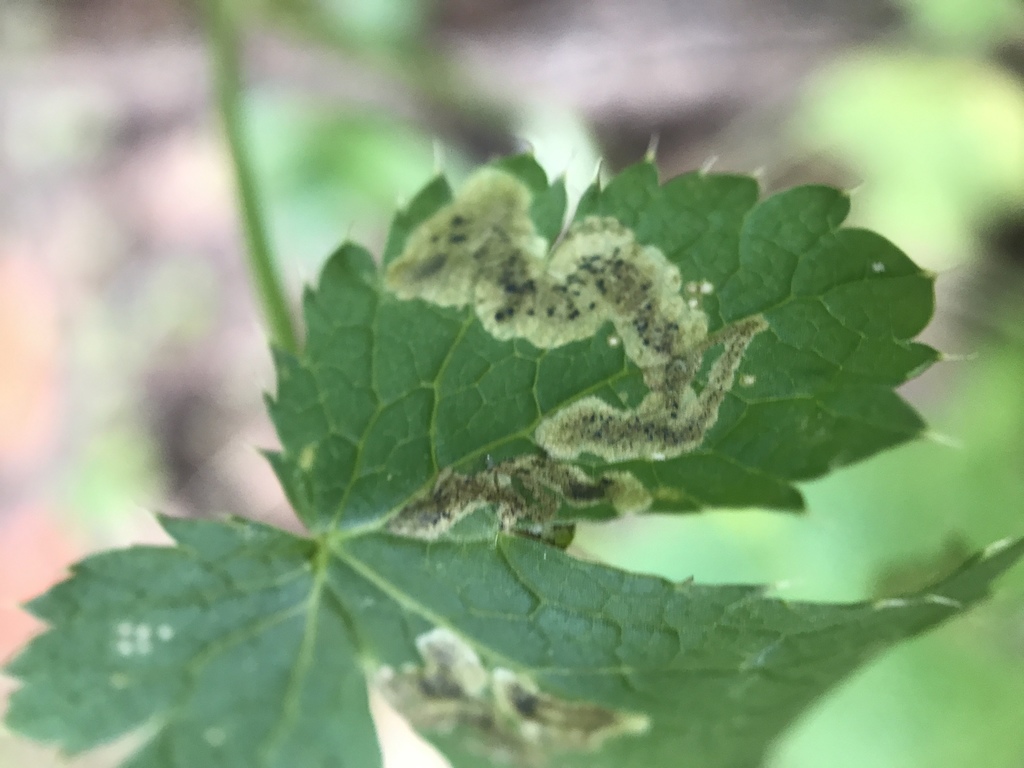





Sanicle Leafminer
Phytomyza saniculae
The Sanicle Leafminer is a tiny insect that lives in leaves. It makes little tunnels inside the leaves, which can look like tiny paths. These paths are where the insect eats and grows!
Hábitat: Forests
The Sanicle Leafminer is a tiny, dark-bodied fly, often appearing black or dark brown with translucent wings. Its small size, typically a few millimeters long, makes it easily mistaken for other minute flies. Its most striking visual feature is often the serpentine mine it creates within leaves, rather than the fly itself.
Categoría
InsectosRareza
Common
Peligro
1/5 · Muy bajo
Snaps
¡Sé la primera persona en hacer un snap!
Baby leafminers eat and live *inside* a leaf, like being in a living sandwich!
Despite their name, they are actually a type of very tiny fly, not a worm.
Each winding path on a leaf is a map of where the tiny larva has traveled.
Their 'leaf art' looks like tiny, wiggly drawings inside the plant's leaves!
Sanicle Leafminer larvae can tunnel through plant leaves, creating protective winding paths that shield them from predators while they eat.
Adult Sanicle Leafminers have keen senses that help them precisely locate specific Sanicle plants for egg-laying.
Sanicle Leafminer larvae have strong mandibles that allow them to consume soft inner leaf tissues, staying hidden from view.
Tiny larvae munch on the soft insides of sanicle leaves for energy!
Diferencias por edad: Adults may consume nectar; larvae feed exclusively on leaf tissue.
Sanicula europaea
larvae feed within its leaves
Diglyphus isaea
lays eggs on or in larvae
%2C_Parc_de_Woluw%C3%A9%2C_Brussels_(13042792905).jpg&width=800)
Parus major
adults and pupae are prey
Los animales solitarios viven solos durante la mayor parte de su vida y solo interactúan con otros para aparearse o cuidar de sus crías.
Este rasgo caracteriza a los organismos cuya dieta consiste total o principalmente en material vegetal.
Los hábitats boscosos son entornos terrestres dominados por una densa cubierta arbórea, que sustentan una gran diversidad de vida animal y vegetal.
Describe a los organismos que descomponen la materia orgánica muerta, reciclando los nutrientes de vuelta al ecosistema.

Relativo a especies que son significativamente más pequeñas que lo típico o promedio de su tipo.

Describe organismos que transfieren polen, permitiendo la fertilización y reproducción de las plantas.
Todavía no hay alias listados.
Peligro
1/5 · Muy bajo
Always look but don't touch insects, as some may be delicate.
4-6 mm
2-3 mm
7-14 días
Tiny larvae munch on the soft insides of sanicle leaves for energy!
Forests
Foraging
6
Acércate para separar los grupos y explorar dónde se ha fotografiado este objeto.
Los snaps recientes aparecerán aquí a medida que se añadan nuevas observaciones.













