

Sarcocapnos Crassifolia
sarcocapnos crassifolia
Sarcocapnos crassifolia, commonly known as the fleshy-leaved sarcocapnos, is a captivating perennial herb specially adapted to life on the edge. Thriving in the sheer limestone cliffs and rocky overhangs of the western Mediterranean, this resilient plant forms low, delicate cushions that defy the harshness of its vertical, soil-poor environment. It belongs to the poppy family (Papaveraceae) but bears a striking visual resemblance to fumitories, showcasing a masterclass in extreme habitat adaptation. What makes this plant truly fascinating is its ability to extract moisture and nutrients from deep within rocky fissures where few other plants can survive. Its presence adds a touch of delicate beauty to otherwise barren cliff faces, making it a highly sought-after sight for avid botanists and hikers exploring mountainous terrains.
Hábitat: Found in vertical crevices, rock faces, and shaded overhangs of limestone cliffs in mountainous Mediterranean regions.
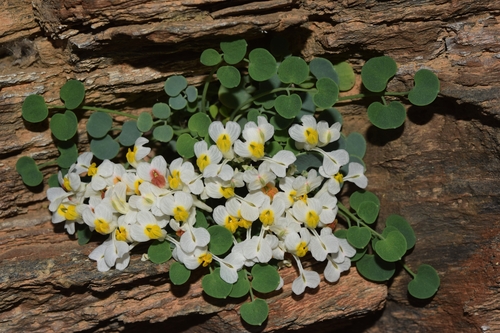
This small, cushion-forming plant grows to about 5 to 25 cm in length, featuring trailing or hanging stems. Its most distinctive feature is its highly succulent, glaucous, blue-green to grayish-green leaves, which are divided into rounded, fleshy leaflets. The small, tubular flowers are bilaterally symmetrical and spur-bearing, typically pale pink, purplish, or white, tipped with a distinct yellow or dark purple spot at the apex. These blossoms cluster together, contrasting beautifully against the dusty, chalky coloration of the foliage.
Categoría
PlantasRareza
Common
Peligro
1/5 · Muy bajo
Snaps
¡Sé la primera persona en hacer un snap!
Despite being part of the poppy family, its flowers look much more like those of bleeding hearts or fumitories.
Its scientific species name 'crassifolia' translates directly to 'thick-leaved', highlighting its succulent, water-storing leaves.
To ensure its offspring survive, the seed-bearing stems actively seek out dark rock crevices rather than dropping seeds to the ground.
Specially adapted to growing in tight rock fissures, using highly specialized, fine root systems to extract water and nutrients from deep within limestone cracks.
Possesses thick, fleshy, glaucous leaves that store water efficiently, allowing it to withstand long dry spells on exposed rock faces.
The seed stalks exhibit negative phototropism, bending away from light toward dark crevices to deposit seeds directly into secure rock cracks.
As a photoautotrophic plant, it synthesizes its own food through photosynthesis using sunlight, water, and carbon dioxide, while absorbing essential minerals from limestone rock.
Bombus terrestris
Provides nectar and pollen to bumblebees, which in turn pollinate its specialized flowers.
Messor barbarus
Harvester ants collect the seeds, occasionally dropping them in suitable rock crevices where they can germinate.
Capra pyrenaica
Occasionally browses on the plant's succulent leaves in hard-to-reach cliff areas.
Aún no hay insignias de rasgos asignadas a este objeto.
Todavía no hay alias listados.
Las colecciones para este objeto aparecerán aquí a medida que se añadan más temas.
Peligro
1/5 · Muy bajo
Todavía no hay notas especiales de seguridad.
La forma más fácil de identificar a Sarcocapnos Crassifolia es usar la aplicación de identificación de naturaleza Snappit.
5-25 cm
3-10 años
As a photoautotrophic plant, it synthesizes its own food through photosynthesis using sunlight, water, and carbon dioxide, while absorbing essential minerals from limestone rock.
Found in vertical crevices, rock faces, and shaded overhangs of limestone cliffs in mountainous Mediterranean regions.
Acércate para separar los grupos y explorar dónde se ha fotografiado este objeto.
Los snaps recientes aparecerán aquí a medida que se añadan nuevas observaciones.








