

Scarabaeus Cicatricosus
scarabaeus cicatricosus
Scarabaeus cicatricosus es una notable especie de escarabajo pelotero nativa del Mediterráneo occidental, particularmente del sur de la Península Ibérica y partes del Norte de África. Como ingeniero de ecosistemas por excelencia, este laborioso insecto desempeña un papel indispensable en el ciclo de nutrientes, la aireación del suelo y la dispersión de semillas. Al esculpir y rodar enormes esferas de estiércol de mamíferos, asegura tanto una rica fuente de alimento para sí mismo como un vivero para su futura descendencia. Observar a este escarabajo navegar por terrenos difíciles mientras empuja una bola varias veces su propio peso es un testimonio de su extraordinaria fuerza y determinación biológica. Lamentablemente, los cambios en la ganadería pastoral tradicional y el uso generalizado de productos farmacéuticos para el ganado plantean desafíos significativos para su supervivencia, lo que convierte a esta especie en un foco vital para los esfuerzos de conservación regionales.
Hábitat: Se encuentra en pastizales mediterráneos secos, dehesas y matorrales abiertos donde pasta el ganado herbívoro.
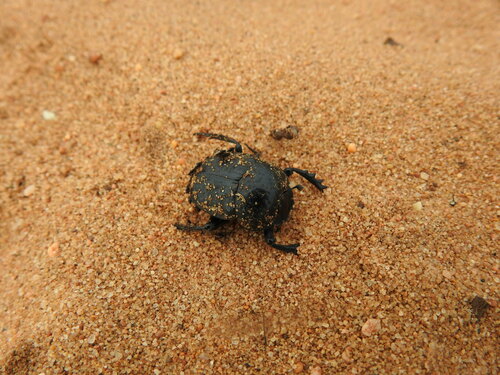
Este escarabajo de tamaño mediano generalmente mide entre 2.0 y 3.0 centímetros de longitud y se caracteriza por un cuerpo robusto y ovalado con una coloración negra mate profunda. Su característica más definitoria es la superficie texturizada y fuertemente punteada de sus élitros, que se asemeja a una serie de cicatrices o rugosidades, lo que le da a la especie su nombre científico. Posee patas delanteras anchas en forma de pala, fuertemente modificadas para excavar y esculpir el estiércol, mientras que sus antenas en forma de abanico son altamente sensibles a las señales químicas en el aire.
Categoría
InsectosRareza
Común
Peligro
1/5 · Muy bajo
Snaps
¡Sé la primera persona en hacer un snap!
Como otras especies de Scarabaeus, ruedan las bolas de estiércol hacia atrás usando sus patas traseras mientras caminan boca abajo con la cabeza hacia el suelo.
El nombre de la especie 'cicatricosus' se refiere a los cráteres con forma de cicatriz en sus élitros, lo que ayuda a distinguirlo de otros escarabajos de cuerpo liso.
Son altamente sensibles a los componentes químicos del estiércol fresco, capaces de volar directamente hacia una nueva fuente de estiércol a los pocos minutos de su deposición.
Este escarabajo utiliza la luz polarizada del sol, la luna e incluso la Vía Láctea para mantener un rumbo recto mientras rueda las bolas de estiércol lejos de sus competidores.
Equipado con patas delanteras especializadas y aserradas y un clípeo en forma de pala, puede excavar rápidamente en suelo compactado para enterrar su bola de estiércol de forma segura.
Es capaz de rodar y transportar esferas de estiércol que pesan hasta varias docenas de veces su propia masa corporal sobre terrenos irregulares.
Se alimenta casi exclusivamente del estiércol de mamíferos herbívoros y omnívoros, prefiriendo las heces frescas de ganado vacuno, ovino y equino.
Diferencias por edad: Las larvas se alimentan dentro de la bola de cría enterrada con el estiércol proporcionado por sus padres, mientras que los adultos buscan activamente estiércol fresco en la superficie.
Ovis aries
Proporciona al escarabajo su principal fuente de alimento y material para las bolas de cría.

Vulpes vulpes
Depreda a los escarabajos peloteros mientras forrajean en la superficie.
Sisyphus schaefferi
Compiten por los recursos de estiércol fresco para construir bolas de cría.
Aún no hay insignias de rasgos asignadas a este objeto.
Todavía no hay alias listados.
Las colecciones para este objeto aparecerán aquí a medida que se añadan más temas.
Peligro
1/5 · Muy bajo
Todavía no hay notas especiales de seguridad.
Busca élitros duros que se juntan en una línea por el lomo y compara después las antenas, la forma del cuerpo, las patas y las marcas. Los colores metálicos cambian mucho con la luz. Identificador de escarabajos: sube una foto y compara los detalles visibles.
2+ cm
4+ cm
0.001+ kg
1+ años
5 km/h
Se alimenta casi exclusivamente del estiércol de mamíferos herbívoros y omnívoros, prefiriendo las heces frescas de ganado vacuno, ovino y equino.
Se encuentra en pastizales mediterráneos secos, dehesas y matorrales abiertos donde pasta el ganado herbívoro.
Acércate para separar los grupos y explorar dónde se ha fotografiado este objeto.
Los snaps recientes aparecerán aquí a medida que se añadan nuevas observaciones.
Llévate el descubrimiento
Haz una foto con Snappit, identifica la especie y guarda el hallazgo en tu colección.