

Schoenoplectiella
schoenoplectiella
Schoenoplectiella es un género de juncos esbeltos y cespitosos de humedal que pertenece a la familia Cyperaceae. A menudo denominadas junquillos, estas plantas resistentes desempeñan un papel vital en los ecosistemas de humedales de todo el mundo, estabilizando las orillas y proporcionando material de anidación y alimento esenciales para diversas especies acuáticas. A diferencia de algunos de sus parientes juncos más grandes, las especies de Schoenoplectiella son generalmente de tamaño modesto, lo que las convierte en un tema fascinante para los entusiastas de la botánica que exploran marismas, ciénagas y orillas de lagos. Estas plantas están muy adaptadas a ambientes saturados, prosperando en lugares donde los niveles de agua fluctúan. Sus estructuras simplificadas, similares a la hierba, y sus inflorescencias compactas les permiten colonizar rápidamente llanuras de barro y aguas poco profundas, especialmente en áreas de humedales alteradas o estacionales.
Hábitat: Se encuentra en orillas pantanosas, llanuras de barro húmedas y aguas poco profundas de charcas estacionales o bordes de lagos.
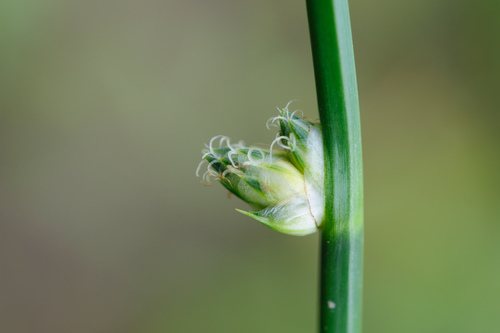
Los juncos de Schoenoplectiella suelen formar matas densas y bajas de tallos verdes delgados y cilíndricos que alcanzan alturas de 10 a 100 cm. Las hojas a menudo se reducen a estructuras simples, en forma de vaina, en la base, dejando que los tallos lisos y fotosintéticos hagan la mayor parte del trabajo. La característica más distintiva es el denso racimo de espiguillas parduscas en forma de huevo que parecen brotar lateralmente del costado del tallo cerca de la parte superior; esta ilusión es causada por una sola bráctea erguida que continúa sin interrupciones hacia arriba, imitando el propio tallo.
Categoría
PlantasRareza
Común
Peligro
1/5 · Muy bajo
Snaps
¡Sé la primera persona en hacer un snap!
A pesar de parecer que tienen hojas, la fotosíntesis la realizan casi por completo sus tallos redondos y huecos.
El nombre Schoenoplectiella se deriva de palabras griegas que significan 'pequeña caña trenzada', en referencia a su uso histórico en el tejido de pequeñas esteras y cestas.
Las semillas tienen pequeñas cerdas que apuntan hacia atrás que les ayudan a viajar en las plumas y patas embarradas de las aves migratorias, permitiéndoles dispersarse a nuevos humedales.
La planta presenta una bráctea erguida altamente modificada que imita perfectamente el tallo principal, empujando el racimo de flores hacia un lado para optimizar el espacio y la integridad estructural en condiciones de humedal ventoso.
Sus tallos contienen canales de aire internos especializados que transportan oxígeno desde las partes expuestas de la planta hasta las raíces sumergidas en lodo deficiente en oxígeno.
Muchas especies de este género producen semillas abundantes y muy flotantes que se establecen rápidamente en llanuras de barro recién expuestas cuando los niveles de agua bajan.
Como planta fotoautótrofa, produce su propia energía utilizando clorofila para capturar la luz solar, absorbiendo agua y minerales esenciales del suelo a través de su sistema de raíces poco profundas.
Anas platyrhynchos
Las semillas de Schoenoplectiella son una fuente de alimento altamente nutritiva para las aves acuáticas migratorias durante el otoño.

Phragmites australis
Compite por espacio y nutrientes en los márgenes poco profundos de los humedales, siendo ocasionalmente sombreada por colonias agresivas de cañaverales.

Ondatra zibethicus
Las ratas almizcleras ocasionalmente cosechan las raíces y los tallos inferiores de estos juncos para alimentarse y construir sus madrigueras.
Aún no hay insignias de rasgos asignadas a este objeto.
Todavía no hay alias listados.
Las colecciones para este objeto aparecerán aquí a medida que se añadan más temas.
Peligro
1/5 · Muy bajo
Todavía no hay notas especiales de seguridad.
Compara las espigas con semillas, la forma del tallo, cómo se unen las hojas y la articulación donde la hoja se une al tallo. Un trozo de césped recién cortado rara vez muestra lo suficiente para una identificación exacta. Identificador de gramíneas: sube una foto y compara los detalles visibles.
10-100 cm
0.01-0.2 kg
1-5 años
Como planta fotoautótrofa, produce su propia energía utilizando clorofila para capturar la luz solar, absorbiendo agua y minerales esenciales del suelo a través de su sistema de raíces poco profundas.
Se encuentra en orillas pantanosas, llanuras de barro húmedas y aguas poco profundas de charcas estacionales o bordes de lagos.
Acércate para separar los grupos y explorar dónde se ha fotografiado este objeto.
Los snaps recientes aparecerán aquí a medida que se añadan nuevas observaciones.
Llévate el descubrimiento
Haz una foto con Snappit, identifica la especie y guarda el hallazgo en tu colección.